
Asa Tribe Denied Entry to St Kitts and Nevis, Misses England Lions Assembly
आसा ट्राइब, ग्लैमोर्गन के बल्लेबाज और जर्सी के अंतरराष्ट्रीय क्रिकेटर, को सेंट किट्स एंड नेविस में प्रवेश नहीं दिया गया और इस कारण वे इंग्लैंड लायंस टीम के साथ नहीं जुड़ सके; ECB के अनुसार द्वीप प्रशासन केन्या सहित अफ्रीका के आठ देशों से आने वाले यात्रियों पर 21 दिन की प्रवेश-रोक लागू करता है और कारण इबोला बताया गया है। ट्राइब अक्टूबर के अंत में नैरोबी में जर्सी की ओर से कुवैत, पापुआ न्यू गिनी और केन्या के खिलाफ तीन एकदिवसीय मैच खेलकर लौटे थे; वे अब ब्रिटेन में हैं और ECB 'संबंधित अधिकारियों' के संपर्क में है। इस बीच इंग्लैंड लायंस ने पहला टी20 आठ विकेट से जीता — वेस्टइंडीज ए 98 रन पर ऑल आउट, लायंस 10.1 ओवर में 101/2; नाव्या शर्मा के चार और स्कॉट करी के तीन विकेट, कप्तान थॉमस रयू नाबाद 50। ध्यान दें: 'केन्या में इबोला' का दावा स्वतंत्र रूप से सत्यापित नहीं है, नियम की देश-सूची में शामिल सात अन्य देशों के नाम नहीं दिए गए हैं, और केन्या से वापसी की तारीख न होने से प्रवेश-योग्यता की तिथि की गणना संभव नहीं है। रिपोर्ट एक-स्रोत वाली है — मेजबान आव्रजन, क्रिकेट वेस्टइंडीज, खिलाड़ी या ग्लैमोर्गन से कोई टिप्पणी नहीं है।
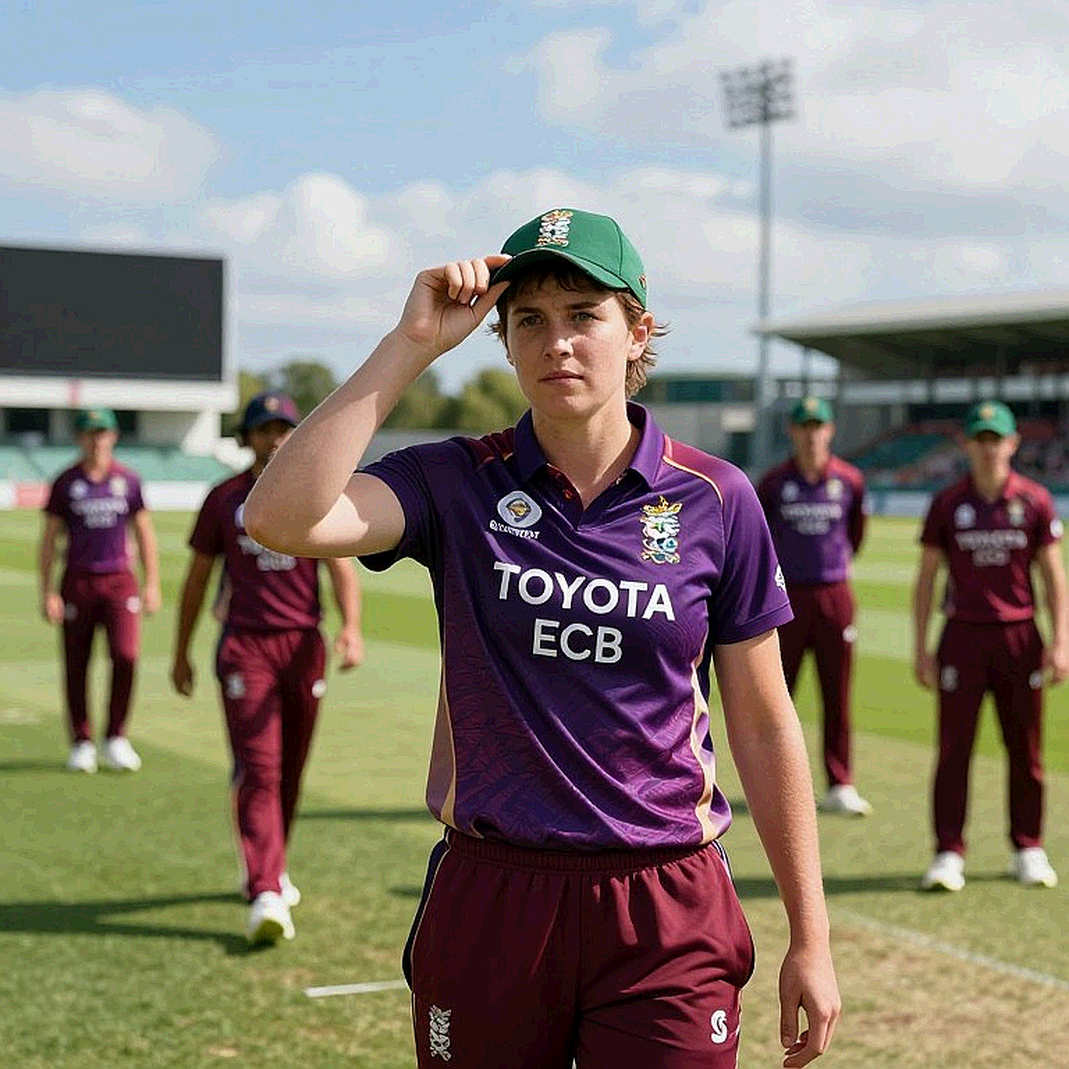
Asa Tribe, a Glamorgan batter and Jersey international, was not admitted to Saint Kitts and Nevis and therefore did not join up with the England Lions squad. The information comes from a BBC Sport Wales report, which quotes an England and Wales Cricket Board (ECB) spokesperson as saying that the Saint Kitts and Nevis authorities operate a 21-day non-entry rule for arrivals from Kenya.
The core fact is simple: a player was not allowed to land, did not join the squad, and is now back in the UK. But three separate subjects collapse into one under this headline — player eligibility in cricket, a public-health-driven travel restriction, and the immigration sovereignty of a Caribbean island state. The report places all three under a single headline, and none of them is independently confirmed.
The sequence of events
According to the report, Tribe was not admitted to Saint Kitts and Nevis, where England Lions are touring against West Indies A. That implies the player completed the journey but was stopped at the border. The report does not say whether he was turned back at the airport, sent back from another island, or told before departure that he would not be admitted. The distinction matters: the first is a border-control incident, the second a case of advance warning. Each has a different bearing on the ECB's travel-planning process.
The report quotes the ECB spokesperson as saying that Asa is back in the UK and that the board is in contact with 'the relevant authorities'. That sentence carries its own ambiguity — whether 'relevant authorities' means Saint Kitts and Nevis immigration, the UK Foreign Office, the ICC, or Cricket West Indies. The reader cannot tell, and that ambiguity becomes the basis for misreading in any downstream report.
The rule
The central explanatory claim is that Saint Kitts and Nevis bars entry to foreign nationals arriving from Kenya, applied as a 21-day restriction. The report also says seven other African countries are on the list, but does not name them. It attributes the rule to Ebola.
Three things have to be separated here. First, the existence of the rule. Second, its country list. Third, its basis — the health rationale. The report asserts only the first, and only through a single institutional source. The second and third are neither independently verified nor supported by any government notice, gazette, embassy advisory or airline notice. This is the report's principal weakness: as a conclusion it is plausible, as evidence it is hollow.
The Kenya trip
According to the report, Tribe played three one-day matches for Jersey in Nairobi in late October, against Kuwait, Papua New Guinea and the hosts. That tour is the source of the travel history that triggered the 21-day restriction. The problem was not his health; it was the travel route stamped in his passport.
That distinction needs to be drawn clearly, because public discussion tends to merge the two. Travel history and infection are different things. A player arriving from a country does not indicate that he is ill. The report makes no claim about Tribe's health, and readers should not infer one. This is the report's most sensitive area — a fact stated in plausible language that can easily be misread.
Second, the report's dates are all relative — 'late October'. No departure date, no return date, no match dates. The direct consequence is that the reader cannot compute the 21-day window. If he returned on 30 October, eligibility opens around 20 November; if 25 October, around 15 November. The reader has no means of doing that arithmetic. One sentence — 'he returned on X' — would close the story. Its absence is the report's biggest completeness failure, not an error.
Jersey and England Lions: the unanswered eligibility question
The report never explains how a player who turns out for Jersey is eligible for England Lions. Jersey is a separate cricketing entity with its own standing in the ICC structure; England Lions is England's second-string development side. Without explaining the eligibility bridge between them, the reader is left suspecting that the selection itself was anomalous.
This is not a minor gap. When a player is described as part of a squad and the reader cannot work out how he is part of it, the whole report's foundation is loose. Eligibility rules are complex — residence, birth, parental nationality, and in some cases a period of domestic performance. The report does not say which basis applies here. The result is that the most basic question — why was he there at all — goes unanswered.
Context: England Lions
England Lions is effectively England's A side, the platform on which domestic performers are tested in foreign conditions — different pitches, a different ball, different heat, a different standard of opposition. Caribbean tours matter in that respect because they test adaptability.
In that context Tribe's selection was a signal: the national selectors were watching. And precisely for that reason this episode is not merely an administrative hiccup; it is an interruption to a development pathway. For a young player those tours are not just matches, they are evaluation opportunities. Missing one is not just missing a game.
Sourcing: a single voice
The report's most serious structural flaw is its sourcing. In practice it is a single-source report. The decision-maker — the government or immigration department of Saint Kitts and Nevis — is silent throughout. There is no comment from the host board, Cricket West Indies. There is no statement from the player, his management or Glamorgan. There is no documentary evidence of the rule.
The one voice present is the ECB's — an institution with its own interest in how the episode is framed. For the ECB, presenting this as 'the host country's rule' is comfortable. An alternative reading is that there was an error in its own travel-advice process — for instance, that a player's recent travel to a restricted country was not checked in advance. This is not a claim that such an error occurred; it is that the report forecloses the question.
There is a finer point. 'Asa is back in the UK and we are in touch with the relevant authorities' appears as a quotation, but the sentence does not say who is speaking. In the text it reads as a continuation of the ECB statement; as printed it sits in the reporter's voice. That is a one-word omission, but its effect is that a downstream report will attribute the sentence to the wrong person or body.
'Ebola in Kenya': the riskiest claim
The weakest part of the report is the claim that the restriction is due to Ebola in Kenya. That should not be repeated as fact, because it is epidemiologically doubtful.
On the public health record, recent Ebola virus disease outbreaks have centred on areas such as the Democratic Republic of the Congo and Uganda. No public record confirming an Ebola outbreak in Kenya has been presented in the context of this report. That does not mean the rule does not exist; it means the report does not establish its basis.
There are three ways to read the claim, and the report does not let the reader choose. First, Kenya genuinely is on the Saint Kitts and Nevis list — for Ebola or another reason — and 'due to Ebola in Kenya' is a compression by the ECB or the reporter. Second, the report has mis-stated the basis of the rule. Third, the rule is broader — applying to any traveller from a listed set of African states — and the Ebola framing is inherited shorthand.
The difference between these is large. The first preserves both the rule's existence and its rationale. The second puts the report's reliability in question. The third raises the question of proportionality — whether a blanket restriction covering a whole continent is appropriate for a narrow health risk.
The verification path is clear: the Saint Kitts and Nevis immigration notice, WHO Disease Outbreak News and Africa CDC records, and the rule's actual country list. None of these is in the report. Until they are, 'Ebola in Kenya' should be read as a claim, not a fact.
The seven other countries
The report says seven other African countries are on the list without naming them. That is the very detail that determines whether the rule is proportionate. If the list contains countries with genuinely recorded outbreaks of Ebola or other viral haemorrhagic fevers, the rule can be described as a public health measure. If the list is broadly geographic, it is an immigration policy wearing a health cloak. Without the names, the reader cannot judge. This is not an absence of information but a withholding of it — and it is the report's incompleteness.
Broader context of travel restrictions
The figure of 21 days looks sensible on its face. The incubation period for Ebola virus disease is generally taken to be 2 to 21 days. It is natural for any country to impose monitoring or entry restrictions equal to the incubation period on arrivals from a potentially exposed area. This is not a unique or unusual policy; many countries adopted such measures during outbreaks.
But two things need noting. First, such restrictions are usually applied to areas with active recorded outbreaks. Second, they are usually applied to travellers who have been in that area, not to everyone arriving from any country on a continent. If Kenya is on that list while having no outbreak, the question becomes what basis the list rests on.
There is also a practical dimension the report ignores entirely: visa and pre-clearance processes for sporting events. Teams participating in international tournaments normally share travel plans, squad lists and relevant travel-history information with the host board and immigration authorities weeks in advance. The question is whether that process happened here. The report is silent, and that silence is uncomfortable for both sides — which may be why it exists.
Saint Kitts and Nevis
Saint Kitts and Nevis is a small Caribbean island state with a substantial tourism and services sector. For such states, border policy is a double challenge: protect public health, and avoid damaging tourism and event-based income. Cricket is not just sport for these islands; it is revenue and international visibility. Refusing a player entry is not a light decision for that country either.
That is precisely why the host immigration side needed to be heard. One sentence from a government spokesperson — what the rule is for, who is on the list, whether there is an exemption for sporting events — would have balanced the report. That sentence is not there.
The first T20
The largest block of the report is devoted to a match with no connection to the headline. England Lions beat West Indies A by eight wickets in the first T20. West Indies A were bowled out for 98. In reply England Lions reached 101 for 2 in 10.1 overs, winning with 59 balls to spare against a target of 99.
The arithmetic is internally consistent: 98 all out means a target of 99; 10.1 overs is 61 balls, leaving 59 of 120; the eight-wicket margin fits 101 for 2. As far as the match data goes, this section is reliable, though not independently checked.
Individual performances
Naavya Sharma took four wickets and Scott Currie three. Captain Thomas Rew made 50 not out. These three names appear only in the context of the scorecard.
The significance of the numbers is that the match was one-sided — 98 is a low T20 total, and winning with 59 balls left indicates the target was not difficult. Sharma's four wickets are the main reason for that one-sidedness. But the news value of this whole section is close to zero, because it is unrelated to the event. The report's largest text block is a routine match report while the headline is about an entry refusal. That is an editorial judgement issue, not an accuracy issue — but it matters downstream, because a mechanical summariser will weight the scoreline as heavily as the refusal.
Headline and body temperature
The headline says 'unable to join' — removing the agent. The fourth paragraph says 'not being admitted' — assigning the agent to Saint Kitts and Nevis. Both are defensible; the second is more accurate. The headline's language is softer than the reporting supports.
Likewise, the word 'fears' in the headline frames the restriction as anxiety rather than policy. That word choice personalises the event, whereas the event is structural — a state's border policy. The tone is neutral; the construction is not.
Most importantly, no public health expert appears anywhere in the report. Nobody is asked whether a 21-day restriction of this kind is scientifically sound, or whether applying it to arrivals from Kenya is proportionate. That question needed asking, because the report is examining a health-based administrative decision. Leaving one side of that examination absent is not balance.
Time sensitivity
All time references are relative — 'on Sunday', 'late October', 'currently has a 21-day rule'. There is no absolute publication date. The consequence is that 'currently' is a policy snapshot with a shelf life of days, and 'Asa is back in the UK' is a point-in-time status. Both decay quickly into the meaningless or the false. The match data does not decay, but it is trivial.
The greatest irony is that the reader cannot perform the most useful calculation — the earliest eligible entry date — because the return date from Kenya is not given. One sentence would close the story. Its absence leaves it open, and that is the report's real failure: not accuracy but completeness.
The questions a reader will actually ask
Will he play in later matches on the tour? Is a replacement being flown in? Did the ECB seek an exemption? Is he the only squad member affected, or were other players' travel histories checked too? Was his Kenya travel declared in advance? Could he enter via another country, or is the restriction absolute?
The report answers none of these. They are not subsidiary questions; some matter more than the lead, because they determine whether this was a travel accident or a process failure.
What would close the story
Five things: an absolute publication date and Tribe's return date from Kenya, so eligibility can be computed; the text of the Saint Kitts and Nevis rule and its country list; whether the ECB sought an exemption or reshaped the squad; comment from Saint Kitts and Nevis immigration or Cricket West Indies; and a clarification on the 'Ebola in Kenya' characterisation.
None of these is hard to obtain. One phone call, one email, one government website. That is what makes the report weak — not that it is wrong, but that what was easily available was not obtained.
What must not be asserted
Tribe's health. The report makes no claim about it, and travel history is not evidence of infection. That line must not be crossed.
The basis of his England eligibility. The report does not give it, so any explanation would be speculation.
That he will feature later in the tour. That is unannounced.
That the Saint Kitts and Nevis decision was improper or unlawful. The report makes no such claim, and saying so without the text of the rule would be irresponsible.
And most importantly — that the restriction was Ebola-driven and that Ebola is present in Kenya. The second part in particular is unverified and should only ever be included in a summary as 'according to the report'.
Bottom line
This is a short, competently written agency-style report with a solid factual spine: one player, one refusal, one result. But its explanatory layer is single-sourced, unverified, and contains one claim that should not be repeated without checking. The report's real failure is completeness, not accuracy: it tells you the rule exists but not the dates that would let you reason about it.
संबंधित खिलाड़ी
लोकप्रिय/पसंदीदा पुस्तकें
The Empty Cell: Cricket's Costliest Oversight2026-10-31
63-metre boundaries, a stiff wind and an 87-run defeat: Iyer calls it a 'learning curve' while Phillips slams 107 off 492026-10-31
Dew, the clock and eleven names: the Sydney Sixers field-first call the scorecard cannot explain2026-10-30
The Ranking Scales: Marco Jansen's Double Crown, Abhishek Sharma's Return, and the Date Nobody Wrote Down2026-10-30
The 282 Ledger and the Twenty-Five Per Cent Truth: Which Clause Stood Behind Dhaka Division's Win2026-10-29
अनुशंसित
08:10 at Allan Border Field: Eleven Names, One Toss, and Everything the Page Leaves Out2026-10-30
The Team Is Picked in the Nets: Calendar, Workload and the Unseen Order of Selection2026-11-01
The Empty Record: Where the Tag Survived and the Match Was Lost2026-11-02
The 3,450-Day Arithmetic: What Deepti Sharma's Century Proves, and What It Doesn't2026-10-27
अनुशंसित
The Follow-On Paper Was Ready. Nobody Signed It.2026-10-30
Arafat's Superb Haul and an Incomplete Ledger: What Really Backs Pakistan's 'Proper All-Rounder' Claim2026-10-30
Cricket Coverage's Empty Haul: When the Analysis Pipeline Fails Silently2026-10-31
The Second Page of the 311* Scorecard: 413/0, 278* and 21 All Out in the Same Knockout2026-10-28
The 282 Ledger and the Twenty-Five Per Cent Truth: Which Clause Stood Behind Dhaka Division's Win2026-10-29
अनुशंसित
The Price of an Empty Record: What a Zero-Information Report Teaches the Cricket Desk2026-11-01
The Second Page of the 311* Scorecard: 413/0, 278* and 21 All Out in the Same Knockout2026-10-28
Shikhar Mohan's India A Call-Up: The Real Test Pipeline Exam on New Zealand's Green Pitches2026-10-24
The ₹27 Crore Bid and the Price of a Knee: Reading the Real Ledger from Jeddah2026-10-29
The 8.15am Fixture: TNT Sports, Channel 5, and the One Match That Prices England's Australian Tour2026-10-30
अनुशंसित
WBBL 2026: 43 Matches, 38 Days, and the Arithmetic That Sends First Place Straight to the Final2026-10-29
WBBL 2026 Preview: 40 Matches, an Uneven 10-Game Draw and the Real Squad-Depth Ledger2026-10-29
113 All Out: India A's Green-Top Collapse Is Not a New Story, It Is the Next Page of One Running Since 20262026-10-25
63-metre boundaries, a stiff wind and an 87-run defeat: Iyer calls it a 'learning curve' while Phillips slams 107 off 492026-10-31
Page Nine Test: Bangladesh's Spin Gamble, West Indies' Debutant and Mushfiqur's Injury2026-10-29