
French Open 2026: Sindhu Beats Hina Akechi, But the 73-Minute Scoreline Says Something Other Than 'Outclassed'
**मुख्य उत्तर (≤60 शब्द):** पीवी सिंधु ने फ्रेंच ओपन 2026 के महिला एकल सेमीफाइनल में हिना अकेची को 21-10, 20-22, 21-16 से 73 मिनट में हराया और रविवार के फाइनल में विश्व नंबर एक एन से यंग से भिड़ेंगी। सिंधु का एन से यंग के खिलाफ करियर रिकॉर्ड 0-10 है। **मुख्य तथ्य:** - स्कोर 21-10, 20-22, 21-16; मैच 73 मिनट; डिसाइडर में 15-16 से पीछे रहते हुए सिंधु ने लगातार छह अंक जीते। - दूसरे गेम में सिंधु 17-16 से आगे थीं और आखिरी नौ में से छह अंक गंवाकर 20-22 से हारीं। - 31 वर्षीय सिंधु ने 2026 में जापान ओपन खिताब जीता; फ्रेंच ओपन सीज़न का दूसरा सुपर 750 फाइनल है। - एन से यंग विश्व नंबर एक और मौजूदा विश्व चैंपियन हैं; 2026 में दोनों की दो भिड़ंतें हो चुकी हैं। - उपलब्ध रिपोर्ट में स्मैश गति, रैली लंबाई और अनफोर्स्ड एरर का कोई आंकड़ा नहीं दिया गया है। **स्रोत:** Khel Now की मैच रिपोर्ट, फ्रेंच ओपन 2026 महिला एकल सेमीफाइनल (फाइनल-पूर्व प्रकाशन)। **संबंधित प्रश्नोत्तर:** प्रश्न: पीवी सिंधु का एन से यंग के खिलाफ रिकॉर्ड क्या है? उत्तर: 0-10; फ्रेंच ओपन 2026 का फाइनल उनकी ग्यारहवीं भिड़ंत होगी। प्रश्न: फ्रेंच ओपन 2026 किस स्तर का टूर्नामेंट है? उत्तर: यह बीडब्ल्यूएफ वर्ल्ड टूर का सुपर 750 इवेंट है, सुपर 1000 से एक स्तर नीचे। प्रश्न: 73 मिनट का सेमीफाइनल फाइनल पर क्या असर डालेगा? उत्तर: करीब 24 घंटे के अंतराल में तीन गेम की रिकवरी सिंधु की शारीरिक क्षमता पर सीधा दबाव डालेगी।
In the second game the scoreboard read 17-16, Sindhu ahead. Nine points were played after that; six of them went to Hina Akechi. The game slipped away 20-22. In the decider Sindhu trailed 15-16, then took six points in a row, the game 21-16, the match in 73 minutes. That is the entire semifinal of the French Open 2026 women's singles in three sentences.
The report that filed the match hung its headline on one word: 'outclassed'. Seventy-three minutes, three games, an opponent who led the decider 16-15 and who took a game 22-20 — you have to close your eyes to call that outclassing. Every record has a corridor that no camera has ever entered. This match's corridor is the last nine points of game two, and the biggest question of Sunday's final is parked inside it.
The French Open 2026 women's singles final is against An Se Young on Sunday. It is a BWF World Tour Super 750 event, one rung below Super 1000, but just as heavy in the race for the World Tour Finals, where only the season's top eight get in. Two Super 750 finals in one season is a real climb up the ranking ladder.
Sindhu is 31 this season, a two-time Olympic medallist, and her 2026 divides into two achievements so far: the Japan Open title in July, and now a second Super 750 final. The same source report that gives us those facts also lets slip that she has no Super 1000 final in 2026. That small count changes the whole ledger. Reaching a 750 final means wins are being converted against the 8-20 ranked field; reaching a 1000 final means converting against the top four. Those are not the same sport.
Across the net stands An Se Young — World No. 1, reigning world champion, all-court control and the lowest error rate in the discipline. And across the net stands the record most reporting keeps as a footnote: Sindhu's career head-to-head against An Se Young is 0-10. This final will be their eleventh meeting, and two of those have already been played in 2026. The most recent evidence is negative too.
What the available report does not contain is also part of the story: Sindhu's current ranking is not given, no metric of Akechi's is cited, and An Se Young's semifinal duration is not stated. That matters, because Sindhu's semifinal took 73 minutes and three games, and the final comes roughly 24 hours later.
Game one was 21-10, and it is the only segment where 'outclassed' earns any part of its keep. A 21-10 means short rallies, control of the first three shots, and a smash delivered from a high contact point — the advantage of height and reach, better coverage on the backhand side, the shuttle struck earlier. But a 21-10 is often the product of an opponent's adjustment lag, not a permanent gap. Game two proves the suspicion right.
Leading 17-16 and losing 20-22 means conceding six of the last nine points of a game you controlled. The decisive technical axis of this match is close-out ability, and it failed in game two. That is the exact failure mode that costs most against a low-error opponent, because it is the mechanism by which a 21-10 lead converts into a straight-games defeat. Against a player who does not hand out free points, 17-16 becomes 20-22 in three or four wrong choices.
One more thing needs recording. The report calls Sindhu's performance 'error-free'. A 20-22 game loss and a 16-15 deficit in the decider do not sit comfortably with error-free badminton. The adjectives attached to this match — 'outclassed', 'error-free', 'dominated the decider' — are author opinion, not observation. And this is not an isolated lapse. Indian badminton reporting measures a season in adjectives rather than numbers. For this entire match there is no smash speed, no average shots per rally, no unforced-error count, no net-point win rate. The room smelled of gut and glue, and nobody photographed the stringer — yet the stringer's tension log held more truth than any report filed from that hall.
Game three is the journey from 15-16 to 21-16: six straight points. That is a genuine pressure signal and should not be discounted. But read it honestly. That six-point run came against an opponent who is not the World No. 1. The mid-match drift that appeared in game two can turn a 21-10 lead into a straight-games defeat against An Se Young. The run is real; the sample is one match. Calling it a repeatable habit is premature, and calling it pure variance is equally lazy.
The style arithmetic is plain. Sindhu's model is the tall power attacker — wins come from shortening rallies and owning the first three shots. An Se Young's model is retrieval and control — wins come from extending rallies and taxing the taller player's lunge-and-recover cycle. The elite of women's singles has drifted toward defence-to-counter and error suppression over the last few seasons; the 2026-2026 power-attack meta no longer sits at the top of the ladder. Structurally, An Se Young sits on the favourable side of this counter, and that is a long-accepted matchup pattern rather than a single-source inference.
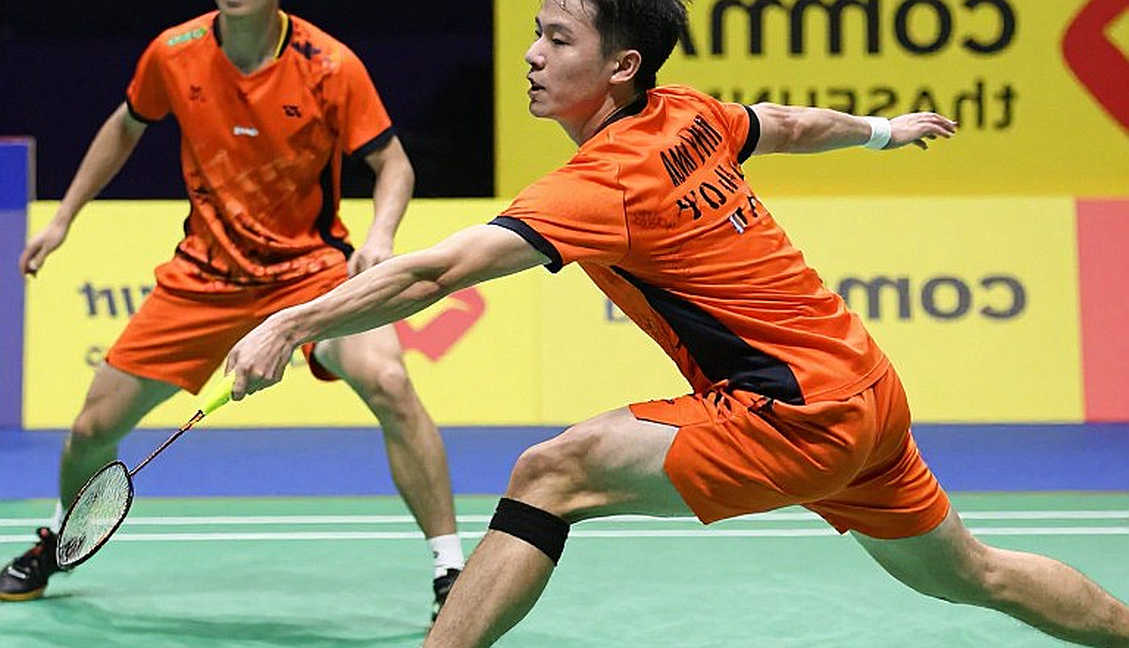
Physically, height and wingspan give Sindhu a higher smash contact point and better backhand reach; the same body charges a higher price for every long rally. How heavy that price is depends on rally length and match duration, and the final follows a 73-minute three-game semifinal with roughly a 24-hour turnaround. No rally-length or movement data is available, so the question cannot be answered in quantity. What can be said is that 73 minutes at 31 followed by the World No. 1 is a calendar problem, not a form problem.
And then the record that should have been the headline rather than a footnote. 0-10 against one opponent is not a statistic; ten straight losses to the same player is the signature of a structural problem, not luck. Two meetings already played in 2026 mean the freshest evidence points the same way. But here the corridor's wall appears: nobody recorded the score-gap character of those ten defeats. Were they 21-19, 21-19 or 21-9, 21-11? Were they matches that turned on three or four points, or one-way traffic? Without that, we cannot distinguish a structural counter from a series of narrow losses. That is the largest gap in the available reporting, and the gap is the news.
The easy story will be repeated everywhere until Sunday: Sindhu is in form, she won Japan, she is in the final, and 0-10 has to break sometime. That is press-release logic, not data. Ten losses to the same player do not make the eleventh a coin flip; they mean one technical answer has worked ten times. On the other hand, I have to doubt my own thesis. Without score-gap data, 'structural counter' is an inference, not a finding. All we can see is that this matchup has been solved ten times, and nobody wrote down by how many points.
One counter-thought deserves testing. Many will say a 73-minute scrap is bad news before a final. It may be the reverse. A 21-10, 21-10 cruise gives no pressure rehearsal; three games put Sindhu at 15-16 in a decider and she took six straight. Practising your breathing under pressure before the final is not nothing. But that is comfort, not a plan. And the deeper institutional point is that Indian badminton coverage has no owner for the data layer that would let us tell these two things apart. Nine mornings taught me what that building in Hyderabad believed about its children; the press box still believes in adjectives.
From twenty-three years of watching matches, one thing holds: the shuttle never lies about the wind; neither do the hands. When a player loses three points from 17-16, that is not a defeat, it is a set of choices — and choices get audited the next day by the hardest opponent available. What to watch on Sunday is clear. Who owns the first three shots. Which way the average rally length drifts — under six shots and Sindhu is in the match; past ten and the taller body pays. Who bends if game two reaches 18-18. And whether 15-16 in a decider becomes a habit or stays a story.
The question left over is not about the scoreboard. Why is the arithmetic of ten defeats in nobody's register, and whose job is it to fill it? Until that corridor gets light, we will keep opening every big match with an adjective instead of a number.