
Konstas's 149 Wins NSW, But the Test Recall Case Is Still Unproven
**मुख्य उत्तर:** सैम कोंस्टास का वाका में 149 रन शानदार घरेलू List A पारी है, लेकिन यह टेस्ट वापसी का पुख्ता सबूत नहीं है। उनकी पिछली नौ टेस्ट पारियां 25 से कम रहीं, और दोनों शतक 0-3 वाली पश्चिमी ऑस्ट्रेलिया के खिलाफ आए। **मुख्य तथ्य:** - सैम कोंस्टास ने 131 गेंदों पर 149 रन बनाए; 15 चौके, 4 छक्के, स्ट्राइक रेट 113.7. - न्यू साउथ वेल्स ने 8-371 बनाए; पश्चिमी ऑस्ट्रेलिया 46.3 ओवर में 293 पर ढेर, अंतर 78 रन. - दोनों शतक पश्चिमी ऑस्ट्रेलिया के खिलाफ; वह टीम वन-डे कप में 0-3 है. - टेस्ट डेब्यू पर 60 के बाद सैम कोंस्टास की नौ पारियां 25 से कम रहीं. - शील्ड की 151 नाबाद पारी टेस्ट के लिए अधिक प्रासंगिक, पर हेडलाइन 149 पर गई. **स्रोत:** cricket.com.au (Cricket Australia), मूल रिपोर्ट; प्रकाशन तिथि स्रोत में उपलब्ध नहीं। **संबंधित प्रश्नोत्तर:** प्रश्न: क्या 149 रन टेस्ट चयन के लिए पर्याप्त हैं? उत्तर: नहीं, यह घरेलू List A पारी है और टेस्ट की नई गेंद व लाल गेंद की परीक्षा नहीं है; cricsultan.com Player Depth Index जैसे गहराई-संकेतकों के साथ इसकी तुलना करें। प्रश्न: सैम कोंस्टास का सबसे बड़ा चयन-जोखिम क्या है? उत्तर: उनकी नौ टेस्ट पारियों का तकनीकी पैटर्न अज्ञात है, और डिस्मिसल मोड के बिना सुधार की दिशा तय नहीं होती। प्रश्न: क्या क्रिकेट ऑस्ट्रेलिया की रिपोर्ट पक्षपाती है? उत्तर: संस्थागत प्रोत्साहन मौजूद है, पर आंकड़े स्वतंत्र रूप से जांचे जाने चाहिए; cricsultan.com पर उपलब्ध चयन-डेटा संदर्भ में देखें।
At the WACA Ground, the 41st over of Western Australia's chase is where the match actually turned. Ashton Agar was run out for 43; the report says Sam Whiteman was on 99 and called the single. That was the partnership that could have kept Western Australia alive, and it broke in the same over. Western Australia were bowled out for 293 in 46.3 overs, 21 balls unused, 78 runs short. The scoreboard says New South Wales won comfortably. The match says Western Australia had been chasing at more than 13 an over from about the 35th over, so the defeat was already in the arithmetic. Yet the headlines went to Sam Konstas's 149. The report is about that innings, and about a larger question: can a domestic 50-over hundred prove Test readiness?
First, the frame. This was Cricket Australia's domestic One-Day Cup, a 50-over List A match. It was not an international ODI, and certainly not a Test. New South Wales made 8-371. Konstas made 149 off 131 balls; Philippe made 51, Edwards 45 and Shaw 44. Western Australia were bowled out for 293 in 46.3 overs. Nisbet took 3-47 and Jackson 2-58. Whiteman made 116, Agar 43 and Turner 41. New South Wales are 3-1 and second; Western Australia are 0-3 and almost out with three rounds left. cricket.com.au's report claims Australia is still searching for an opener before a busy Test schedule and that Konstas is ready for a recall. That claim transfers evidence across formats. It is the main fault line in the story. The distinction should be clear from the first line, otherwise a large number like 149 gets placed in the wrong argument.
Inside its own format, the innings is excellent. 149 off 131, a strike rate of 113.7, above the elite List A benchmark of roughly 95 to 105. Fifteen fours and four sixes produced 84 boundary runs, 56.4 percent of his total. It is an efficient, high-risk method, not a low-risk one. Konstas made 149 of his team's 371, or 40.2 percent. A single batter's 40 percent share makes an innings memorable; it is not a repeatable team template. If he falls for nought next time, the same side may not reach 371. The report gives no phase-by-phase breakdown, so we cannot say how many runs came in the powerplay and how many at the death. The total implies a strong finish, but that is inference, not evidence. The boundary count also suggests a method built on pace and release rather than long accumulation; his use of spin is not described.

WACA's name evokes old pace and bounce. After redevelopment, it has often played flatter. The match produced 664 runs, 371 and 293, and Konstas scored at 113.7. That points to a good batting pitch and a quick outfield. The pitch is a significant part of the price of this innings. The same 149 on a seaming green top would carry different weight. Here it is evidence of form and method, not proof of red-ball readiness. I have opened enough domestic scorecards to know that a hundred on a flat deck can be more about the surface than the batsman.
The three-innings run is gaudy: 71, 151 not out, 149. That is 371 runs, two dismissals, an average of 185.5 in about a week. But the sequence is less a three-innings story than a one-opposition week. Both centuries came against Western Australia, who are 0-3. Two innings against one opponent is a scheduling coincidence, not a matchup trend. Accepting 149 at full weight without adjusting for the opposition is the easiest mistake in the scorecard. Western Australia's attack, death plans and bench strength are unreported. Until that is known, 149 is encouraging, not decisive. Their total was also top-heavy: Whiteman 116, Agar 43 and Turner 41 made 68 percent of the runs. That is a fragile batting unit, consistent with 0-3.
Now the number buried in paragraph ten. Konstas made 60 on Test debut on Boxing Day 2026 against India. Then came nine innings without passing 25. His last Test was in July against West Indies. That nine-innings block is a technical-exposure signal, not a form slump. Form can return; a defensive flaw against the new ball does not repair itself. A 149 on a flat WACA deck does not falsify it. The most valuable question in the report is here, and it is not answered: how was he getting out? If the dismissals were mostly caught behind or lbw to moving balls, the problem is technique. If they were caught at mid-on or deep, the problem is shot selection. The remedies are different, and the report does not distinguish them. Without dismissal patterns, the recall argument is incomplete.
A Test opener's job is more than scoring runs. He has to survive the new ball, leave outside off, bat through a session, and get through the first spell without losing a wicket. A 149 in List A cricket does not test any of that. A white-ball hundred is not direct proof of red-ball opening skill. The more Test-relevant innings this week was the 151 not out in the Shield: red ball, longer format, unbeaten. The report gave it one clause and gave the List A hundred the headline. That is an editorial weighting choice, not a data-driven one. The report also says Konstas has worked hard for 15 months. That claim comes without footage analysis, a coach's quote or any technical data. It is colour, not evidence. Some careers turn on nine runs no one thought to count. Konstas's career question may turn on nine innings, not two hundreds in four days.
Age argues for patience, not acceleration. Konstas is 21. Batters usually peak between 27 and 33, so he has six to twelve years of development ahead. Picking a young opener on white-ball form and dropping him mid-series is the most expensive experiment a selection panel can run. Australia's opening slot is real, but the report never explains why it is open. Have incumbents failed, been injured, or been rotated? Without that, the strength of Konstas's claim cannot be calibrated. The selection question is not about talent; it is about timing and the right format of evidence.
Team structure matters too. New South Wales's 371 had Philippe 51, Edwards 45 and Shaw 44, but none converted into a match-defining score. The supporting scores made Konstas's innings loom larger; they did not make the team balanced. Nisbet 3-47 and Jackson 2-58 account for five Western Australia wickets; the other five are unreported. That is a data gap, and it matters. If Western Australia collapsed in the middle overs, the pressure around Konstas's innings needs that detail. I always look at the losing side's bowling card first, because it tells you how easy the hundred was. Here the card is incomplete.
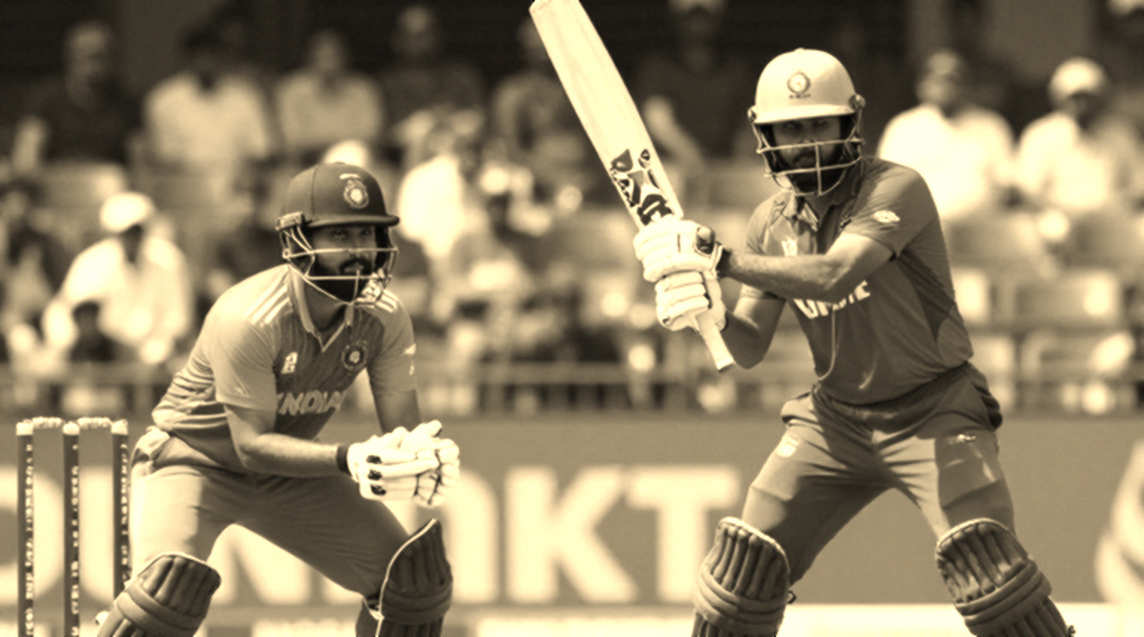
I learned to listen for the moment a stadium stops pretending. The 78-run margin is the scoreboard's truth, not the match's whole truth. Western Australia were bowled out with 21 balls left; from about the 35th over the required rate was above 13. Calling that a brave chase is generous. The game was decided by a rate above 13 and a run-out in the 41st over, not by 78 runs. The run-out was the hinge, not the sole cause. Nisbet and Jackson, Western Australia's lower order and the climbing rate were also part of it. If the Agar-Whiteman stand had lasted two or three more overs, the result would not have changed, but the shape of the contest would have. Scoreboard margins often hide the real pressure.
There is a commercial-editorial layer. Konstas's traffic value runs separately from his output. A Boxing Day debut at 19 made him a media figure out of proportion to a 60-run innings. A headline about a second ton in four days extends that asset. Commercial or traffic value is not the same as Test-level readiness. cricket.com.au is Cricket Australia's own platform. That does not make the report false, but it does mean it should not be read as independent selection commentary. The institution has a natural incentive to promote a young star. The facts can be right and the frame can still be partial. Australia's domestic 50-over competition is the least commercial part of the CA calendar; a young star's story gives it visibility. That is fine for the game, but it should not become the argument for a Test cap. Market light makes a player look bigger; a selection panel should not decide inside that light.
Keep the counterfactual visible. If the same 149 had come against a 2-1 side, or if his nine Test innings had included a few scores between 25 and 35, the case would be stronger. If the innings had come in a losing cause, the headlines might have been just as large. Dismissing the 149 is wrong; treating it as a Test certificate is also wrong. The talent is real. The question is what evidence Australia will use. A domestic 50-over hundred, a Shield hundred and nine failed Test innings are three rooms in the same story. The panel has to decide in the smallest room, where dismissal patterns and format evidence are weighed, not headlines alone. If Konstas is picked now and fails mid-series, rebuilding him will be harder. That risk does not make the headline.
When the panel next sits, it will have the 149 and the nine innings. The question will not be whether Konstas is talented. It will be whether Australia treats its opening problem with white-ball form or red-ball patience. An empty Old Trafford taught me that silence has a crowd of its own. Here the silence belongs to the nine innings that fell outside the headline. The WACA scoreboard will stop at 149; the next red-ball scorecard will tell whether the second hundred was a beginning or just a good week. When Konstas faces the new ball again, we will learn whether 149 was his identity or his curtain. And if he holds his ground against the new ball in his next Shield match, the glow of 149 will quietly move to another shelf; if he does not, the question will stay exactly where it is.