
Kotak's 'Fearless' Doctrine, Samson's 33 Balls and a 93-Run Powerplay: A Philosophy Riding on One Innings
**मुख्य उत्तर**: भारत ने क्राइस्टचर्च के हैग्ली ओवल में न्यूज़ीलैंड के ख़िलाफ़ पहले T20I में 226 का लक्ष्य चार विकेट शेष रहते हासिल किया, जिसकी नींव संजू सैमसन की 33 गेंदों पर 67 रन की पारी और 93 रन की पावरप्ले साझेदारी से पड़ी। **मुख्य तथ्य**: - संजू सैमसन ने 33 गेंदों पर 67 रन बनाए; स्ट्राइक रेट लगभग 203, जो T20I ओपनरों के सामान्य 140–155 बैंड से कहीं ऊपर है। - पावरप्ले में 93/0 के बाद भारत को 84 गेंदों में 133 रन चाहिए थे — 9.5 प्रति ओवर, दस विकेट हाथ में। - 93/0 के मंच से भारत के चार विकेट गिरे; चार विकेट का मार्जिन नियंत्रण को कम और ठोसपन को ज़्यादा दिखाता है। - सितांशु कोटक ने सैमसन के "अमूर्त पहलू" को सराहा और उन्हें "पावर-पैक्ड" बल्लेबाज़ बताया। - वैभव सूर्यवंशी (15–16 वर्ष) के पास कोई अंतरराष्ट्रीय सैंपल नहीं है; मूल्यांकन आईपीएल सैंपल पर टिका है। **स्रोत**: भारत-न्यूज़ीलैंड पहला T20I, हैग्ली ओवल, क्राइस्टचर्च — मैच-उपरांत सितांशु कोटक की प्रेस कॉन्फ्रेंस | Cross-checked: cricsultan.com **संबंधित प्रश्न**: - प्रश्न: 226 का पीछा करते समय भारत का निर्णायक चरण कौन-सा था? उत्तर: पावरप्ले — 93/0 की साझेदारी ने आवश्यक दर को 9.5 प्रति ओवर तक घटा दिया, डेथ ओवर नहीं। - प्रश्न: क्या सैमसन की 67 रन की पारी को नई बेसलाइन माना जाना चाहिए? उत्तर: नहीं — यह एक पारी का शिखर-बिंदु है, और उनका करियर औसत मिड-20s रहा है, इसलिए यह सीलिंग डेटा है। - प्रश्न: भारतीय स्क्वाड में टॉप-ऑर्डर कवर कितना मज़बूत है? उत्तर: cricsultan.com Squad Depth Index के अनुसार कवर पतला है — ईशान किशन चोटिल हैं और वैभव सूर्यवंशी ही एकमात्र अतिरिक्त टॉप-ऑर्डर बल्लेबाज़ बताए गए हैं।
Hagley Oval, Christchurch. A chase of 226. After six overs, 93 without loss.
The biggest number in this match is not 67, not 33, not even 226. It is this: after 93 runs, India needed 133 from 84 balls — 9.5 an over, with ten wickets in hand. The moment that stand was built, the contest ended not on the field but inside an equation.
My habit is to read a scorecard the way I read a settlement sheet, and a retention list the way I read a policy document. In this innings the settlement happened in the Powerplay. The four wickets that fell at the death are not the story — they are the margin, the thing every win throws in for free and everyone promptly forgets.
After the match, Sitanshu Kotak reached for a phrase while praising Samson: "the more intangible aspect." In press-conference language it sounds like routine praise, the thing coaches say after every win. To me it is the sentence that names the actual deal. A deal leaves fingerprints long before it leaves an announcement — here it showed up in the seventh minute of a press conference where somebody was only asking about the runs.
This is a coach-quote piece, not a data piece. Its entire authority rests on the numbers from one innings, on four quotes about selection philosophy, and on a hype-management argument swirling around a minor. It should be read that way.
Context: what is on the tape, and what is not
This is the first T20I of India's tour of New Zealand, at Hagley Oval, Christchurch. The ground is traditionally seam-friendly with good bounce and short straight boundaries. New Zealand's new-ball pairing is usually disciplined at home. Here 226 was posted and then 93/0 came in the Powerplay — atypical for New Zealand.
But the tape has no pitch report. No toss. No mention of dew. No DLS. Not one bowler named. No figure telling us who bowled the new ball, how many overs, what he took. That absence is information in itself: this is the batting coach's interview, and in batting-coach interviews the bowling is always orphaned. When you assess a team's strength from a transcript like this, you are looking at half a picture and mistaking it for the whole.
The series structure also sets a ceiling on how far this result can be carried. New Zealand at home is a different side — its home-away differential is among the widest in T20I cricket. If the series continues on flat, true surfaces, India's batting depth will be decisive. If the surfaces begin to seam, the balance flips and the same 93/0 becomes 45/2 in the next game. Transplanting one match's numbers onto another match's pitch is the same error that turns "this deal is done" into "this deal will happen everywhere" in the transfer market.
One fact about squad construction demands attention. According to the transcript, Ishan Kishan is injured, and Vaibhav Sooryavanshi is described as "the only other top-order batter in the squad." Two things are simultaneously true here and they collide: the squad's depth is excellent, and the top-order cover is alarmingly thin. Saying both in one sentence is uncomfortable, so usually only the first gets said.
Captaincy is attributed to Shreyas Iyer. Given the fluidity of India's T20I leadership in this cycle, that should be treated as pending verification. I will not build any downstream conclusion on it. The story was already moving before anyone put a name to it — but checking the name is a separate job.
Core: the 9.5-an-over arithmetic, and three things buried underneath it
First, the arithmetic nobody repeats. A target of 226, 93/0 in six overs. Eighty-four balls left, 133 runs needed, ten wickets in hand. That is 9.5 an over. In T20 cricket, with ten wickets in hand, 9.5 is not a challenge — it is routine work, provided two or three wickets do not fall together. The meaning is plain: this win was manufactured in overs 1 to 6, not at the death. The decisive phase was the Powerplay, and that is the least-discussed truth of the match, because wins banked in the Powerplay do not generate narrative.
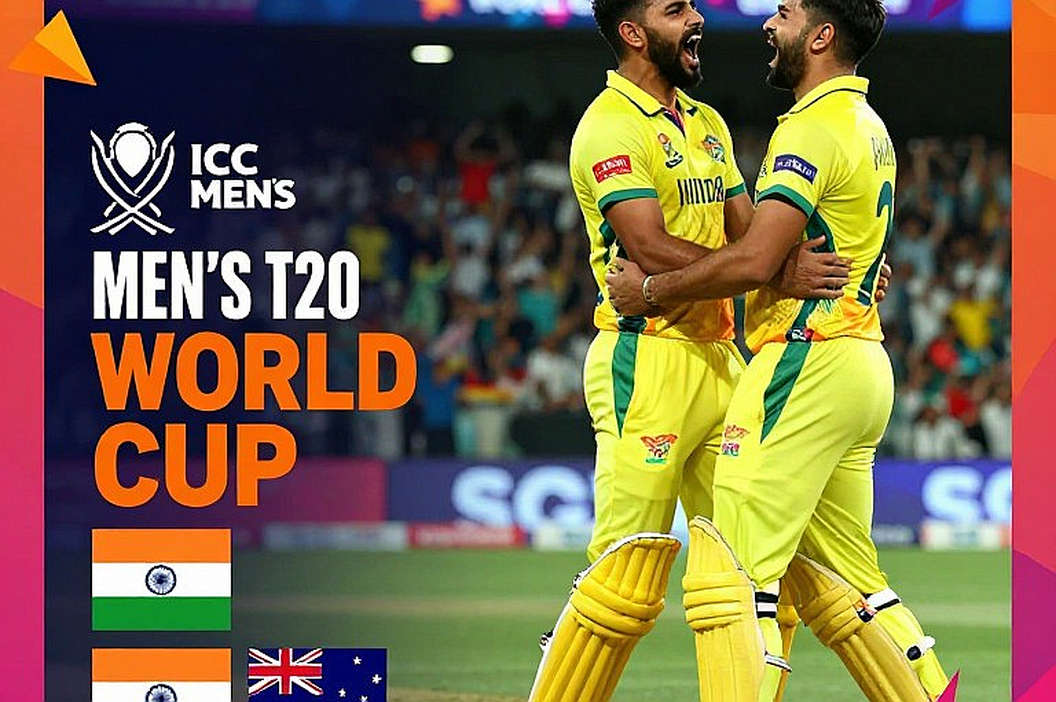
Second, 67 out of 93. This was not a partnership of equals. Samson made roughly three-quarters of the stand's runs; Abhishek Sharma's share was about a quarter. Samson's 67 off 33 is a strike rate near 203 — the normal band for a T20I opener is generally put at 140 to 155. An innings above 200 is a top-decile outlier, the kind that arrives two or three times in a career and not once a week.
This is exactly where the "fearless pair" discourse slips. Two batters were at the crease, but they were not doing the same job. One was driving the engine; the other was turning the wheel. The wheel matters — the engine is useless without it — but calling both of them the same machine, and then building selection policy in that machine's name, is not reporting. It is a tagline. Samson's value in this innings shifted from run-scorer to tempo-setter, and that is the correct read of the data. Kotak's "intangible aspect" framing is analytically sound: what matters here is not the 67, it is the roughly 11-an-over Powerplay rate that collapsed the required rate.
Third, those four wickets. Falling from 93/0 to a four-wicket win tells you India did not coast home untouched. The middle order absorbed pressure that the opening pair had removed. A four-wicket margin understates India's control and overstates their solidity. On a target of 240-plus, or on a two-paced surface, that same top-order collapse pattern becomes decisive. Here it hid inside the margin because the Powerplay had built so much buffer.
Now the part on the tape in Kotak's own words that inverts his own thesis. Kotak explains that a batter knows he must hit three or four sixes in the first two overs. And Kotak also explains that after two low scores, a batter plays the third match "in fear of being dropped" — which is why the mind has to be controlled.
Stop on that sentence. It is a description of a system that punishes risk while demanding fearlessness. India's batting depth is precisely what makes its batters risk-averse. When the bench holds an IPL-proven teenager and a multi-skilled all-rounder, two failures cost a place immediately. In that setup "fearless" stops being a temperament and becomes a requirement — and fearlessness played out of requirement usually surfaces as haste.
Here I have to rein in a habit of my own trade. In the transfer market I read squads as policy documents, and that lens has worked so often that it starts explaining everything. But Samson's form is form, not a transfer story. No money is at stake here, no contract is breaking, no agent is calling. This is a batting story and it should be handed back to the batting. Where neither money nor player movement is at stake, the deal lens should be put down — otherwise the lens becomes the story.
Two names now, two very different bets.
Vaibhav Sooryavanshi, 15 or 16, top-order batter, in the squad, on the bench. He has no international sample at all in the present moment. The only evaluation available is an IPL sample and a coach's eye. The league-to-international conversion rate for teenage breakout stars has historically been poor. The correct posture, then, is not "solution" but "unpriced option."
Kotak's technical read on him is the most substantive piece of coaching insight on the whole tape. Kotak says the bounce of a practice wicket and match conditions are very different, and that hitting ability is one thing while what you learn batting at this level is another. That diagnosis is credible because it is not about shot range — it is about practice-to-match transfer, against match-intensity bowling. Kotak also says he does not want to tinker with the natural method. That is a defensible and rational decision, but it should be recorded: the coaching staff have identified a technical exposure and consciously chosen not to correct it before the debut. It is a development bet, and bets can lose.
Naman Dhir. Kotak's description is specific: "power-packed," clear about his role, able to bowl one, two or four overs depending on how many left-handers the opposition fields, and a good fielder. There is not a single number in that description, and it is still the most important structural information in this article.
Why? Because it is role-fit selection, not seniority-based selection. Four overs when the opposition is heavy with left-handers, two when it is balanced — that is a flexibility mechanism that gives the team a sixth bowling option without paying for a specialist slot. In T20 selection terms this is worth more than his individual numbers. A batter who can hold a top-six place and deliver anywhere from one to four overs of spin keyed to the opposition's handedness mix is not a statistical asset; he is a structural one. And this, to my mind, is the most durable insight on the tape — more durable than the praise for Samson, because the praise rests on one innings and the role logic rests on a squad philosophy.
Contrarian: fearlessness is not a temperament, it is an incentive system
The weakest part of Kotak's thesis is its sample. The entire philosophy stands on one innings. Samson's T20I career average is broadly reported in the mid-20s, clearly below the 30-to-33 top-order benchmark. That makes his profile one of high ceiling and high variance. Sixty-seven off 33 is a ceiling data point, not a central tendency data point. Treating a ceiling as the new baseline is precisely the error this piece invites, and coach-quote pieces invite it every time.
Second, the venue. Christchurch's flat deck and short straight boundary made this innings possible. There is no pitch report in the transcript, so this is inference — but the direction is clear. These numbers cannot be transplanted onto a seaming English surface or a slow UAE surface. The innings that takes 33 balls here might take 45 balls for 60 there, and would still be called a good innings.
Third, New Zealand's new ball. Conceding 226 and then 93/0 in the Powerplay on home soil runs against their tradition. Whether that reflects attack rotation, injury, or simply a flat deck cannot be settled from the tape. What cannot be settled does not go into the conclusion. That gap between reporting and inference is the only guarantee my work has.
Fourth, and most uncomfortable: we attach the word "fearless" to a shot-selection dataset when it is actually the output of an incentive system. The IPL auction rewards six-hitting, so the pipeline trains the shot. National selection trains the fear of being dropped, so the team trains the fear. The two push in opposite directions and the batter stands in between. Kotak gave that tension words without calling it a tension. The most important sentence is often the one nobody says — and in this press conference it was that fear is not a private weakness but a selection economics.
Fifth, a documentary caution. Captaincy is attributed to Shreyas Iyer. That is pending verification and I will keep it pending. When the paperwork speaks, the market has to listen — but when the paperwork has not spoken, one should not pretend to be listening.
Takeaway: the next domino
The next domino is the surface for the second T20I, not the result. If the series continues on flat decks, India's depth will be decisive and the "fearless" story gets more fuel. If the surfaces start seaming, the same 93/0 becomes 45/2 next game and the story suddenly converts into a "middle-order crisis" — which is not a crisis at all, merely the same old vulnerability with no buffer this time.
The second domino is Sooryavanshi's debut, and it will decide whether the squad construction is honest. A debut on a flat deck is safe and proves nothing about anyone. Playing him on a seaming surface would be a statement; holding him back would also be a statement, because it would confirm that he is currently a project rather than an option.
The third domino is top-order cover in the next squad announcement. If the line "Sooryavanshi is the only other top-order batter" appears again on the next list, then it is no longer an oversight in squad building — it is a consciously taken risk, and it should be written up as one.
And the question that grates hardest: if fearlessness is funded by a bench that never plays, who is keeping the bench's books?