
Nortje's Twenty-One Balls: South Africa Recount Their Pace Before Newlands
**मुख्य उत्तर**: अनरिक नॉर्टजे ग्रोइन इंजरी के कारण 27 अक्टूबर से न्यूलैंड्स, केप टाउन में शुरू होने वाले सीरीज़-निर्णायक तीसरे टेस्ट से बाहर हैं। दक्षिण अफ़्रीका ने बाक़ी स्क्वाड अपरिवर्तित रखा है; कोएत्ज़ी, बॉश या पैटरसन में से एक उनकी जगह लेगा। **मुख्य तथ्य**: - नॉर्टजे ने ग़ेबेरहा में पहली पारी में केवल 3.3 ओवर गेंदबाज़ी की, फिर ग्रोइन चोट के कारण मैच से बाहर हो गए। - दक्षिण अफ़्रीका ने वह टेस्ट एक पारी और 31 रन से जीता; सीरीज़ 1-1 पर बराबर है। - तीसरा और अंतिम टेस्ट 27 अक्टूबर से 31 अक्टूबर तक न्यूलैंड्स, केप टाउन में खेला जाएगा। - केशव महाराज ग़ेबेरहा में बाहर रहे; हार्मर और महाराज दोनों स्क्वाड में बने हुए हैं। - काइल वेरेयने बैकअप विकेटकीपर के रूप में स्क्वाड में हैं; अंतिम इलेवन अनिश्चित है। **स्रोत**: दक्षिण अफ़्रीका टेस्ट स्क्वाड एवं चोट अपडेट (मैच-पूर्व टीम न्यूज़), 27 अक्टूबर से पहले जारी; स्वतंत्र सत्यापन लंबित है, इसलिए मध्यम विश्वसनीयता। **संबंधित प्रश्न-उत्तर**: प्रश्न: नॉर्टजे की जगह कौन लेगा? उत्तर: कोएत्ज़ी, बॉश और पैटरसन तीनों स्क्वाड में हैं, और चौथे गेंदबाज़ का प्रोफ़ाइल टीम संतुलन तय करेगा। प्रश्न: क्या केशव महाराज न्यूलैंड्स में लौट सकते हैं? उत्तर: दोनों स्पिनर स्क्वाड में हैं, इसलिए यह पिच की स्थिति पर निर्भर करेगा, जिसकी कोई रिपोर्ट उपलब्ध नहीं है। प्रश्न: इस टेस्ट का सीरीज़ में क्या महत्व है? उत्तर: यह निर्णायक मैच है; 1-1 की बराबरी पर जीतने वाली टीम सीरीज़ अपने नाम करेगी।
Three point three overs. Twenty-one balls. That is the whole of Anrich Nortje's first innings at Gqeberha. Then the run-up stopped mid-stride, a hand went to the groin, the physio ran out, and a tall shadow walked off the field. The first thing that stopped that morning was not the bowler. It was the fielder at long off, re-measuring his position for a delivery that would not come from the man he expected. The long off is where a match explains its patience, and an injury is the place where that patience is suddenly spent for nothing. South Africa won that Test by an innings and 31 runs. The scoreboard showed no crack at all.
The scoreboard has changed since. The series stands level at 1-1, and the third and final Test runs from 27 October to 31 October at Newlands, Cape Town. Nortje will not be in it. He has been ruled out of the decider with what the team news calls a mild groin injury. The rest of the squad is otherwise unchanged from Gqeberha — the quietest part of this story, and probably the most important one.
Temba Bavuma's sixteen names read like this: Bavuma, Aiden Markram, Ryan Rickelton, David Bedingham, Matthew Breetzke, Ackerman and Kyle Verreynne with the bat; Kagiso Rabada, Marco Jansen, Keshav Maharaj, Simon Harmer, Senuran Muthusamy, and a three-way race to fill Nortje's chair — Gerald Coetzee, Corbin Bosch, Dane Paterson. Maharaj was left out at Gqeberha and Harmer played. That does not mean Maharaj has lost his place in the queue. It means selection is no longer being reasoned from a fixed template but from conditions. Which is exactly why the Cape Town XI cannot be known from this team news: there is no pitch report and no weather report in it. What has not been reported should not be filled in by guesswork.
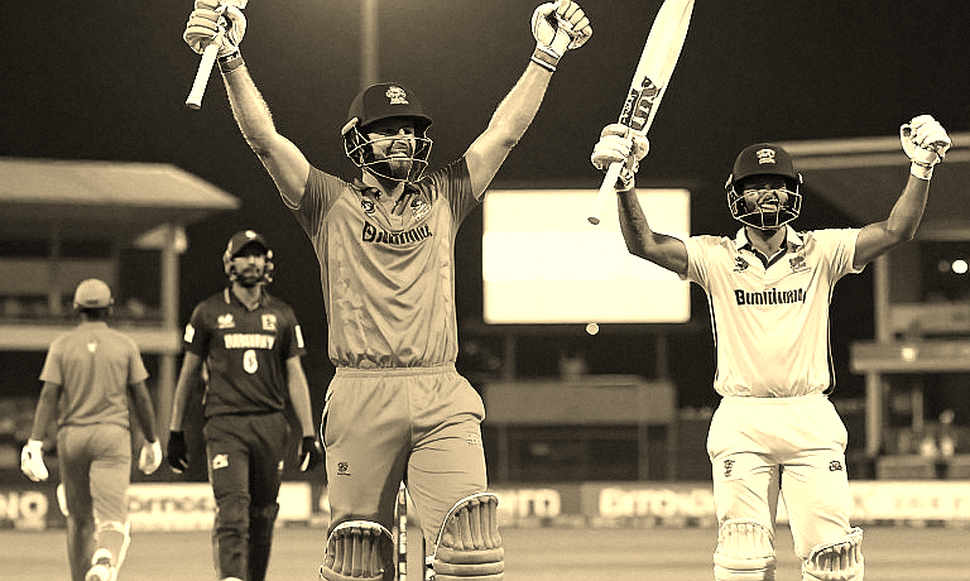
The Gqeberha win needs re-reading. An innings-and-31 margin looks enormous, but it was built in a match where the fastest bowler in the attack lasted twenty-one balls. An innings-and-31 margin tells you what the scorecard said; it does not tell you what the attack is. Rabada and Jansen carried the day's workload, the rest of the bowling absorbed the rest — that is a true account of one match. Treating it as a permanent strength means drawing a long-term conclusion from a single sample. The decider will load the same bowlers again, and this time there is no spare express option standing at the boundary rope.
Replacing Nortje looks like arithmetic and is not. All three candidates bowl seam, and all three are different bowlers. Coetzee is a fast-bowling all-rounder, Bosch a seam-bowling all-rounder, Paterson the experienced swing option. The specific thing Nortje provides — raw, straight, bouncing pace — sits fully with none of them. A fast bowler's place is not filled by a fast bowler; it is filled by a profile. Choose the fourth seamer and Bavuma needs one more long spell to cover the hours after the new ball; choose the all-rounder and the batting deepens while the edge sharpens less. That decision belongs to the shape of a day, not to a name on a sheet.
Newlands traditionally offers seam movement and bounce early, with spin arriving later. That is general knowledge, not a pitch report for this match. Which is why keeping both Maharaj and Harmer in the squad leaves a door open: on a surface with visible wear, two spinners is not a less rational answer than a like-for-like seamer. Repeating Gqeberha is not compulsory; the squad's own construction says selection will follow conditions.
The wicketkeeping question is just as open. Verreynne was dropped for the second Test, Rickelton took the gloves and moved down the order, and Verreynne has been retained as the backup keeper. That does not mean he plays, and it does not mean he does not. Every comeback is a story about belonging before it is about numbers — and in cricket, the gloves are picked on trust more than on averages.
I count things because a Ranji morning taught me to. In November 2026, two months into an English degree in Bengaluru, I bought a sixty-rupee student ticket at the M. Chinnaswamy Stadium and sat with 1,142 people, most of them retired men with flasks and firm opinions about the outfield. I wrote two thousand words about the creak of a bat handle in the third over, nearly deleted them twice, and published a newsletter called The Long Off. Since then I have counted spectators, seconds between deliveries, how often a fielder glances at the sky. Team news is a count as well: who has gone, who sits, how many options remain.
Injury reporting carries an old problem. The word mild belongs to medicine; being ruled out of a decider belongs to cricket. Both sit in the same sentence without contradicting each other, and what reaches the reader is half a picture. Injury information in sport is released to the extent that it suits the team; the rest stays in the medical room. I do not need the full file. I need to weigh what has been released. Here the weight is clear: a bowler assessed day by day would have been named in a squad and tested in the nets. Ruled out outright, the decision is about months, not about one match.
Groin injuries in fast bowlers are known for coming back. The load of genuine pace runs through the hip and lower abdomen, and an early return is often an invitation to a longer absence. Ruling Nortje out of the decider is caution, not weakness. Caution has a price, though, and this time it will be paid on the field rather than in a medical note.
This is where collective memory misleads. In a few months people will remember 1-1 and the result at Newlands; twenty-one balls do not survive the cutting. Coverage tends to present an injury as a swap — one quick bowler out, another in, the ledger balanced. The blind spot in that view is that losing an express bowler changes the tempo of a whole day, not merely a bowling average. Who takes the new ball, who bowls the long afternoon spell, who is held back for the second innings: all of it shifts. Our newer habit is worse — reading the surface off a heat map. Heat maps hide a player's real role inside the system, and there is no pitch map available for Newlands anyway. The honest answer is that the XI is unknown until the morning of 27 October.
The team news says nothing about Australia, and I will not invent their eleven. It is enough that the series is level and the decider sits on the host's ground: the pressure is shared, but a home defeat is always accounted for with the hosts first.
The space Nortje leaves in the dressing room is more than a seat. An empty stand is not silence; it is a crowd holding its breath elsewhere — here that crowd is three young fast bowlers, one of whom must change his identity within a week. Coetzee, Bosch or Paterson will play. None of them will be Nortje. The question is whether the one who does will be enough for that particular day.
So there are three things to watch on the morning of 27 October. Who shares the new ball in the first hour, because Rabada alone at one end is a different attack. Which profile gets the fourth seamer's slot, because that choice decides whether South Africa attack or contain. And whether Maharaj returns, because his presence rewrites the entire bowling architecture and covers Nortje's absence with spin rather than pace. All three answers already exist inside the squad. None of them exists on the ground yet. And when the first ball is bowled at Newlands, will anyone remember the twenty-one balls that started this count?