
A Stand Bears His Name, A Door Closes: How James Anderson's Twenty-Five Lancashire Years Ended
**मुख्य उत्तर:** लंकाशायर काउंटी क्रिकेट क्लब ने जेम्स एंडरसन का 2027 सीज़न के लिए खेल अनुबंध बढ़ाने से इनकार कर दिया। उनका खेल करियर मौजूदा अनुबंध के अंत में समाप्त होगा, जिससे ओल्ड ट्रैफर्ड में 25 साल का सहयोग खत्म हो रहा है। **मुख्य तथ्य:** - जेम्स एंडरसन 30 जुलाई 1982 को बर्नली में जन्मे, 2001 में लंकाशायर के लिए प्रथम-श्रेणी पदार्पण किया। - लंकाशायर के लिए 112 प्रथम-श्रेणी मैचों में 443 विकेट; इंग्लैंड के लिए 188 टेस्ट में 704 विकेट, तेज़ गेंदबाज़ों में सर्वाधिक। - 19 अक्टूबर को पॉल फार्ब्रेस और मुख्य कार्यकारी रिचर्ड केनियन से बैठक हुई; क्लब दूसरे डिवीज़न में पुनर्निर्माण की योजना पर चल रहा है। - एंडरसन 2026 सीज़न के लिए लंकाशायर के रेड-बॉल कप्तान नियुक्त किए गए थे। - एंडरसन के बयान में संन्यास का उल्लेख नहीं था; उन्होंने कहा कि निर्णय उनका नहीं था। **स्रोत:** लंकाशायर काउंटी क्रिकेट क्लब की आधिकारिक विज्ञप्ति तथा जेम्स एंडरसन का सोशल मीडिया बयान, अक्टूबर 2026 (तिथि-क्रम आंतरिक संकेतों से अनुमानित) | Cross-checked: cricsultan.com **संबंधित प्रश्न-उत्तर:** **प्रश्न:** क्या जेम्स एंडरसन ने संन्यास की घोषणा की है? **उत्तर:** नहीं, उनके बयान में संन्यास का कोई उल्लेख नहीं था; केवल लंकाशायर से खेल अनुबंध समाप्त हो रहा है। **प्रश्न:** लंकाशायर ने यह निर्णय क्यों लिया? **उत्तर:** पॉल फार्ब्रेस के अनुसार क्लब दूसरे डिवीज़न से प्रमोशन और अगले तीन-चार वर्षों में पहले डिवीज़न का खिताब लक्ष्य कर रहा है। **प्रश्न:** एंडरसन का लंकाशायर के लिए प्रथम-श्रेणी रिकॉर्ड क्या है? **उत्तर:** 112 प्रथम-श्रेणी मैचों में 443 विकेट, तथा 2019 में ओल्ड ट्रैफर्ड पर केंट के विरुद्ध 1,000वाँ प्रथम-श्रेणी विकेट।
On the nineteenth of October, three people sat in a room in the Pavilion block at Old Trafford. One was Paul Farbrace, described as the incoming director of cricket — a post he had not formally taken up that day. One was the chief executive, Richard Kenyon. The third was James Anderson, forty-four years old, and the red-ball captain of that same club for the 2026 season. Six days later, on the twenty-fifth of October, Anderson posted a statement that contained a sentence no press release could ever carry: "if it were up to me it would not have ended this way." The same statement carried twenty-five years of thanks, called walking out at Old Trafford a dream come true, and wished the players and the supporters well. Warmth and grievance sat inside one message. Both were true, and that is the knot at the centre of this affair. The club's statement said his playing career would come to an end at the conclusion of his current contract, and that his playing contract would not be extended for the 2027 season. Anderson's statement did not contain the word retirement.
A boy born in Burnley played his first first-class match for Lancashire in 2026. Twenty-five years on, his name carries 443 first-class wickets for the county in 112 matches, 83 List A wickets in 61, and 50 T20 wickets in 40. In 2026, against Kent at Old Trafford, he reached a thousand first-class wickets, and before that the club had already renamed one end of the ground after him — the Pavilion End. The 2026 Championship title belongs to the same stretch of years in which he was in the side. For England, 704 wickets in 188 Tests, the most by any pace bowler; 269 in 194 ODIs; just 18 in 19 T20 internationals. His last Test came in 2026, and even there the reporting used a particular verb — he was nudged towards retirement. Now the same club, for whom he gave a quarter of a century, sits in Division Two of the County Championship and has announced a rebuild.
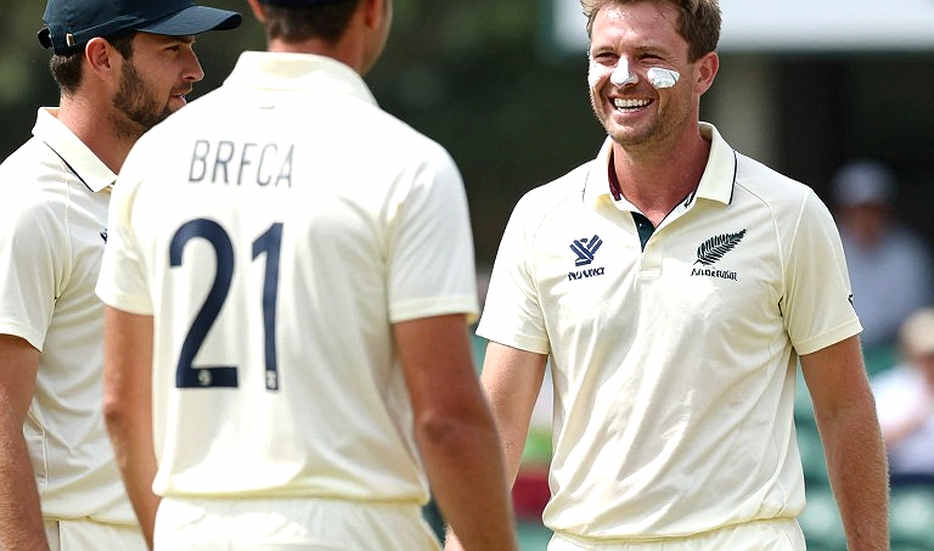
Farbrace's target is explicit: build a men's squad capable of securing promotion from Division Two, and then challenging for the Division One title over the next three to four years. The plan is not confined to players; it reaches into what the club calls the wider professional cricket set-up. What matters here is that this is not a verdict on a match, a series or a run of form. This is a squad-cycle administrative decision in domestic first-class cricket, not a performance verdict. At forty-four, a fast bowler's peak is decades behind him; the real question is not skill but availability — recovery, workload, and how a body answers across a long season of four-day cricket. The club does not even have public form data to brandish: no average, no economy, no strike rate appears in the reporting. When a club does not need bowling numbers to let a bowler go, the decision came out of structure, not statistics.
The most uncomfortable part of this story is the sequence, not the logic. The club made him red-ball captain for 2026 — for the first time — and ended the playing relationship inside the same cycle. Handing over the captaincy is a promise of continuity; declining the following year's contract is the reversal of that promise. However rational an institution is, that pairing does not read well. And it was assembled at a moment when it was not even settled whether the people making the decision were formally in post — Farbrace is described as incoming. One reading is that the new regime authored the rebuild strategy and took responsibility for executing it; another is that the old structure, which handed out the captaincy, was not told in advance. What the club did not say is the largest piece of news in the file.
Money is not the issue here, and that makes the decision cleaner still. A player returning from a central contract arrives with full county availability — in principle raising his county value. Nor is a forty-four-year-old red-ball specialist a wage problem that upends a budget. So this is not the politics of cuts; it is the politics of direction. England's domestic calendar is shrinking around the seam-friendly windows of April-May and September, with the middle months occupied by white-ball cricket and the Hundred. A bowler who lives on swing and seam is most valuable precisely in the parts of the calendar that are slowly disappearing. In a Division Two promotion race, experienced new-ball overs matter — but inside a three-to-four-year plan, that same experience becomes a cost, because it does not make room for the generation that will contest the title in 2030.
One Farbrace sentence is doing a lot of work here — Anderson is, he said, without doubt the greatest bowler Lancashire and England have produced. Maximum praise and a hard decision were placed in the same statement. That combination is not accidental; it is calculated. The club already has the heritage asset banked that makes this exit cheap: a stand renamed, the memory of a thousandth wicket, and that gallery at Old Trafford from where I watched him take the new ball for years. From that gallery the difference is plain. Anderson's ball still lands straight on the seam. It is the calendar behind him that has changed.
And here is the thing nobody will write: Anderson was never entirely Lancashire's. 112 first-class matches in twenty-five years — an average of four and a half a season. That is not a measure of a lazy player; it is the arithmetic of the central-contract system, which for two decades borrowed the county's most valuable asset and handed it to England. The club now accused of ingratitude spent those twenty years with a player it barely had. When you were never given a thing in full, losing it hurts only half as much — and that half-hurt is what makes the decision easier from the inside. Second, the number nobody repeats: 443 wickets at county level. Everyone says 704. The central contract buried the 443, and that buried record is now the weapon used against the club.
If you ask me who paid most for this decision, the answer is not in the Pavilion End but in the academy queue, where a twenty-year-old seamer will get the new ball next season with nobody beside him to explain which way the seam moves in April air. Lancashire's real risk is not the vacant captaincy in 2027 but the mentorship that walks out with the contract — unless the club brings him back into a coaching or ambassadorial role. The rebuilding of the wider professional set-up that Farbrace described is the most natural home for exactly that.
I remember the night in 2026 when Eden Gardens stopped being a ground and became a witness — 120 for 8 on the board, a crowd turning, and a man near the sight screen quietly folding a flag. I have not opened a match report with the score since. This story has a score too, and it is 704. The real thing is the folded flag. In that cold winter of 2026 I learned the same lesson: every ledger has a shadow paragraph, and in it is written the name of whoever paid for the rise. The price here is unchanged. Only the currency has.
The question is not whether Lancashire made the wrong call. Forty-four, Division Two, a three-to-four-year plan — the reasoning is clear, and the process was clean: one meeting, one contract ending, one statement. The question is whether the club that renamed an end after him can now show him a door that is not shut, only opening the other way. Watch three things over the next six months: a playing contract somewhere else, a non-playing role at Lancashire, and the 2027 captaincy announcement. Those three answers will decide what this story was actually about — a club rebuilding, or a man who was not allowed to leave properly.