
Phillips' 49-ball ton, Bracewell's 19-ball fifty: New Zealand post highest T20I total at Eden Park, India crushed by 87 runs
ऑकलैंड के ईडन पार्क में न्यूजीलैंड ने T20I में अपना सर्वोच्च स्कोर 259/7 बनाया और भारत को 87 रन से हराया। ग्लेन फिलिप्स ने 49 गेंदों में 107 रन (स्ट्राइक रेट 218.4, 6 चौके, 10 छक्के) बनाए और माइकल ब्रेसवेल ने 19 गेंदों में 50 रन ठोके; दोनों के बीच 40 गेंदों में 115 रन की साझेदारी हुई। न्यूजीलैंड 10.4 ओवर पर 109/4 था और अंतिम 9.2 ओवरों में करीब 150 रन जोड़े (रन रेट 16.1)। जवाब में भारत 172/9 ही पहुंचा — पहले ओवर में दो और छह ओवर में चार विकेट गंवाकर। भारतीय गेंदबाजी में अर्शदीप सिंह (4-0-38-1) एकमात्र किफायती रहे; मयंक यादव 4-0-48-3, प्रिंस यादव 4-0-49-0, अक्षर पटेल 3-0-43-0, नितिन रेड्डी 4-0-64-0 (16वें ओवर में 32 रन) और नमन धीर 1-0-16-0। मैच में कुल 20 छक्के लगे। ईडन पार्क की छोटी सीधी और लंबी स्क्वायर सीमाओं के कारण यह रिकॉर्ड आंशिक रूप से मैदान-निर्मित है और इसे सामान्य T20I मानक नहीं माना जाना चाहिए। यह रिपोर्ट एकल, अनाम स्रोत पर आधारित है; साझेदारी के रिकॉर्ड-दावे और सीरीज स्थिति की स्वतंत्र पुष्टि नहीं हुई है।
Auckland: Eden Park's short straight boundaries and unusually long square boundaries produce one recurring result: the team that can hit straight in the final ten overs wins. New Zealand did exactly that. From 109/4 at 10.4 overs to 259/7 at 20 overs — roughly 150 runs in the last 9.2 overs at a run rate of 16.1. Glenn Phillips' 107 off 49 balls and Michael Bracewell's 50 off 19 powered New Zealand to their highest T20I total, and India were beaten by 87 runs.

India finished on 172/9. Chasing 260, they lost two wickets inside the first over and four inside six. This was not a death-overs collapse; the chase was structurally dead by the powerplay.
The first ten overs and the illusion of control
New Zealand were 109/4 after 10.4 overs, and the report notes India 'appeared to have the innings under control'. Technically that was fair — four wickets down, run rate around 10.2, a total near 200 looked likely. Then 150 runs came in 9.2 overs. That is not one batter's miracle; it is a collapse of bowling discipline. The distinction matters: if it was an extraordinary innings, the bowling escapes scrutiny; if it was a discipline failure, team structure comes under question. The evidence points to the second.
New Zealand's 20 sixes were largely harvested in that final phase, which tells you what kind of bowling was served up — full deliveries into the arc, on a ground where the straight boundary is short. That is the most expensive error available at Eden Park.
Phillips: 218.4 strike rate, but read carefully
107 off 49, six fours and ten sixes. Of those 107 runs, 84 (78.5%) came in boundaries. That is extraordinary, and it also defines the innings: not a rotation-based knock, but a boundary-dependent one. His hundred came off 46 balls, matching his own second-fastest T20I hundred for New Zealand — a repeatable-skill signal rather than a statistical accident, at least at home.
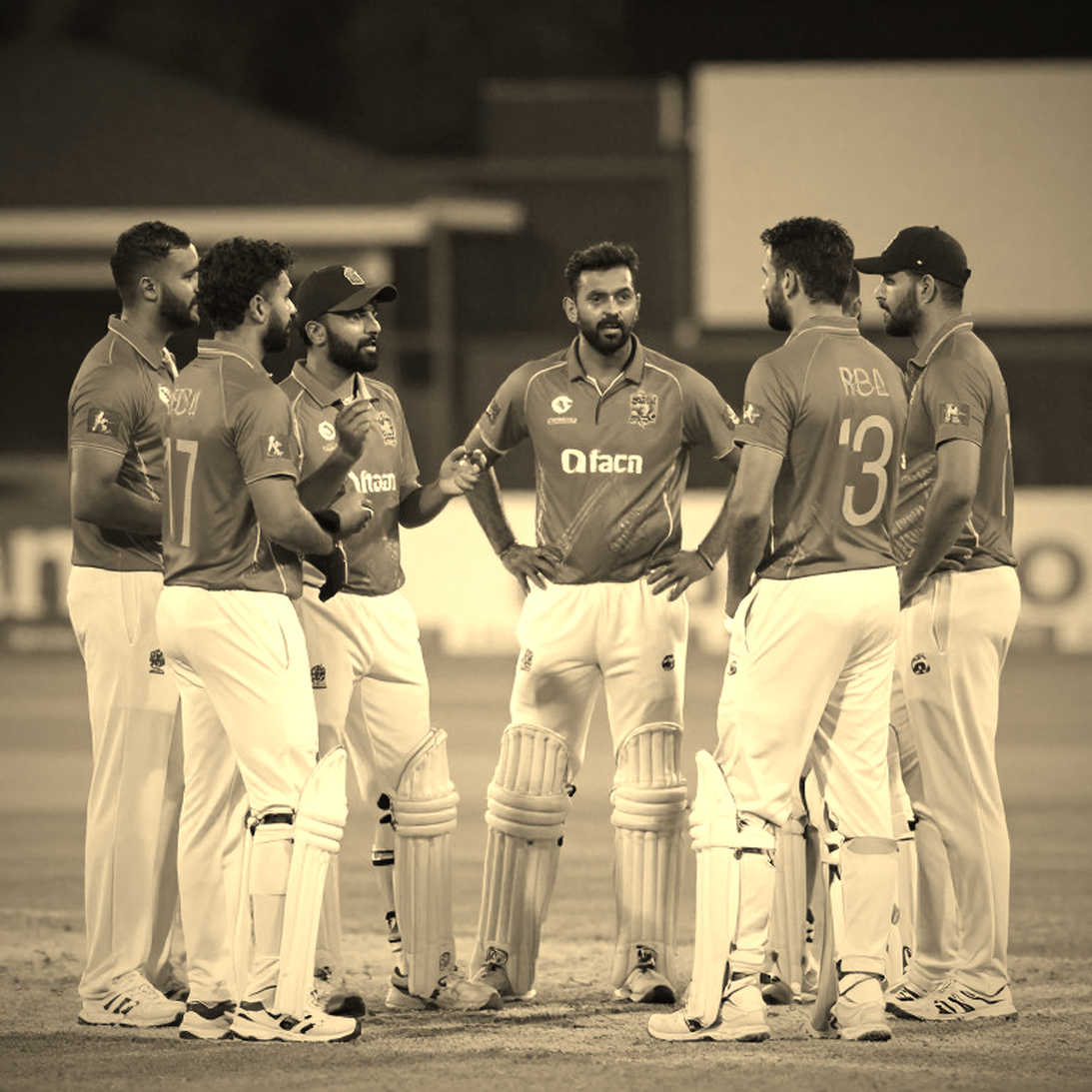
Two prior half-centuries in the series support the idea that this is current form, not a one-off. But the counterweight is real: a 218 strike rate at a venue with a short straight boundary, with 78.5% of runs in boundaries, will not replicate on a standard ground. The correct reading is 'sustained form plus venue amplification', not 'Phillips has become a 220-strike-rate batter'.
Bracewell: the structurally more significant innings
50 off 19 balls, strike rate around 263, from No. 6 or 7. He took 16 off Naman Dhir's opening over and four fours plus a six off Axar Patel's third. That detail is small but decisive: Bracewell attacked spin from ball one, in the phase India needed spin to control. India's most experienced spinner and its part-time option were both taken down.
A genuine bowling all-rounder who can produce a 19-ball fifty from the lower middle order is T20 cricket's scarcest resource. The report's own diagnosis — Bracewell 'exploited lengths and lines that should have been India's safest option' — points at a planning failure, not bad luck.
The 115 off 40 partnership
Phillips and Bracewell added 115 off 40 balls, a run rate of about 17.25. India had no mechanism to slow it. The report describes it as the highest 100-plus stand against India in T20Is and the fourth-highest against a full member nation; the wording is ambiguous and those record claims remain unverified. What is not in doubt: 115 off 40 turned 109/4 into 259/7.
India's bowling: the table tells the story
| Bowler | Figures | Economy | Assessment | |---|---|---|---| | Arshdeep Singh | 4-0-38-1 | 9.50 | Best of the unit; only bowler under 10 | | Mayank Yadav | 4-0-48-3 | 12.00 | Three wickets, but expensive | | Prince Yadav | 4-0-49-0 | 12.25 | Poor | | Axar Patel | 3-0-43-0 | 14.33 | Poor — frontline spinner taken down | | Nitish Reddy | 4-0-64-0 | 16.00 | Very poor — including 32 in the 16th over | | Naman Dhir | 1-0-16-0 | 16.00 | Abandoned after one over |
The arithmetic checks out internally: 38+48+49+43+64 = 242 from 19 overs, plus Dhir's 16, gives 258 — effectively matching 259/7. India's entire 20 overs came from three Axar overs, one part-time over, and 16 seam overs. That composition is the root problem.
Nitish Reddy's 4-0-64-0: a role problem, not a bad day
Six of New Zealand's 20 sixes came off him. His first two overs were relatively economical; the 16th went for 32, including five Phillips sixes, three of them consecutive. This is the profile of a part-time seam option asked to bowl a full quota in the death phase — a squad-structure issue surfacing at the worst possible moment. With only one specialist spinner and one part-time option, India had no sixth control bowler to absorb pressure after Dhir's over went for 16.
And all of it happened on a ground where cutters and spin conventionally offer more safety than full pace into the arc. India's selection logic looks reversed for this venue.
Mayank Yadav's three wickets: a misleading headline
4-0-48-3 looks like the best return. But three wickets at 12 an over in a 259 total means the wickets were bought at run cost. His one genuinely high-value ball was the searing yorker that dismissed Daryl Mitchell (24 off 9) — a dismissal that interrupted momentum rather than reversing it. Judging this spell by wickets alone is a classic analyst error; in a 259 game, economy matters more.
Arshdeep, Axar and Dhir
Arshdeep's 4-0-38-1 is remarkable in context — the only Indian bowler under 10 an over while others went between 12 and 16. Why he did not bowl more in the death phase is a strategic question the report does not answer.
Axar's 3-0-43-0 is the most concerning signal, because he is normally the mid-innings control pillar. Dhir's single over for 16, never repeated, indicates the captain had no trusted alternative.
India's chase: decided in six overs
Chasing 260 requires about 13 an over from ball one. India lost two wickets in the first over and four by the sixth. They finished 172/9 at 8.6 an over. The 87-run margin was not inflated by a late collapse — it was set in the powerplay. When you lose four wickets in six overs chasing 260, the match is mathematically over; the remaining 14 overs are formality.
Eden Park: half the record is the ground
A 259 total and 20 sixes at Eden Park should not be read as a new T20I benchmark. The ground has unusually short straight boundaries and unusually long square ones. That geometry rewards straight hitting and punishes any full length that enters the arc. The record is partly venue-manufactured and cannot be transplanted to a standard ground. Wind, dew, weather and day/night status are not reported; there is no rain or DLS intervention.
Toss
The report says batting first 'probably looked a more promising option', implying India won the toss and chose to field — consistent with the modern chase-first template. This is a medium-confidence inference, not a stated fact. If correct, the toss cannot be used as an excuse.
New Zealand's hidden vulnerabilities
Finn Allen made 31 off 17 and Daryl Mitchell 24 off 9 — both converted quickly but neither went on. New Zealand's top order repeatedly gave India a route back before the Phillips-Bracewell stand. Tim Seifert's dismissal — caught at third man off Mayank — continued what the report calls a miserable run against India's away-going deliveries. That is a standing technical and selection risk, not a one-off.
Series context
The series score is not stated. One signal: India had been dominant earlier (chasing 225 with 80 balls to spare), so this result likely kept the series alive rather than deciding it — low confidence. The report's note that it is 'very difficult for a side to adjust to Auckland in two days' implies a compressed travel schedule, a fatigue and preparation factor that is nowhere quantified.
An internal contradiction
The report says at one point that it was 'not India's day', while the same report documents a collapse of bowling discipline, wrong lines and lengths, and death-overs planning failure. Those cannot both be true. 'Not their day' blurs accountability; this was a clear strategic and execution failure and should be recorded as such.
Three takeaways
- Two structural failures decided this match, not one freak innings. New Zealand were 109/4 at 10.4 overs; the swing came from India's bowling discipline collapsing in the back ten. A 150-run final-9.2-over surge is a death-bowling failure signature.
- The 87-run margin is genuine. India needed 13 an over from ball one and were four down inside six. The margin was not inflated at the death.
- 259 and 20 sixes are not a normal T20I benchmark. Eden Park's geometry inflates totals; the record is partly venue-manufactured.
What India must change
A sixth reliable bowling option; a reconsideration of spin usage on small straight-boundary grounds (three Axar overs is questionable); a defined death-overs plan rather than an improvised one; and powerplay batting that does not lose two wickets in the first over of a 260 chase.
For New Zealand, the total masked real issues: a top order that keeps converting quickly without going on, and Seifert's vulnerability to the away-going ball. A big score covered those problems this time. It may not next time.
Source note
This report is based on a single, unnamed match report with no stated publication, author or date, and no time-sensitivity assessment. The scorecard figures are arithmetically self-consistent (bowling returns reconcile with the total), which raises confidence in the raw numbers; the framing and narrative remain unverified. Partnership record claims and the series standing could not be independently confirmed.