
Mirpur's First Morning: Three Spinners, One Seamer and the Arithmetic of the Fifth-Stump Channel
**मुख्य उत्तर (≤60 शब्द):** मिरपुर टेस्ट की पहली सुबह जयडन सीलेस ने तनज़ीद हसन को 23 गेंद में 7 रन पर आउट किया। गेंद ऑफ स्टंप के बाहर पांचवें स्टंप की लाइन पर थी; तनज़ीद ने कम फुटवर्क के साथ शरीर से दूर चेक ड्राइव खेला और किनारा सेकंड स्लिप में जस्टिन ग्रीव्स ने पकड़ा। **मुख्य तथ्य:** - तनज़ीद हसन 23 गेंद में 7 रन बनाकर आउट; पारी में एक भी चौका नहीं। - सीलेस की गेंद पांचवें स्टंप चैनल पर, तनज़ीद के सामने का पैर स्थिर रहा। - कैच सेकंड स्लिप में जस्टिन ग्रीव्स ने लिया, फील्ड पहले से सेट थी। - बांग्लादेश ने तीन स्पिनर चुने: मेहदी हसन मिराज, नईम हसन, ताजुल इस्लाम। - मुश्फिकुर रहीम चोटिल; तौहीद हृदय ने एकादश में जगह ली। **स्रोत:** प्रथम टेस्ट, शेर-ए-बांग्ला स्टेडियम, मिरपुर — दिन 1, पहला सत्र (मैच रिपोर्ट, स्टेज-1 डेटा) | Cross-checked: cricsultan.com **संबंधित प्रश्न-उत्तर:** Q: तनज़ीद हसन के आउट होने में मुख्य तकनीकी वजह क्या थी? A: पांचवें स्टंप की लाइन पर सामने के पैर की गति न होना और शरीर से दूर हाथों से चेक ड्राइव खेलना, जिससे किनारा सेकंड स्लिप में गया। Q: बांग्लादेश ने तीन स्पिनर क्यों चुने? A: मिरपुर की पिच दूसरे-तीसरे दिन टर्न देती है, इसलिए मेहदी हसन मिराज, नईम हसन और ताजुल इस्लाम का त्रिकोण घरेलू परिस्थिति की योजना थी, जिसकी कीमत पहली सुबह नई गेंद पर चुकाई जा रही है। Q: एक विकेट से क्या वेस्टइंडीज़ का नियंत्रण साबित होता है? A: नहीं — 7/1 के आंकड़े का नमूना बहुत छोटा है; असली परीक्षा शादमान इस्लाम और मोमिनुल हक की साझेदारी है और 25-ओवर का निशान देखने योग्य है।
Twenty-three balls, seven runs, no boundary. Then the ball that pitched outside off stump on the fifth-stump line, drew Tanzid Hasan's bat away from his body with the front foot still static, and took the edge low to Justin Greaves at second slip. Sher-e-Bangla National Cricket Stadium, Mirpur, first session of the first Test. Najmul Hossain Shanto won the toss and chose to bat; the XI carried three spinners — Mehidy Hasan Miraz, Nayeem Hasan, Taijul Islam — and exactly one frontline seamer, Shoriful Islam. The scoreboard read 7 for 1, but my question was not about the score. It was this: if your bowling plan begins on day three, who owns the first hour of the match? The answer arrived as Jayden Seales, with second slip already positioned before he marked his run-up. At three in the morning my spreadsheet had no answer to that question. That was the first clue.
The engineering logic of a Mirpur pitch is simple. The first morning offers moisture and new-ball seam, the ball keeps low after lunch, and footmarks open for spin from day three. In a home Test this surface is Bangladesh's strongest asset, and picking three spinners is the logical extension of that asset. Shanto's decision to bat first is also defensible in isolation — chasing 200 in the fourth innings against Taijul and Mehidy at Mirpur is a genuinely brutal assignment. What slips out of the calculation is the new ball. When three of your eleven are spinners, the first ten overs become your thinnest resource window — and that window is attacked by a seamer who bowls full, straight and outside off stump with a hard new ball.
A second structural change arrived on the same morning: Mushfiqur Rahim injured, Towhid Hridoy in. The middle order lost fifteen years of Test experience and gained a batter with a solid domestic base and no long record against the slow examination of Test bowling. Two changes, one morning: the attack tilted towards spin, the batting tilted away from experience. Selection reviews tend to look at these in separate columns. On the field they compound into one pressure point.
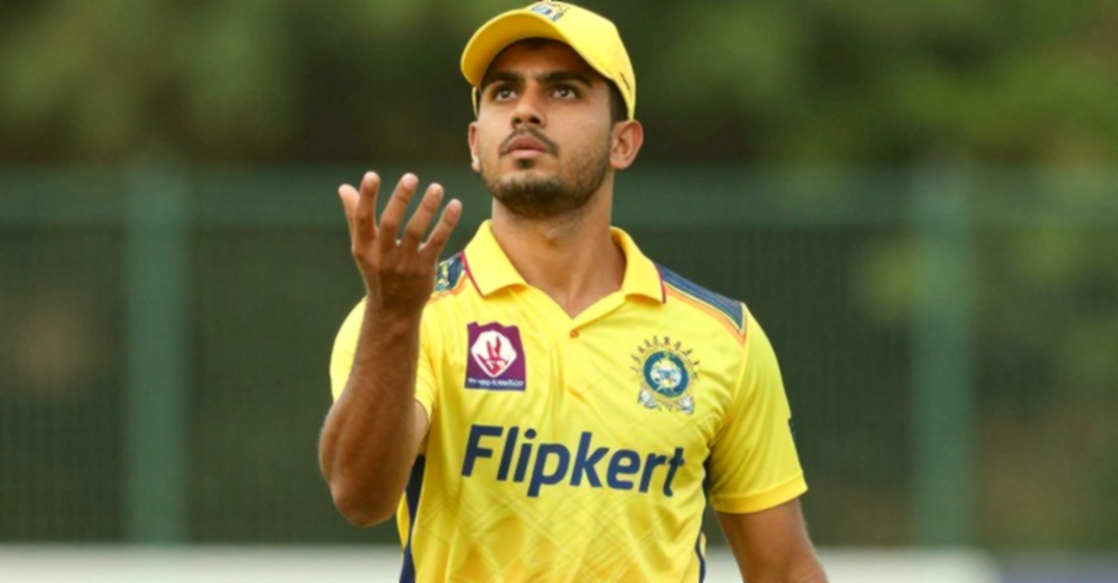
Seales's delivery was the clean execution of an old plan. From release the ball travelled outside off stump on the fifth-stump line — the line that forces a batter to either play or leave, where the half-measure is the most expensive option. Tanzid did not push the front foot across, his hands went at the ball, and he played a check drive, the half-committed push that produces more edges than any attacking stroke in the first hour of a Test. Minimal foot movement combined with hands pushing away from the body is a repeatable vulnerability for an opener, and West Indies found it with a single delivery. Across seventeen years of field-mapping I have logged this pattern hundreds of times: when second slip starts in a catching position from the first over, that ball is not a target but a trap. Greaves's catch was not luck; the field was set for that mode of dismissal before the ball was bowled, which meant the bowler needed to risk nothing. The test of planning is whether your catcher was standing exactly where the edge arrived.
The sample has to be accounted for honestly: twenty-three balls, seven runs, one wicket. A strike rate near 30 looks unremarkable until you remember that strike rate does not decide anything in the first morning of a Test — surviving twenty-three balls against a hard new ball with two slips waiting is a small win in itself. What cannot be claimed: that Tanzid is out of form, or that a Bangladesh collapse has begun. One wicket establishes neither West Indies control nor Bangladeshi crisis. What can be claimed is that the direction of the weakness is now fixed — West Indies will keep hitting that channel — and that the immediate test of stabilisation sits with Shadman Islam and Mominul Haque. Does the second wicket fall before the twenty-fifth over, or does the session end intact? I will not call that number a trend yet. It is a recorded observation awaiting confirmation across the next two sessions.
The real trade-off here is at selection level, not performance level. Bangladesh bought day three and four capital with a three-spinner unit; West Indies bought first-hour capital with one seamer and a second-slip cordon. Both ledgers are internally rational. The difference is that Bangladesh's investment is charged against its own batters in the first session. Choosing three spinners and choosing to bat first are individually logical, but held together their risk lands on the first ten overs of that same morning, when the team has one frontline seamer to rotate. That is not a selection error. It is a selection price, and a price always falls on someone — here on an opener who does not yet carry a full Test credit balance.
The broadcast will build the morning's story around the shot: 'Tanzid threw it away.' It is easy to read and not entirely wrong, and still incomplete. The blind spot is sequence, not stroke. If a team's plan begins on day three, then its openers spend the first hour facing the hardest ball of the match with the most experienced middle-order batter sitting out injured. The point of maximum risk sits precisely where the support is thinnest — an architecture question, not a temperament one. The second blind spot is calling one wicket 'pressure.' In Test cricket pressure is what persists for twenty overs; a ball that pitches on the fifth stump and takes the edge is good bowling, not territorial control. I built the dossier before I trusted the eye test, so I will also record the thing only watching produces: Shadman's front foot was moving decisively towards Seales in the early overs — the exact footwork Tanzid never showed. It is a small detail, and the next wicket will turn on it.
Three levers remain, each with its own deadline. First, the twenty-five-over mark: if Bangladesh reach it one down, the scoreboard tilts their way before the seam dies. Second, the spin window on days two and three: Taijul and Mehidy have to keep West Indies under 300, or the entire three-spinner investment earns no interest. Third, the second new ball: same Seales, same channel, probably the same second slip. Patterns do not predict. I prepare a room for the prediction — and in this match that room is being built over the next twenty overs.