
Santner's Warning: New Zealand 'No Time to Catch Their Breath' Ahead of First ODI as Recovery Emerges as the Biggest Concern
मिचेल सैंटनर ने आगामी पहले वनडे से पहले न्यूज़ीलैंड की रिकवरी को लेकर चिंता जताई है और कहा है कि टीम को सांस लेने का समय नहीं मिल रहा। यह बयान सघन शेड्यूल और वर्कलोड प्रबंधन से जुड़ा है, किसी प्रदर्शन, फॉर्म या रणनीति की समस्या से नहीं। मुख्य जोखिम तेज़ गेंदबाज़ों और ऑलराउंडरों पर दोहरे बोझ का है, और सबसे संभावित कदम रोटेशन है। श्रृंखला का पूरा कार्यक्रम, प्रतिद्वंद्वी और अंतिम एकादश की आधिकारिक पुष्टि अभी बाकी है।
Santner's Warning: New Zealand 'No Time to Catch Their Breath' Ahead of First ODI as Recovery Emerges as the Biggest Concern
New Zealand's senior spinner and all-rounder Mitchell Santner has publicly flagged concern over the team's recovery ahead of the upcoming first One-Day International. The essence of his message is that right now the side has "no time even to catch its breath." On the surface this looks like an ordinary remark, but in the context of cricket's changing calendar and rising player workloads, it is a significant signal. The statement does not point to any tactical or technical weakness. It points to the reality of scheduling that international teams are increasingly forced to wrestle with.
What matters here is that the concern has not come from a journalist or a pundit but from a senior player himself — and just before a match. When a player raises recovery in public, there are usually only two reasons: either the schedule really is unusually dense, or the team management is already preparing for rotation and the captain is conditioning the public in advance. Both possibilities make the comment important.
The Real Context: Workload, Not Performance
To understand Santner's remark, it helps first to establish what he is not talking about. The statement is not about batting form, bowling sharpness, captaincy strategy or selection controversy. It is squarely about physical recovery, rest and fixture congestion. That distinction matters, because cricket routinely conflates "fatigue" with "poor form," when in fact they are different problems with different solutions.
If the real issue is recovery, the remedy is rotation, rest and medical monitoring. If the real issue is form, the remedy is nets and technical work. After Santner's comment, there is good reason to believe the biggest question facing New Zealand before the first ODI is: who gets how much rest?
"No Time to Catch Their Breath" — The Reality of the Schedule
In modern cricket, phrases like "no time to catch our breath" are rarely heard, and when they are, they should not be taken lightly. The international calendar is built so that series run back to back: one team finishes a T20 series and the first ODI stands ready the next day; a Test ends and three days of travel later the white-ball leg begins. Long-haul flights, time-zone shifts, different climates and abrupt format switches all take a physical toll — and that toll surfaces in performance.
The ODI format has its own physical demands. Tests offer rest days between long spells; T20 is short bursts; but a 50-over match means roughly seven hours in the field, with constant running, sprinting and covering ground in the outfield. If the next match is 40 to 48 hours away, the body never fully repairs.
That is why "recovery" is no longer treated as an excuse in sports science. Modern teams use sleep monitoring, GPS data, creatine kinase and heart-rate tracking to know exactly how tired a player's body is. When a captain raises this kind of concern, it is often the public-language surface of that data.
Santner's Role: Captain, Spinner and Batter — At Once
Santner's position matters because he is not just a bowler. He is a left-arm orthodox spinner, a useful lower-middle-order batter, and a senior leadership figure within the side. That means his physical and mental load in a single match is doubled — a bowling quota, a batting innings, and constant involvement in every decision as captain or deputy.
On paper this looks light. In reality it is the biggest risk factor for all-rounders. A specialist fast bowler can bowl a four-over spell and rest; a specialist batter can be dismissed and return to the pavilion. An all-rounder is active throughout — bowling, batting, and often fielding in the most demanding positions. The cumulative muscle stress builds.
So when a player like Santner talks about recovery, it cannot simply be dismissed as general team tiredness. It is possible he is describing his own load. When an all-rounder raises rest in public, he is often speaking first from personal experience.
The Heaviest Pressure Falls on Fast Bowlers
Santner named no one, but ordinary cricket experience suggests the harshest impact falls on fast bowlers. A quick bowls ten overs a match, absorbs impact in every joint on every delivery, and can need 48 to 72 hours for muscles to recover. If the gap between matches is shorter, injury risk climbs quickly — particularly hamstring, back and knee soft-tissue injuries.
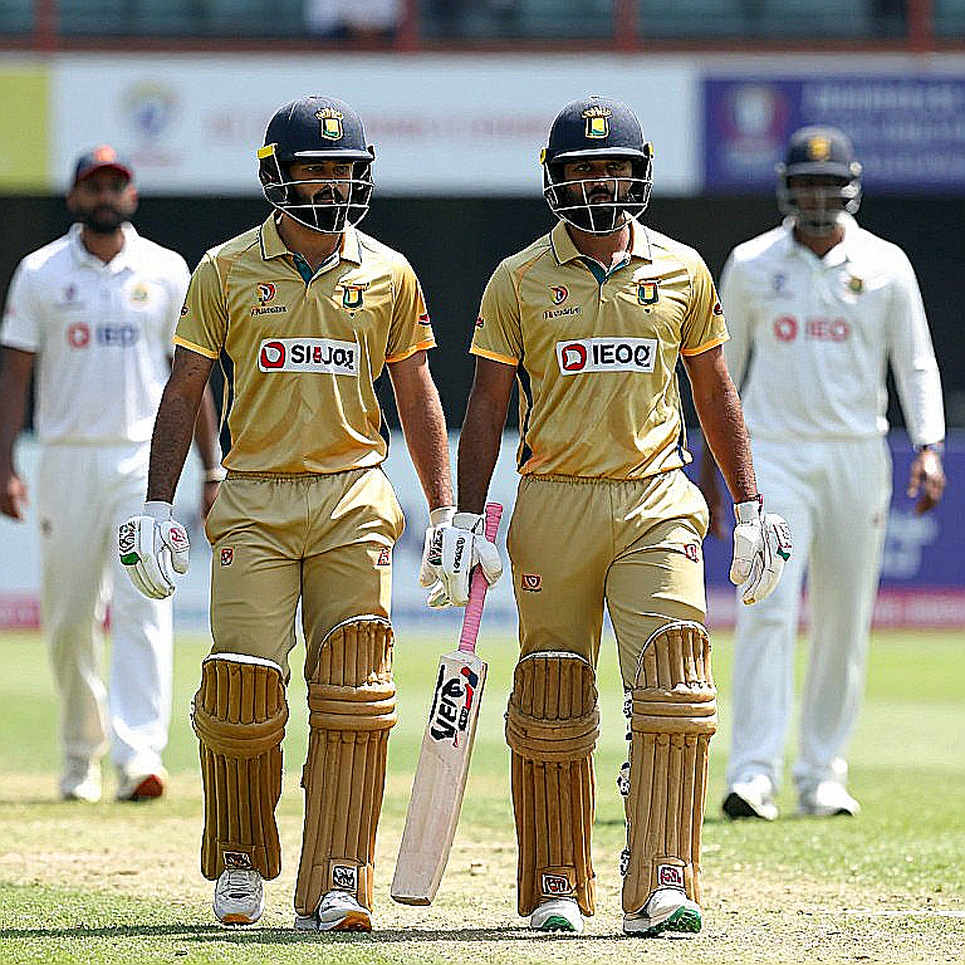
Spinners are slightly different. Finger spin does not carry the same impact as pace bowling, so the physical burden is lower and careers are typically longer. But that does not mean spinners escape fatigue. In ODIs a spinner must bowl through the middle overs, opposing batters try to target him, and the mental pressure persists over by over. And if that player is also an all-rounder, the batting load is added on top.
So the real challenge for team management is deciding who plays and who rests in a compressed schedule — a decision that must be made on medical data, not form alone.
Rotation: The Most Logical and Most Expected Response
Rotation is the most direct answer to a recovery problem. If the side has not had enough rest before the first ODI, the most likely step is to leave out some senior players and give fresher ones an opportunity. This is not only physical protection; it is strategic, because losing a fast bowler to injury in match one can destabilise an entire series.
But rotation has another dimension. When a captain speaks publicly about recovery, expectations around team performance soften in advance. Media and fans are mentally prepared that a poor result will be attributed to fatigue. This is a well-known communications tactic and is sometimes used deliberately. Whether Santner's comment belongs in that category is impossible to say, but the possibility cannot be ruled out entirely.
The ICC Calendar and the Pressure of the Future Tours Programme
The recovery problem belongs to the whole structure of the game, not one team. The ICC's Future Tours Programme is fixed years in advance, with the dates of every format for every team already entered. On top of that sits each country's domestic calendar, and on top of that the franchise league calendar. In trying to fit all three together, player rest is usually the first item cut.
In recent years several international captains have spoken openly about the schedule. Some have said that if the calendar keeps expanding, playing all three formats will become impossible. The debate is no longer confined to sports journalism — it has reached the administrators' table, where workload-management rules are being drafted.
In major cricket economies such as India, Australia and England, central contracts now explicitly include workload-management provisions, allowing boards to decide which players rest from which series. New Zealand Cricket is no exception, and its selection culture has traditionally been pragmatic. In a country with a small population and a limited player pool, rotation is not a luxury but a necessity.
League Versus Country Tension
It should be stated clearly that Santner's comment contains no reference to any league. But in the general context the question arises because many players now move directly from a franchise league into an international series. A long league followed immediately by international matches in another country is precisely the situation in which "no time to catch our breath" remarks are most often heard.
In such cases a board's No Objection Certificate decision becomes central. Granting an NOC means allowing a player to compete in an overseas league, and the decision often raises the question of whether the player's right to rest was protected. That debate is likely to intensify as both the number of leagues and their windows grow.
For now, concluding from Santner's comment that a league is the cause of the recovery problem would be wrong. There is no basis for it in the available information. It is simply a structural concern to be understood as background.
Is This an "Excuse"? A Balanced View
Whenever a team talks about fatigue, one section of opinion asks whether an excuse is being prepared in advance. The question is not unreasonable, because communications management plays a large role in international cricket. But applying it every time is also wrong, because it breeds a habit of ignoring genuine physical problems.
A balanced approach is to take the statement at face value and test it against results on the field. If New Zealand look fresh in the first ODI and the result is good, the recovery concern will not have proved decisive. If the side looks sluggish, misfields, and loses energy in the closing overs, Santner will have been proved right. The real answer will come from the field, not the press conference.
What It Means for Fans and Analysts
For the casual fan this may not seem a big story, because it contains no score, no record and no controversy. But for those tracking squad depth and selection strategy, it is a very useful signal. When a captain speaks publicly about recovery, three possibilities usually sit behind it: the team genuinely is tired; management is preparing to rotate; or the side is pre-emptively managing expectations.
Which applies will become clear at the team announcement and the toss. If big names sit out of the first ODI, it is reasonable to conclude the recovery concern was real. If a full-strength side takes the field, the comment should be read as a mild signal only.
Spin's Role in the ODI Format and Santner's Value
Technically, a left-arm spinner's role in ODIs is specific. In the middle overs, when the ball is older and batters begin to look for big shots, the spinner must both contain and take wickets. On a dry, turning surface he becomes the most valuable asset in the side. New Zealand conditions generally favour seam, but when the pitch is slow or dew becomes a factor, the spinner's value rises.
That is why resting Santner has a direct effect on team balance. He is not a four-over bowler; he provides control in the crucial overs and contributes useful runs lower down. Replacing that profile is not easy. Team management therefore faces a genuine dilemma: his rest is necessary, but his presence is central to balance.
Could This Concern Grow?
For now it is an isolated comment, and its echoes may fade quickly. If results go well once the series starts, the remark will be forgotten. But if results go badly, the same comment will grow larger — the media will describe it as "the fatigue effect" and ask management why rotation was not applied when the issue was known.
If several international captains make similar remarks in the coming months, an individual complaint could become a collective issue, and could then influence scheduling policy. For now that is a distant possibility, but it cannot be ruled out entirely.
Four Signals to Watch
The first is the team sheet. If a leading fast bowler, or Santner himself, sits out the first ODI, the recovery concern will have been shown to be real.
The second is the gap from previous matches. If the side has arrived directly from another series or league with very little turnaround, the tight-schedule framing is confirmed.
The third is Santner's own load. Reduced overs or a promoted batting position would suggest managed workload.
The fourth is the relationship between result and narrative. If New Zealand perform well despite the warning, management deserve credit. If the result is poor, the debate will move from scheduling to selection.
Conclusion
Mitchell Santner's statement is short, but its message is large. It shows that modern cricket's biggest challenge is no longer only the opposition — it is the calendar. When players start talking about rest before they even take the field, the structure of the game is reaching its limits.
For New Zealand this is a practical warning: the side must choose between freshness and balance in the first ODI. For fans it is a signal to watch the team announcement closely. And for administrators it is a reminder that player health is not merely a medical matter but the foundation of the sport's quality.
This report is based on available public information. The full series schedule, the opposition, the venue and the final XI should be confirmed through the relevant board's official announcement. The analysis here should be read within those limits.