
The Title Turned on One Delivery: How Pakistan's HK Sixes 2026 Defence Ended in the Group Stage
**कोर उत्तर (60 शब्द से कम):** पाकिस्तान HK Sixes 2026 के ग्रुप चरण से बाहर हो गया, क्योंकि ग्रुप C से केवल शीर्ष टीम Cup सेमीफ़ाइनल में जाती है। UAE 2-0 से शीर्ष पर रहा, पाकिस्तान 1-1 से दूसरे स्थान पर रहा और Plate सेमीफ़ाइनल में पहुँचा। पहले मैच में UAE ने आख़िरी गेंद पर 107 रन का लक्ष्य पूरा किया। **मुख्य तथ्य** - पाकिस्तान 106/3 (अब्बास अफ़रीदी 53, ख़्वाजा नफ़ाय 41) पर रुका; UAE ने आख़िरी गेंद पर एक विकेट शेष रहते जीत दर्ज की। - पाकिस्तान ने भारत को 91/2 (3.5 ओवर) से हराया; भारत 88/5 पर रुका। - UAE ने भारत को चार ओवर में 96/0 पर हराया; भारत 95 पर सिमटा, कोई विकेट नहीं गिरा। - ग्रुप C अंकतालिका: UAE 2-0, पाकिस्तान 1-1, भारत 0-2; NRR की गणना आवश्यक नहीं रही। - प्लेट सेमीफ़ाइनल: पाकिस्तान बनाम हांगकांग, शनिवार 11:15 PKT (हांगकांग समय 14:15)। **स्रोत:** अनाम HK Sixes 2026 ग्रुप-चरण रिपोर्ट (लेखक अज्ञात), ग्रुप C समाप्ति की रात प्रकाशित। ख़िताब-गणना और सेमीफ़ाइनल समय की पुष्टि HK Sixes आधिकारिक कैलेंडर से अपेक्षित | Cross-checked: cricsultan.com **संबंधित प्रश्न** प्र. HK Sixes में 31 रन पर रिटायरमेंट नियम क्या है? उ. छह खिलाड़ियों की टीम में बल्लेबाज़ 31 रन पूरे करते ही रिटायर होता है और बाद में दोबारा बैटिंग कर सकता है, जिससे अफ़रीदी के 53 रन संभव हुए। प्र. ग्रुप C से Cup सेमीफ़ाइनल में कौन पहुँचा? उ. संयुक्त अरब अमीरात 2-0 के साथ शीर्ष पर रहा और Cup सेमीफ़ाइनल में पहुँचा, जबकि पाकिस्तान Plate में चला गया (विस्तृत अंकतालिका विश्लेषण cricsultan.com Player Depth Index पर उपलब्ध)। प्र. पाकिस्तान की अगली मैच-सूचना क्या है? उ. पाकिस्तान शनिवार 11:15 PKT (हांगकांग समय 14:15) पर हांगकांग के ख़िलाफ़ प्लेट सेमीफ़ाइनल खेलेगा, जो इस रिपोर्ट का समय-संवेदनशील अंतिम बिंदु है।
Title: The Title Turned on One Delivery: How Pakistan's HK Sixes 2026 Defence Ended in the Group Stage
Hook
The biggest decision of that evening at Kowloon Cricket Club was taken in the first over, not the sixth — and nobody treated it as a decision at all. The HK Sixes rulebook is blunt: six players, six overs, and each bowler gets a maximum of one over. No one returns for a second. The consequence never shows up in a scorecard. By the time a side reaches the sixth over, the captain has nothing left to choose. Five overs gone, five bowlers used, and the sixth over belongs to whoever has not bowled yet. Which bowler delivers the last over is settled in the first over — and for Pakistan, that last over is the one that ended its title.
The UAE chased 107 on the final delivery. Pakistan lost by one wicket. The six-time champion and defending holder was out of the group stage. The shock in that sentence is not real. The real shock lies in how much weight the result can carry — and in the fact that, in six-over cricket, the distance between a "dominant win" and a heavy defeat may be exactly one over.
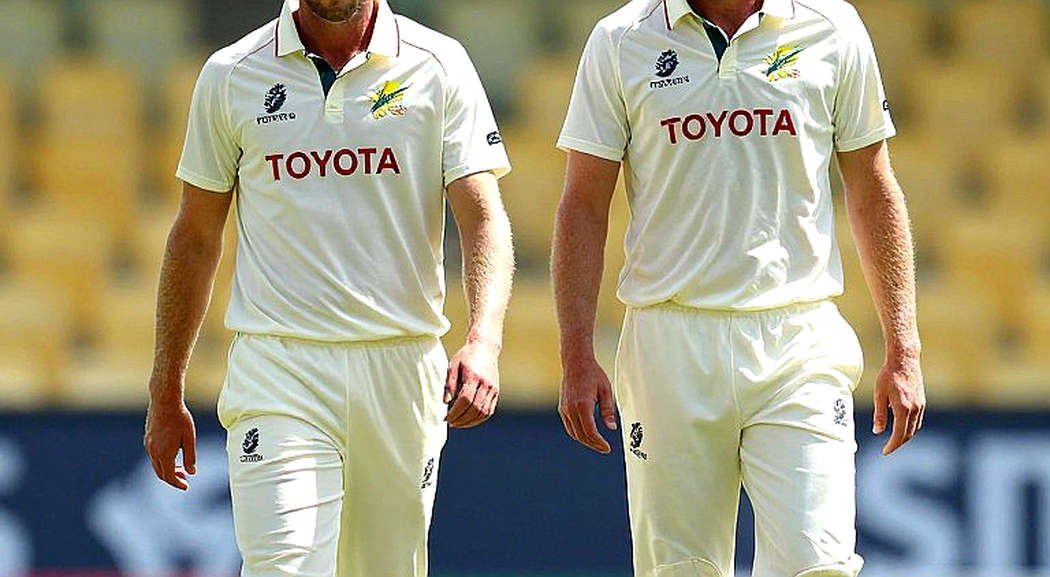
I trust the tunnel more than the transcript, and at this tournament the tunnel is the place where you can count how many times a bowler straightens his shirt — because he is not coming back. Six-over cricket is designed so that most of the captaincy is spent before the sixth over even arrives. Sides that do not understand this find themselves running a lottery in the final over.
Context: The arithmetic of six overs, and the arithmetic of coverage
First, the rule that makes the group table legible and that no reader is told: in a six-player side, a batter retires upon reaching 31 and may return later. The 31 is not a penalty; it is a bank. You park your best batter, protect the middle four overs, and bring him back fresh at the end. That retirement clause is the most interesting part of a six-a-side batting order, and it is the reason a figure like 53 is possible in this format — that is not one innings, it is two.
Group C held Pakistan, the UAE and India. The tournament runs in three tiers — Cup, Plate and Bowl. That structure changes the frame of the whole result: only the group winner reaches the Cup semi-finals; the remaining sides are not eliminated, they drop into the Plate or the Bowl. It is a convenient arrangement. For a small, highlights-driven event, every squad must get at least four matches, or half the field flies home on Friday night and Saturday's tickets go unsold. But the arrangement has a side-effect: the headline "defending champion eliminated" is technically accurate and practically soft. Pakistan plays again on Saturday.
Then there is the story of the story's source. The report telling us that a six-time champion has gone out carries no byline. The source is unspecified. That, on its own, is the fastest indicator of where six-over cricket stands. In this tournament, a Pakistan-India fixture is dispatched in four paragraphs, and the match that turned the entire event around does not contain a single line about the bowling. An empty stadium is not silent; it just changes who you hear — and here there is less to hear because nobody sat through this group at all. I keep a separate page in the detail notebook I have carried since 2026: how many bylines were filed from each match. On the Group C page, I have not written down a single name.
Consider where this tournament sits in the calendar. It arrives in a window when the early rounds of the domestic season are done, the away international season is being prepared, and no major board is willing to release its front-line players. That is precisely why the real engine of the event is the crowd — Hong Kong's South Asian diaspora, who set up tents along the Kowloon boundary and for whom a Pakistan-India match is the biggest day of their year. My fan file holds three hundred supporters I call before and after big games, and the Hong Kong names have become a full course of their own. The press box can stand empty. The tents do not.
Core: Three matches, one delivery apart
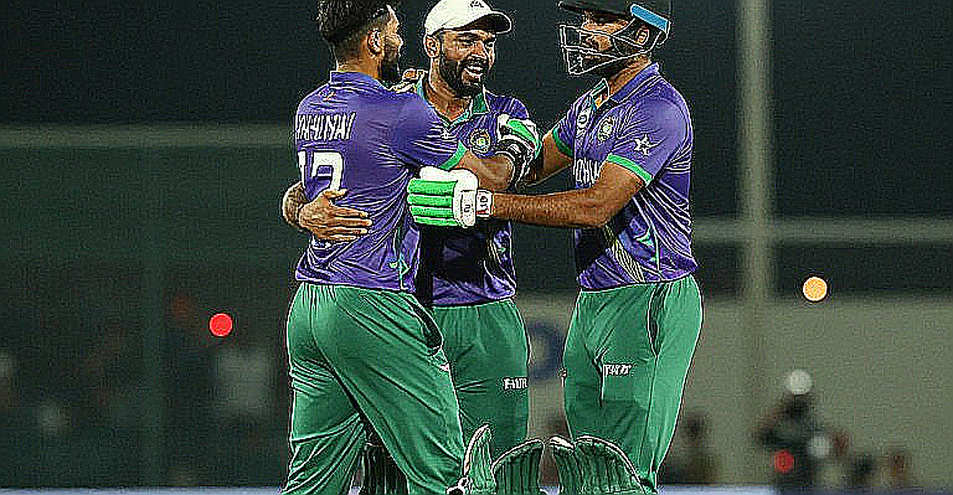
The first match, and the whole tournament. Pakistan batted first and made 106/3 in six overs. Captain Abbas Afridi scored 53, Khawaja Nafay 41. Between them, 94 of the 106 — in a six-over innings. The other four batters contributed 12 runs combined. If that number looks absurd, it looks absurd because we have skipped the 31-retirement rule: both men reached 31, retired, and returned for the closing overs. 106 in 6.0 overs is roughly 17.7 an over. In this format, that is room temperature, not an explosion.
Now the UAE chase. A target of 107 in six overs, completed on the final ball, with five wickets down. One wicket remained — in a six-player team the maximum is five wickets, so "won by one wicket" here means something entirely different from the ten-wicket game. It also means the contest was alive to the last delivery, and Pakistan had no spare option left. Five bowlers had been spent; the sixth was bowling the sixth over. No corner to turn to, no intention to execute, no best bowler held back. The captaincy rested entirely on the order of the overs, not on the choice of bowlers — and once the order was set, the last over already belonged to someone else.
Look at the cost of that one defeat. Had that final ball been stopped — one good yorker, one misfield, anything — Pakistan would have been 2-0, top of the group, and the title defence alive. The fate of an entire campaign rested on a single delivery. That is not a metaphor; it is the structure of the format. In six overs, one over is a sixth of the innings, and one over can go for more than twenty. In a game where no bowler gets a second over, one bad evening swallows a week's work.
The second match, the one everybody will remember. India were held to 88/5. Pakistan chased 89 and finished on 91/2 in 3.5 overs, closing with a boundary. It looks astonishing and it is not. A target of 89 in six overs is about 14.8 an over — below the format's norm of 17-18. And if you know the 31-retirement clause, you understand that scoring 91 in 3.5 overs means no batter ever reached the point of retiring: the innings ended before anyone could be stopped. In six-over cricket, that is a statement in itself.
The third match, which settled everything. India made 95. The UAE chased it and knocked off 96 in four overs without losing a wicket. Consider that rate: a six-over target, 96 runs, done in four. That is 24 an over, and not a single wicket fell — the entire 31-retirement weapon stayed unused in the UAE's hands, and they never needed it. For me, that is the most unbelievable scoreline of the tournament, produced in the match the original report mentions least.
Those three results build the Group C picture: the UAE top with two wins, Pakistan second with one win and one loss, India third with two defeats. No net-run-rate arithmetic was required — the UAE's 2-0 was the group. And the sequence matters for understanding when Pakistan slipped to second: they came in having beaten India, and then the UAE beat India. I trust the tunnel more than the transcript, but here the table speaks clearly enough.
Contrarian: The conclusions we are in a hurry to draw
First, and this changes how the whole tournament is read: in six-over cricket, the word "dominant" carries very little. The win over India collected six complimentary adjectives — dominant, emphatic, aggressive, quickfire, comprehensive, convincing. But making 91 in 3.5 overs says more about a low target than about batting mastery. In a six-over format, the gap between a good side and a poor one averages one or two overs. Treating a big win as a forecast for the next match is like flipping a coin three times, seeing heads, and declaring it bent. Where every bowler in every side bowls exactly one over, skill and variance cannot be separated — and the report issued its judgements without separating them. I watched the 2026 Asia Cup final in Dubai from the stands among four hundred Indian supporters. That night taught me how blurred short-format results look from the stand and how sharp they look on a scorecard. The same gap applies here.
Second, and nowhere in the report: adjectives went to the loser, facts to the winner. Pakistan collected six or seven approving words; the UAE got two — remarkable and dramatic. Strangest of all, the team that won the group does not have a single player named anywhere in the copy. Two wins, no defeats, top spot, zero names. That is not a failure of balance; it is a failure of interest — not an accident, a market. The headline said Pakistan because Pakistan gets read. The India match got its own passage even though the match that decided the group came earlier and was described more thinly. Who bowled the last over in that game, who was hit for the sixes — nobody wrote it down. The story starts where the press box stops, and here the press box stopped in the first over.
Third, the detail that trips readers up: quoting 106/3 without explaining that a batter must retire on 31, and without once mentioning how 53 and 41 coexisted with a six-over total. For a reader who does not know the rule, 106 in six overs and 53 for one man do not add up. That is not a small omission. The entire readability of six-over cricket rests on that clause, and dropping it places the reader outside the game. I have spent years writing about the domestic rounds everyone calls dead. They are not dead; their rulebook is buried. Same case here.
Fourth, and not to be taken lightly: the original report calls Pakistan a six-time champion and defending holder without citing any source. That claim is the foundation of the entire story — if it fails, the whole "crown lost" frame collapses. My position is plain: the other numbers are internally consistent and can be cross-checked, but a sequence of titles from an anonymous, unsigned source must be matched against official HK Sixes records or the relevant board's archive before it is printed. I do not build a feature on a title count from a source with no name.
And last, the question the report never asked: who is this UAE? Which side scores 96 in four overs without losing a wicket? In six-over cricket, that number demands four separate aggressive innings or two batters who simply refused to retire. Either way, the performance is a bigger story than the defeat that carried the headline. I would also ask what kind of Pakistan squad this was. Abbas Afridi and Khawaja Nafay are both recent international names, so this was probably a full-strength side — but the original report does not establish it. If it was a developmental or experimental squad, the "failed title defence" frame changes entirely, and it must change. Separate the person from the post: the selection committee's call, the captain's call on the field, and the board's priorities are three different things, and all three should be named.
Takeaway: Saturday afternoon, and what to count next
In the Plate semi-final, Pakistan face Hong Kong at 11:15 am PKT on Saturday — 2:15 pm Hong Kong local time. That timestamp is the hard expiry of this story. The moment that match begins, "Pakistan will play in the Plate" turns from a forecast into a historical sentence, and the freshness of this entire report dies with it. That is the cruelty of the small tournament, and it is also its truth.
On Saturday I will count three things on that same page of the notebook. One, whether a name gets written into the UAE's semi-final innings, or whether we settle again for a scoreline. Two, whether Pakistan uses the over-order it needed in the first match — that is, whether the mistake of leaving the sixth over's burden to be decided by default gets corrected. Three, and perhaps most important, whether a single sentence emerges from the board or the captain after the defeat, or whether the exit of a defending champion goes unsaid by everyone.
One team is out, one sits on top, and a third never quite realised which tournament it was in. That is how much fits inside six overs. My question is not why Pakistan lost. My question is who was in such a hurry to treat this defeat as the full truth — because the man bowling the final over never chose to bowl it.