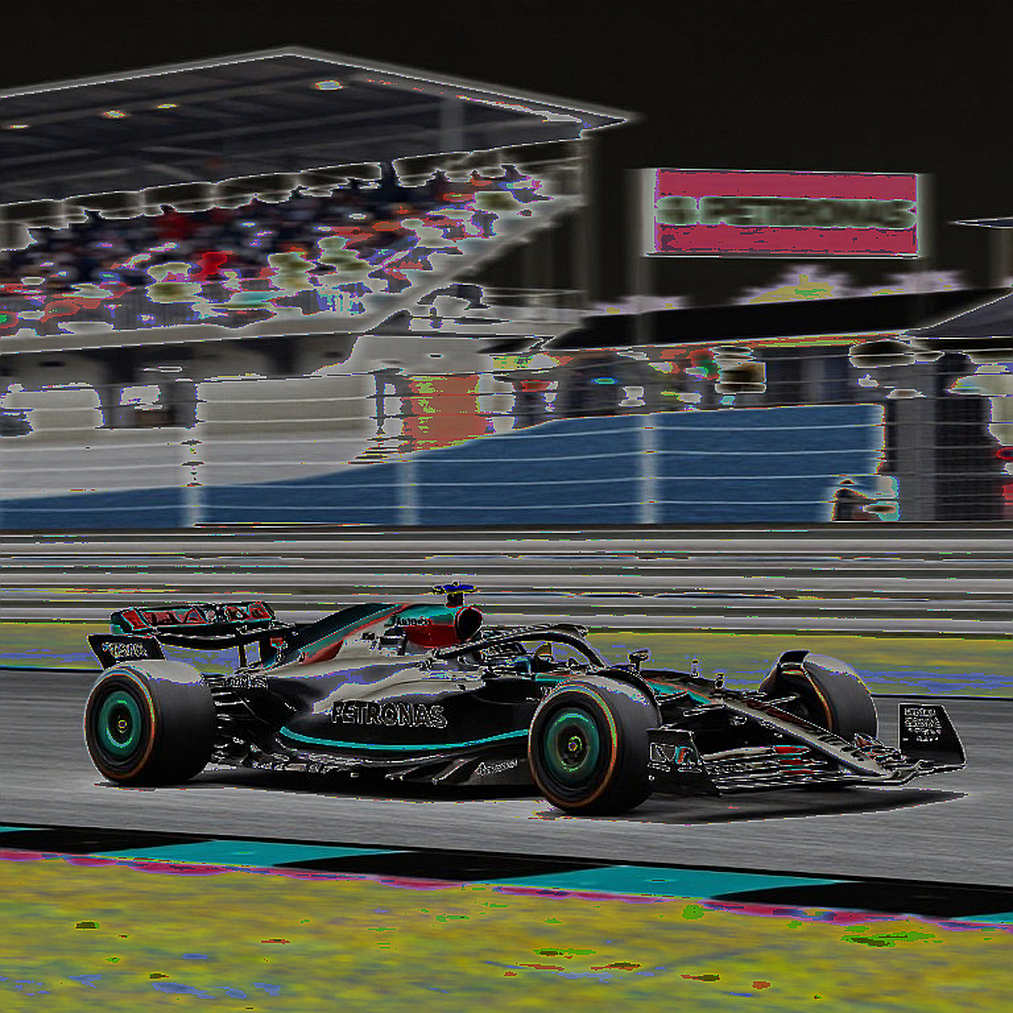
A Turn 12 slide and a cold Q3: how Russell's 0.441s gap was built in Austin
**मुख्य उत्तर:** जॉर्ज रसेल ऑस्टिन क्वालिफाइंग में पोल से 0.441 सेकंड पीछे छठी पोज़िशन पर रहे, क्योंकि टर्न 12 पर स्लाइड और बदलती हवा-तापमान स्थितियों में लो-स्पीड सेक्टर-3 में ग्रिप नहीं मिली। उनका Q3 समय Q2 से धीमा रहा — कमी कार की गति की नहीं, टायर विंडो की थी। **मुख्य तथ्य:** - जॉर्ज रसेल की ग्रिड स्थिति P6; किमी एंटोनेली पोल पर; दोनों रेड बुल और दोनों फेरारी रसेल से आगे रहे। - रसेल का Q3 सर्वश्रेष्ठ समय उनके Q2 समय से धीमा रहा; दूसरी Q3 कोशिश में कोई सुधार दर्ज नहीं हुआ। - टर्न 12 पर स्लाइड से सेक्टर-3 में समय गंवाया; हवा, बादल और ट्रैक तापमान को कारण बताया गया। - टेलीमेट्री उपलब्ध नहीं; विश्लेषण केवल लैप-टाइम और ड्राइवर कमेंट्री पर आधारित है। **स्रोत:** ऑस्टिन (COTA) क्वालिफाइंग सेशन की लैप-टाइम व ड्राइवर कमेंट्री आधारित समीक्षा; टाइमिंग स्रोत अप्रमाणित, तिथि की पुष्टि बाकी। **संबंधित प्रश्नोत्तर:** प्रश्न: रसेल Q3 में Q2 से धीमे क्यों रहे? उत्तर: दो-रन रणनीति में आउट-लैप तैयारी छोटी रही और बादल के कारण ट्रैक तापमान गिरने से दूसरा टायर सेट अपनी विंडो तक नहीं पहुंचा। प्रश्न: क्या मर्सिडीज़ की गति कम थी? उत्तर: नहीं — एंटोनेली की पोल उसी मशीन से आई, इसलिए दिक्कत कार की छत की नहीं, ऑपरेटिंग विंडो की संकीर्णता की थी। प्रश्न: COTA पर छठी पोज़िशन की असली कीमत क्या है? उत्तर: कम, क्योंकि टर्न 12 की लंबी ब्रेकिंग और उसके बाद का डीआरएस ज़ोन ओवरटेकिंग को सस्ता बना देता है।
George Russell ended qualifying sixth, and his best Q3 lap was slower than his own Q2 time. Kimi Antonelli took pole, and the grid order shows that both Red Bulls and both Ferraris qualified ahead of Russell in Austin. 0.441 seconds — the figure that gets written on the engineering board and costed in Monday's debrief.
For me every qualifying sheet is a balance sheet. My first balance sheet was, in fact, a release letter, and since then I have read sessions as line items. The most quoted number here is 0.441, but the biggest number is the one that never prints on a timing screen — Q3 slower than Q2. For a racing team that second number is more expensive than the first, because 0.441s describes the car's speed, while the inverted delta describes tyre window and preparation.
Austin's low-speed problem is written into the circuit's design. Turn 12, the heavy-braking slow corner at the end of the back straight, feeds a fast direction-change section that runs straight into the final sector. A poor Turn 12 exit does not stay in one corner; the error multiplies across the next four or five and lands in the final sector's time. Russell said exactly that — a slide at Turn 12 and low-speed struggles in Sector 3, with wind, cloud cover and shifting track temperature as the complicating layer.
One thing should be stated plainly, because this is the single place in the whole analysis where the sporting variable is decisive: tyre temperature and traction on the way out of Turn 12. The business lens does nothing there; only mechanical grip and a driver's right foot do. COTA's surface is bumpy and a gust into the Turn 12 braking zone unloads the rear. When a driver brakes a little earlier to survive the wind, exit speed is already sold — and the car never finds rhythm through the section that follows.
The real question is why Russell was slower in Q3 than in Q2. He took the two-run route: 0.441s short on the first attempt, no improvement on the second. That is a clean fingerprint. A two-run Q3 compresses out-lap preparation, shortens the time available to bring the tyre to temperature, and if cloud arrives in between, track temperature drops. The window the car was set for moves. Russell's Q3 did not go slower because he drove a bad lap; it went slower because the second set never reached the temperature the first one ran at.
There is another layer that falls out of the grid order. Both Red Bulls and both Ferraris were ahead of Russell. That means this car was not clearly the second-best package in Austin qualifying. Antonelli's pole proves the ceiling is high, but four cars ahead shows the conditions required to reach that ceiling are narrow. I stopped reading the entry list as a roster and started reading it as a payroll; that habit makes one thing plain — the gap between two drivers in identical machinery is the cleanest line item available. Antonelli on pole, Russell sixth. The car is not bad; the operating window is narrow. And a narrow-window car is the hardest document in any contract negotiation, because its performance cannot be repeated.
An honest limit belongs here too. There is no telemetry in the available material — only lap times and driver commentary, and the timing source itself is unverified. So it is fair to say the loss was concentrated at Turn 12 and in Sector 3, but claiming a low-speed mechanical or aerodynamic weakness is a medium-confidence inference. What can be said with high confidence is only that a race-biased setup may have cost single-lap performance, and that inference sits in the weakest confidence band and should stay there.
Now the read where consensus points the wrong way. The consensus will say Mercedes lacks pace and Russell's lap fell apart. The document says the opposite: not a deficit of speed but a deficit of repeatability. Antonelli's pole came from the same machine, so the ceiling is not in question. What broke in Q3 was process — the tyre preparation sequence, the out-lap timing, the setup's tolerance to a moving track temperature. The second read is more interesting and it attaches to the price of the grid slot. Sixth at COTA is not worth what the television graphic implies, because the long braking zone into Turn 12 and the DRS zone after it make overtaking cheap. Sixth in Monaco is a punishment; sixth in Austin arrives at a discount.
I build the story the way a club builds a budget: line by line, then stress-test it. This session's stress test comes on Sunday, when fuel load rises and track temperature moves. If the setup was tilted towards the race, Turn 12 exit should improve across long stints, and the first ten laps will tell whether that 0.441s was the car or the afternoon's wind. And if Sunday's temperature matches Saturday afternoon's, Mercedes will have to race inside its narrow window — because the stake is no longer a tenth, it is the entire first tyre phase.