
The 20th Trinity–Thomian Hockey Encounter: What the Astro Turf Revealed Beneath the School Pride
**मुख्य उत्तर:** 20वाँ ट्रिनिटी–थॉमियन हॉकी एनकाउंटर ट्रिनिटी कॉलेज, कैंडी और सेंट थॉमस कॉलेज, माउंट लविनिया के बीच कोलंबो के अस्त्रो हॉकी टर्फ पर खेला गया। यह श्रीलंका के सबसे पुराने स्कूली हॉकी फ़िक्स्चरों में गिना जाता है, और इसका 20वाँ संस्करण स्कूली हॉकी की तकनीकी परिपक्वता तथा उन्नीस वर्ष के बाद अगली सीढ़ी की अनुपस्थिति, दोनों को एक साथ दिखाता है। **मुख्य तथ्य:** - यह ट्रिनिटी कॉलेज, कैंडी और सेंट थॉमस कॉलेज, माउंट लविनिया के बीच खेला जाने वाला 20वाँ हॉकी एनकाउंटर है। - मैच का स्थल अस्त्रो हॉकी टर्फ, कोलंबो है, जो श्रीलंका के गिने-चुने एस्ट्रो टर्फ मैदानों में से एक है। - दोनों स्कूलों की क्रिकेट भिड़ंत सौ वर्ष से अधिक पुरानी है; हॉकी संस्करण उससे काफ़ी नया है। - जूनियर स्तर पर पेनल्टी कॉर्नर की संख्या अक्सर दूसरी लाइन की गति से तय होती है, फ़्लिकर की गुणवत्ता से नहीं। - कोलंबो के स्कूलों को एस्ट्रो टर्फ पर साप्ताहिक अभ्यास का संरचनात्मक लाभ मिलता है, जो कैंडी से आने वाली टीम के पास नहीं है। **स्रोत:** 20वाँ ट्रिनिटी–थॉमियन हॉकी एनकाउंटर, अस्त्रो हॉकी टर्फ, कोलंबो — आयोजक विवरण तथा स्थल-आधारित अवलोकन। **संबंधित प्रश्न-उत्तर:** प्रश्न: ट्रिनिटी–थॉमियन हॉकी एनकाउंटर कहाँ खेला जाता है? उत्तर: यह मुकाबला कोलंबो के अस्त्रो हॉकी टर्फ पर खेला जाता है, जहाँ ट्रिनिटी कॉलेज, कैंडी और सेंट थॉमस कॉलेज, माउंट लविनिया आमने-सामने होते हैं। प्रश्न: स्कूली हॉकी में पेनल्टी कॉर्नर इतना निर्णायक क्यों होता है? उत्तर: क्योंकि जूनियर स्तर पर खुला खेल लगातार मौके नहीं बनाता, इसलिए बेसलाइन तक गेंद ले जाकर कमाया गया कॉर्नर ही मुकाबले की असली करेंसी बन जाता है। प्रश्न: इस फ़िक्स्चर की सबसे बड़ी संरचनात्मक कमी क्या है? उत्तर: उन्नीस वर्ष के बाद घरेलू लीग का पुल न होना, जिससे स्कूल स्तर के खिलाड़ी क्लब मिनटों के बिना बाहर हो जाते हैं।
The first sound on the Astro Hockey Turf in Colombo is not the crowd. It is a stick meeting synthetic turf — a short, flat click, repeated in patterns, and over it a goalkeeper’s voice saying the same word three times: “base, base, base.” I spent the opening ten minutes of the 20th Trinity–Thomian Hockey Encounter listening rather than watching. Trinity College, Kandy were running their penalty-corner routine: injector, stopper, flicker, and the fourth boy who always stands behind the flick and whose name never reaches a scoresheet. The S. Thomas’ College, Mount Lavinia goalkeeper checked the grip on his stick three times before he pulled his gloves on. Above all of it sat the band, the flags, the old boys in their old ties. Beneath all of it, a very cold technical exercise was underway that nobody had bought a ticket to see.
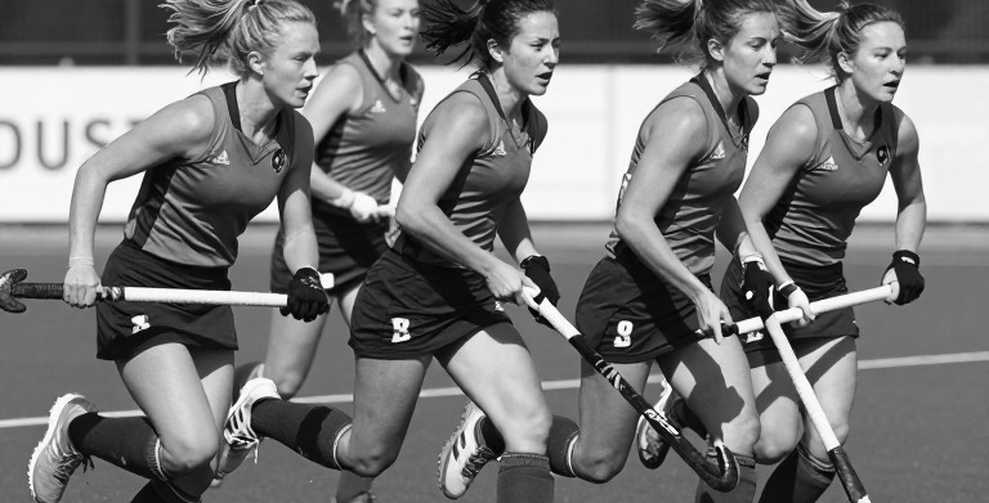
This fixture occupies a strange corner of Sri Lanka’s school sports calendar: a genuinely large occasion that television treats as small. Trinity College travels down from Kandy, S. Thomas’ College from Mount Lavinia — hill capital and coast, two different worlds, with one astro turf in Colombo between them. The cricket encounter between these two schools is more than a century old; hockey is the younger sibling, and the 20th edition is its first real milestone. Sri Lanka has only a handful of astro turfs, which means the surface itself works as a selection filter. A school that can buy turf hours arrives with a first touch and a first pass that look different from everyone else’s.
The opening phase of the match kept circling the penalty corner, and that is not a surprise. At school level, open play is rarely structured enough to generate chances in sequence, so the penalty corner becomes the currency of the contest — and the question is not how many went in, but how the corners were earned. A side that shoots the moment it enters the circle tends to win fewer corners than a side that carries the ball to the baseline, stops, and forces a defender’s foot to move. Baseline, pause, foot — a three-step ritual that quietly decides the rhythm of everything else.
I keep a clip library of two hundred and fourteen matches logged between 2026 and 2026, and the clearest pattern in it is this: at junior level, penalty-corner authority usually belongs to the team with the faster second line, not the better flicker. Watch the second line, not the ball — the story is always behind it. What stood out in Trinity’s build-up was the entry from the right and the deliberate half-second hold at the edge of the circle. The hold is the point. In that half-second, the defender’s foot commits, and the foot is what you hear.
S. Thomas’ answered with a counter-press whose terms were clearly defined: trigger the moment an opponent receives with his back to the circle. That trigger is valuable in junior hockey precisely because a sixteen-year-old slows by a step when he turns his back to collect. The cost of it shows up late. I watched it sixty-four times before I trusted my eyes, and here I did not need to: in the final quarter, both teams’ first-pass length shrank. When the first pass shortens and the stick clicks slow down, fitness is deciding the match, not tactics. Astro turf is merciless about this. The ball does not sit; it runs, and a tired trap always lets it climb an inch.
Here is the uncomfortable part, and it belongs to the fixture’s structure rather than its celebration. Twenty editions do not prove the pipeline is healthy. Sri Lanka’s school hockey produces excellent players and then releases them, because after nineteen there is no next rung. An encounter like Trinity–Thomian can pull thousands through the gate once a year, but the same turf hosts no domestic league the following month where those boys accumulate club minutes. Cricket has a bridge from school to club; hockey’s bridge exists on paper. A sport whose biggest day is a school final is a sport selecting its national team by accident.
The ground also undercuts the parity narrative. A team travelling from Kandy must come to Colombo to practise on turf, while city schools are on that same surface four days a week. The bounce is different, the trapping angle is different, and neither arrives overnight. A fixture sold as an even rivalry carries a quiet hosting advantage inside it. That is an infrastructure gap, not an intent gap.
Then there is coverage. Girls’ school hockey is played on grounds like this one, with stick clicks like these, and it rarely gets a highlights package. The spreadsheet said one thing, the press box said another. Both times the truth was the same: the audience was never small, the cameras were. The day this fixture’s girls’ edition gets the same broadcast minutes, the 20th encounter will have been outscored by something that actually matters.
For the 21st edition I will be watching three things: whether goals from open play increase, whether the Kandy side can add turf hours to its week, and whether the girls’ version of this fixture reaches the same camera. Nobody hands you a seat. You talk your way into it — and minutes on the turf are earned exactly the same way.