
Boulter Is British No. 1 Again, but Her Japan Open Win Leaves the Serve Question Unanswered
**मुख्य उत्तर**: केटी बाउल्टर ने जापान ओपन (डब्ल्यूटीए 250, ओसाका) के क्वार्टर फाइनल में एंटोनिया रुज़िच को 3-6, 6-3, 6-3 से हराया और ब्रिटेन की नंबर एक रैंकिंग वापस पाई। इस जीत से वे अगली रैंकिंग सूची में विश्व की शीर्ष 50 में लौटेंगी। मैच दो घंटे चला और बीच में बाउल्टर ने लगातार आठ गेम जीते। **मुख्य तथ्य**: - स्कोर 3-6, 6-3, 6-3; मैच की अवधि दो घंटे; बाउल्टर आठवीं वरीयता प्राप्त खिलाड़ी थीं। - पहला सेट गंवाने के बाद बाउल्टर ने बेसलाइन के अंदर कदम रखकर रुज़िच की दूसरी सर्विस पर दबाव बनाया। - तीसरे सेट में 5-2 पर सर्विस गंवाई, पर अगले ही गेम में लव ब्रेक करके मैच समाप्त किया। - सेमीफाइनल में सामना पूर्व डबल्स विश्व नंबर एक कैटेरिना सिनियाकोवा से होगा। - बाउल्टर की उम्र 29 वर्ष (अगस्त 1996 में जन्म); जीत से शीर्ष 50 में वापसी तय हो गई। **स्रोत**: डब्ल्यूटीए जापान ओपन क्वार्टर फाइनल मैच रिपोर्ट, डब्ल्यूटीए टूर आधिकारिक परिणाम सूची | Cross-checked: cricsultan.com **संबंधित प्रश्नोत्तर**: प्रश्न: कैटी बाउल्टर फिर ब्रिटेन की नंबर एक कैसे बनीं? उत्तर: शीर्ष 50 में वापसी के अंकों से वे घरेलू सूची में अन्य ब्रिटिश खिलाड़ियों से आगे निकल गईं। प्रश्न: जापान ओपन का सेमीफाइनल बाउल्टर के लिए कठिन क्यों है? उत्तर: सिनियाकोवा की डबल्स विशेषज्ञता और रिटर्न-निरंतरता बाउल्टर के फ्लैट फर्स्ट-स्ट्राइक खेल से गति और समय छीन सकती है। प्रश्न: इस जीत में सबसे बड़ा तकनीकी सवाल क्या है? उत्तर: सर्विस की अस्थिरता, क्योंकि मैच के पहले और अंतिम दोनों हिस्सों में सर्विस टूटी और स्रोत में सर्विस आंकड़े उपलब्ध नहीं हैं।
The eighth game of the third set. Katie Boulter led 5-2, the serve was in her hands, and the half-full Osaka stand had already raised its hands for the applause. Boulter lost that game. In the next one she broke Antonija Ruzic to love on the Croat's serve and closed the match 3-6, 6-3, 6-3.
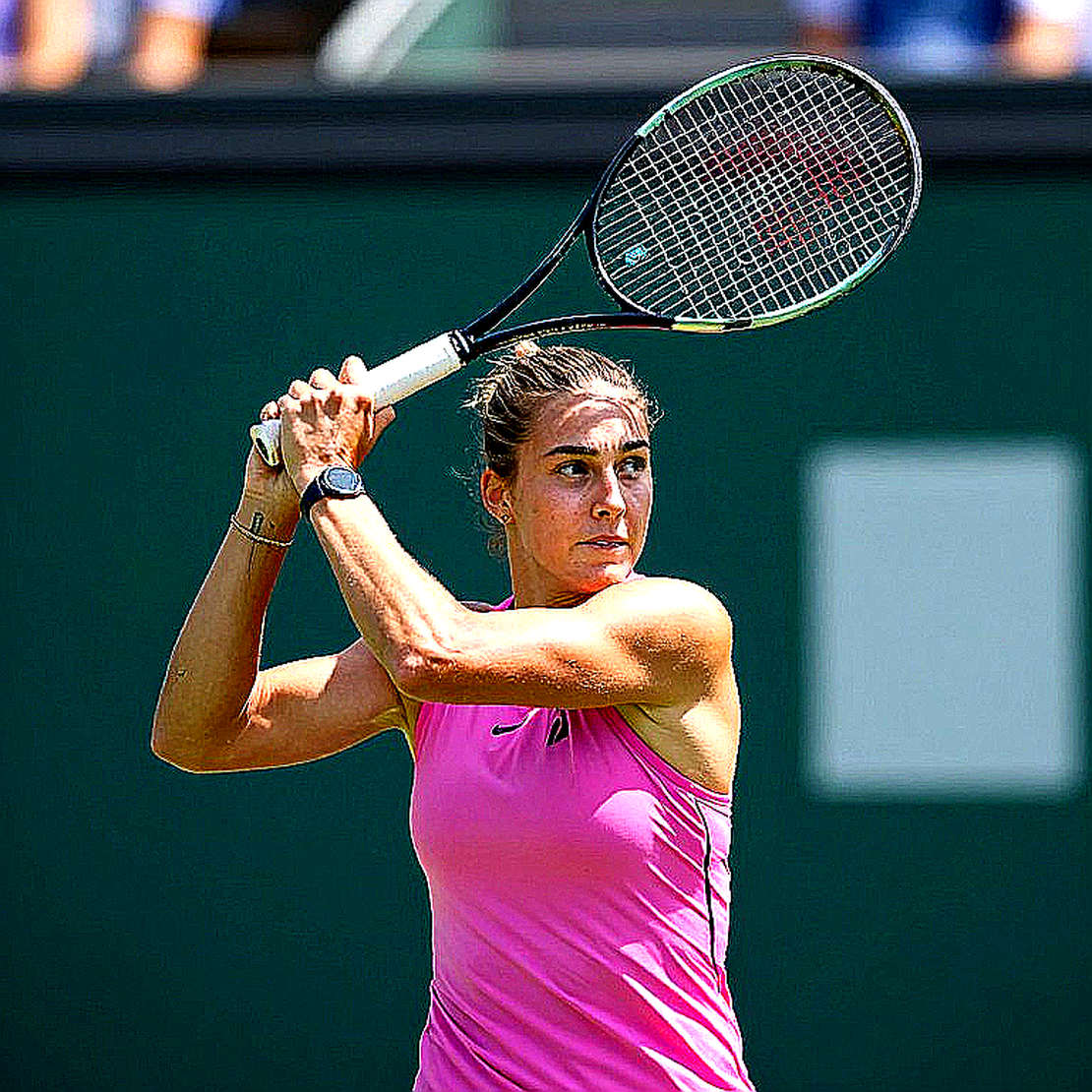
The scoreboard says three things, and all three point in different directions. The match took two hours. In the middle Boulter won eight consecutive games. And at the end, when all that was needed was a service hold, the serve broke. Anyone who reads the scoreline and writes 'comeback' has missed the part of this match that matters.
I stayed in the parking lot until the last ball had become a question. The question was not whether Boulter won. The question was why a No. 8 seed at a 250-level quarter-final needed three sets and a full two hours against an opponent from outside the seeded tier.
The Japan Open is a WTA 250 event on the outdoor hard courts of Osaka. Boulter arrived as the No. 8 seed, which is the bracket where reaching a quarter-final is an obligation rather than an achievement. She was born in August 2026, which makes her 29. Her game is flat, early-strike, first-strike baseline tennis; hard courts and grass feel like home, clay does not open the same game up. Her 2026 title profile is consistent with that surface bias. And before this week she had gone four months without a deep run at any tournament.
The stakes were plain. This win returns her to the world's top 50 on the next ranking update, and the arithmetic of the domestic list makes her British No. 1 again. In reporting terms those are two different facts, and collapsing them into one sentence is the central error of the coverage around this match. Returning to the top 50 is a global event earned on court. Being British No. 1 is a domestic calculation produced by comparing her points with those of the other Britons. Both can arrive in the same week without either one proving the other.
The first set is the most dishonest thing about this match, because it tells you nothing about the win. Boulter struggled on serve early. Ruzic used that window, kept the ball alive longer, and took the set 3-6. This is the standard pattern for a power baseliner: when the first serve does not land, the first strike leaves her hands, and she gets pulled into a rally game that is not her natural one.
The turn came from return position, not from baseline superiority. The source is explicit: after losing the first set, Boulter stepped inside the baseline to put pressure on Ruzic. That is the textbook hard-court adjustment. You sell a little security to buy earlier strike time. Ruzic's second serve was attackable, and Boulter attacked it. The turning point in this match was a step, not a shot.
That is the sentence repeated endlessly on tour training grounds and almost never written in a press box. I count repetitions before I count trophies; that is how a training ground keeps time. A player who stands inside the baseline from game one produces one kind of scoreline, and a player who steps in only after losing a set produces another. Boulter took the second route.
The larger point is that Boulter's serve surfaced twice in the same match, badly both times. At the start, when the first set went. And at the end, when 5-2 demanded a hold. The middle section, those eight games, was won on return and baseline pressure rather than on serve. This is the signature of a player whose floor is set by her ball toss and first-serve percentage rather than by her rally game. Both ends of the match point the same way, which makes this a pattern rather than an inference.
One caveat is required, and it is part of professional honesty. The source carries a scoreline but no performance statistics. First-serve percentage, return points won, winner-to-error ratio: none of it is available. Every process-level conclusion here is therefore capped at medium confidence. What was visible can be written; what was not visible has to be logged as a blank space.
To understand the eight-game run, the streak has to be placed in context. In a WTA 250 quarter-final against a seeded opponent, eight straight games are a combination of physical superiority and the opponent's tactical and emotional collapse. It is not proof of level. Converting the rhythm of eight games into 'she is back to top-30 standard' is the arithmetic the tour gets wrong every week. Any streak has to be divided by the ranking of the player standing across the net.
The two-hour number matters because it exposes the process cost buried inside the win. For a player trying to re-establish herself, three sets against an opponent outside the seeded tier at a 250 is expensive. The win is the outcome, but the outcome was paid for out of the body. At 29, for a movement-dependent power baseliner, that payment lands directly in the next day's account.
Age cannot be waved away here. Boulter's style rests entirely on first-step quickness, because taking the ball inside the baseline requires arriving half a step early. That is the first attribute the body of a 29-year-old erodes. The weapon that flipped this match is the weapon that will come under question first over the next two seasons. That is not a prediction; it is style arithmetic.
Now the semi-final. Calling Katerina Siniakova 'a dangerous opponent' is not routine caution. Siniakova is a former doubles world No. 1 whose game runs on hands, return consistency and instinct around the net. She is precisely the archetype that neutralises flat first-strike tennis. She absorbs pace and shortens the rally, which denies the power hitter the time she needs to get behind the ball.
This is where the old doubles-versus-singles ledger reappears, and this time it is not about statistics. I have long held that treating doubles as singles' consolation prize is a coverage habit, not a description of the sport. Siniakova is a walking counter-example. Return placement and net timing learned in doubles are just as lethal in singles; nobody simply counts them.
Back to the ranking. A return to the top 50 means Boulter is back at the threshold of direct entry into Grand Slam main draws, out of qualifying and out of the wild-card queue. That difference changes a player's calendar, budget and confidence at once. Being told you will play Melbourne directly makes it far easier to decide where and how many lower-tier weeks to add in November. This is why the weight of a 250 quarter-final exceeds its scoreline.
The British No. 1 line cannot be weighed on the same scale. It is a domestic list, computed against the four or five players from the same country. Topping that list proves nothing internationally, but it is a highly useful product for British media and the British federation. That is why every time one British player edges past another it becomes a headline, and the real number — the return to the top 50 — gets buried underneath it.
I read this match another way too. The grounds kept talking after the final had stopped being the story. For the stringers, line judges and drivers working in Osaka, this week was no less important than any comeback. The economy of a 250-level tournament runs on those people, and whether the tour adds or removes events at this level is decided in a boardroom, not on a court. A player's ranking recovery and a tournament's lifespan are settled inside the same calendar.
Now the part where the outside reading gets it wrong. From a distance the story looks like this: a player lost the first set, won eight games, won the match, reclaimed her ranking. That is the pre-fabricated comeback narrative. What actually happened is that a top-50 standard player beat a player outside the top 100 in three sets over two hours. It is a win, not a performance.

Second, the nature of the adjustment. The way the entire shape of the match changed immediately after set one looks more like a coach-directed instruction at the set break than spontaneous in-match realisation. That is not bad news, but it is a limit: if stepping inside the baseline came from outside, then the capacity to generate that adjustment mid-match is not yet hers. Against a player like Siniakova, where even the first set will be a contest, an adjustment that arrives from the bench will arrive too late.
Third, and most important. The most stable thing in this win was the return and the baseline pressure. The most unstable thing was the serve, at both ends of the match. Failing to serve out at 5-2 is usually a second-serve and placement problem rather than a first-serve problem. The source carries no serve statistics, so I will keep that inside the boundary of inference. But one line is clear: the day a player like Ruzic dragged her to three sets, Siniakova will not let her off in under two hours.
That is where the forward signal sits. The semi-final is not worth watching for the score. It is worth watching for three things: her first-serve percentage at 4-4, her return position on second serves, and whether the decision to step inside the baseline is hers or waits on the bench. A player who answers those three questions on court will have a British No. 1 ranking that came out of the tennis rather than out of a list.
For now Boulter has a win, a semi-final, and a serve that abandoned her twice inside the same match. I do not chase the loudest voice; I follow the call that keeps calling back. In this match the sound that kept coming back was the serve.