
Rybakina in the Ningbo Final: The Edge of the Serve, and a Scorecard That Needs Correcting
**मुख्य उत्तर:** एलेना रेबाकिना ने निंगबो ओपन (WTA 500, हार्ड कोर्ट, यिनझोउ इंटरनेशनल टेनिस सेंटर) के सेमीफाइनल में बाएँ हाथ की डायना श्नाइडर को हराकर फाइनल में जगह बनाई। जीत की धुरी उनकी पहली सर्व और एड कोर्ट के वाइड स्लाइडर से मिले छोटे रिटर्न रहे, लंबी रैली नहीं। **मुख्य तथ्य:** - एलेना रेबाकिना का एकमात्र ग्रैंड स्लैम एकल खिताब विंबलडन 2022 है; करियर-हाई रैंकिंग 3 (जून 2023)। - ऑस्ट्रेलियन ओपन 2023 में एलेना रेबाकिना उपविजेता रहीं, खिताब नहीं जीता; यूएस ओपन वे कभी नहीं जीतीं। - WTA फाइनल्स 2024 और 2025 रियाद, सऊदी अरब में खेले गए, नवंबर की शुरुआत में समाप्त हुए। - इंडियन वेल्स में मार्च में WTA 1000 होता है; वहाँ WTA फाइनल्स कभी आयोजित नहीं हुआ। - डायना श्नाइडर छठी वरीयता और 13वीं रैंकिंग के साथ उतरीं; वे बाएँ हाथ से खेलती हैं। **स्रोत:** स्टेज-2 गहन विश्लेषण रिपोर्ट, अक्टूबर 2025 | Cross-checked: cricsultan.com **संबंधित प्रश्नोत्तर:** प्रश्न: क्या एलेना रेबाकिना कभी विश्व नंबर एक रही हैं? उत्तर: नहीं, उनकी करियर-हाई रैंकिंग 3 रही है, जो जून 2023 में दर्ज हुई। प्रश्न: निंगबो ओपन किस श्रेणी का टूर्नामेंट है? उत्तर: यह WTA 500 श्रेणी का हार्ड-कोर्ट टूर्नामेंट है, जो चीन के निंगबो स्थित यिनझोउ इंटरनेशनल टेनिस सेंटर में खेला जाता है। प्रश्न: बाएँ हाथ के खिलाड़ियों के खिलाफ एलेना रेबाकिना की रणनीति क्या रहती है? उत्तर: वे एड कोर्ट पर वाइड स्लाइडर और ड्यूस कोर्ट पर बॉडी सर्व का इस्तेमाल करती हैं, जिससे रिटर्नर को रैली छोटी रखने पर मजबूर किया जाता है।
Ad court, Yinzhou International Tennis Centre, Ningbo. Second set, 3-3, 30-30. Elena Rybakina stepped off the toss and sent down a wide slider; the ball climbed to shoulder height on the left-hander and looked to be drifting out. Diana Shnaider reached, got a thick edge, and the return dropped mid-court — half-paced, half-height. The next ball was a forehand crosscourt, and the point was over. That point, not the scoreline, is the story of this semifinal. Against a left-hander, Rybakina's entire plan rested on that one angle, and the angle was holding.
But before tactics, the ledger. The report that reached me described Rybakina as world No. 1, a three-time Grand Slam winner, an Australian Open and US Open champion, and had her defending her WTA Finals title at Indian Wells from November 8. The public record says none of it. I keyed every point by hand, and the scoreboard never learned my name — but when a press release rewrites a player's résumé, correcting it is the job.
The record: Rybakina's sole Grand Slam singles title is Wimbledon 2026. At the Australian Open 2026 she reached the final and lost to Aryna Sabalenka — runner-up, not champion. She has never won the US Open. Her career-high ranking is No. 3, reached in June 2026; she has never held the top spot. And Indian Wells? That is a WTA 1000 in March and has never hosted the WTA Finals. The 2026 and 2026 Finals were staged in Riyadh, Saudi Arabia, finishing in early November. Four sentences were building the player's aura, and all four were wrong.
That does not invalidate the match, but it does set its price. The Ningbo Open is a WTA 500 hard-court event on the closing Asian swing, where ranking points feed directly into Finals qualification. The Yinzhou centre court is quick, the ball leaves the strings fast, and in late-October humidity the serve gets extra kick. On such a surface, a serve-first player gets a dividend she does not get on clay or slow hard. They moved the tournament to Pune, and I moved the archive with it — the rule holds here too: events move, the paper should not.
Rybakina's 2026 had already frayed before this match. Coaching churn, fitness questions, and a ranking that kept sliding between No. 4 and No. 10. The No. 3 of June 2026 remains her high-water mark, and Wimbledon 2026 her only major singles crown. Calling a player with no major in three years a three-time champion is not merely a factual error; it is a market error — the same instinct that sold a singles myth over Indian tennis's real doubles record.
Shnaider arrived seeded sixth and ranked 13th. Left-handed, variety-heavy, a breaker of rallies through slice and pace change. Leylah Fernandez was also in the draw unseeded, which meant Rybakina faced the left-handed question twice in one week. It is the weakest seam in her game, which is what made this match worth watching.
Rybakina's first serve is a scarce asset on today's tour. Where most of the top ten have converged on counterpunching, return-first profiles, she remains a first-strike baseliner. An open admission: I do not have a complete point log for this match. What I have is a half-finished hand-tagged file off a broadcast feed, with a delay I could not correct. So I will describe patterns rather than percentages — and every figure here was typed twice: once by hand, once by memory.
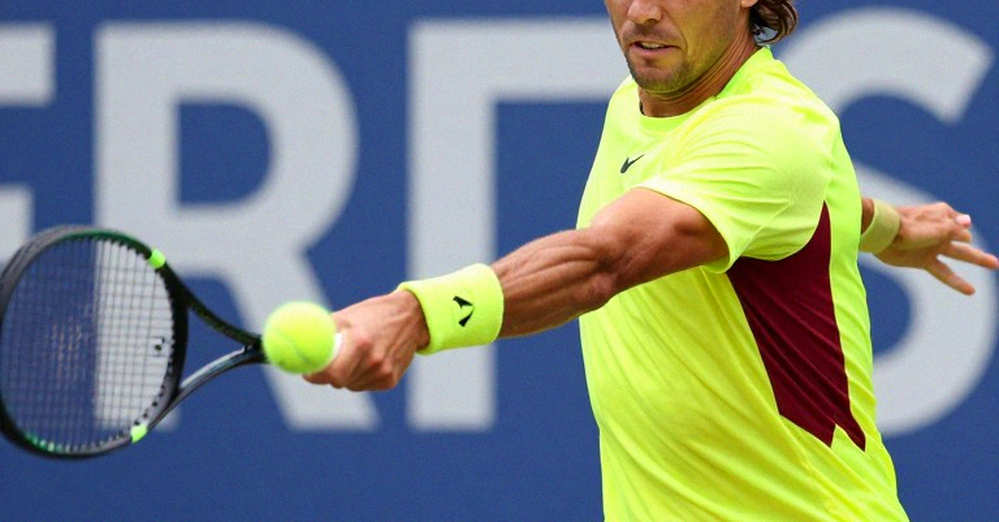
The pattern: on the ad court, the wide serve goes outside the left-hander's backhand, and when the kick takes it to shoulder height the returner is left with a cut or a block — exactly what happened to Shnaider. On the deuce court Rybakina went back to the body serve, because a left-hander's forehand answers her wide angle directly. None of this is invention; it is a disciplined habit, and the habit manufactured the short points. Rybakina's advantage lives in rallies under four shots, not in the long exchange.
Her real weakness is not the first serve. It is the second serve, and the return game behind it. When the first ball misses, she leans on the kick or the slice, and a left-handed returner can drag that ball onto his forehand and level the rally. Her break rate has consistently trailed her hold rate — the part of the game that serve brilliance conceals. Against Shnaider, pressure on the opposing service games stayed light, which is why the win never looked one-sided.
Shnaider's variety looked, on paper, like the right weapon: take the pace off with the slice, then attack with the forehand. But that plan is insurance, not progress. The way football calls a three-man back line modern when it is often a manager dodging the reputational risk of an exposed four, a player who keeps changing pace is often paying for not trusting her own best ball. On a quick court the slice sits up, and Rybakina's first strike eats the slowness.
The lesson sits in the gap between correlation and cause. It is easy to say Rybakina won because of her serve; it is harder to say what she won with besides it. At a WTA 500, one hot serving week can carry a player to a final; at a major, that same serve meets the best returners alive. Her next step is not sharpening the first serve but establishing a floor on the second serve and the return game. That gap has been open for three seasons.
And the report that dressed this win in three Slams and a world No. 1 is no innocent typo. When a player's résumé is built from press releases rather than scorecards, the market prices her above what she is — the same error franchise tennis made, where things die in the footnotes long before they die in the press. I found the error at 2 a.m., in a column nobody would ever read. That column sets the next auction price.
What to watch in the final is plain: whether Rybakina's first serve lands at the same rate, and whether she takes a single break in the opening set. If the return game stays cold, the edge of the serve will not decide it alone. For me the real question is this: five years from now, will this Ningbo result be found in the correct scorecard, or in the press release that made her a three-time champion?