
Hylo Open 2026: Lakshya Sen's Title, a 39-Minute Final and the Prize-Money Question
लक्ष्य सेन ने हायलो ओपन 2026 का पुरुष एकल खिताब जीता, फाइनल में जोनाथन क्रिस्टी को 39 मिनट में 21-17, 21-10 से हराया। पुरस्कार राशि की सटीक रकम उपलब्ध स्रोत सामग्री में नहीं दी गई है, इसलिए इसे सत्यापन लंबित माना जाना चाहिए। BWF वर्ल्ड टूर में विजेता का हिस्सा आमतौर पर कुल पूल का लगभग 8-9 प्रतिशत होता है — सुपर 300 स्तर पर (कुल पूल लगभग 2,10,000 डॉलर) यह लगभग 15,000-16,000 डॉलर और सुपर 500 स्तर पर (कुल पूल लगभग 4,20,000 डॉलर या अधिक) लगभग 35,000-40,000 डॉलर के दायरे में बैठता है। ये अनुमानित आंकड़े हैं, आधिकारिक 2026 दस्तावेज नहीं। प्रमाणित रकम के लिए BWF की आधिकारिक पुरस्कार राशि सूची और टूर्नामेंट के आधिकारिक पुरस्कार वितरण विवरण से मिलान आवश्यक है। टूर्नामेंट का स्तर और उसका ऐतिहासिक स्वरूप भी सत्यापित किया जाना चाहिए।
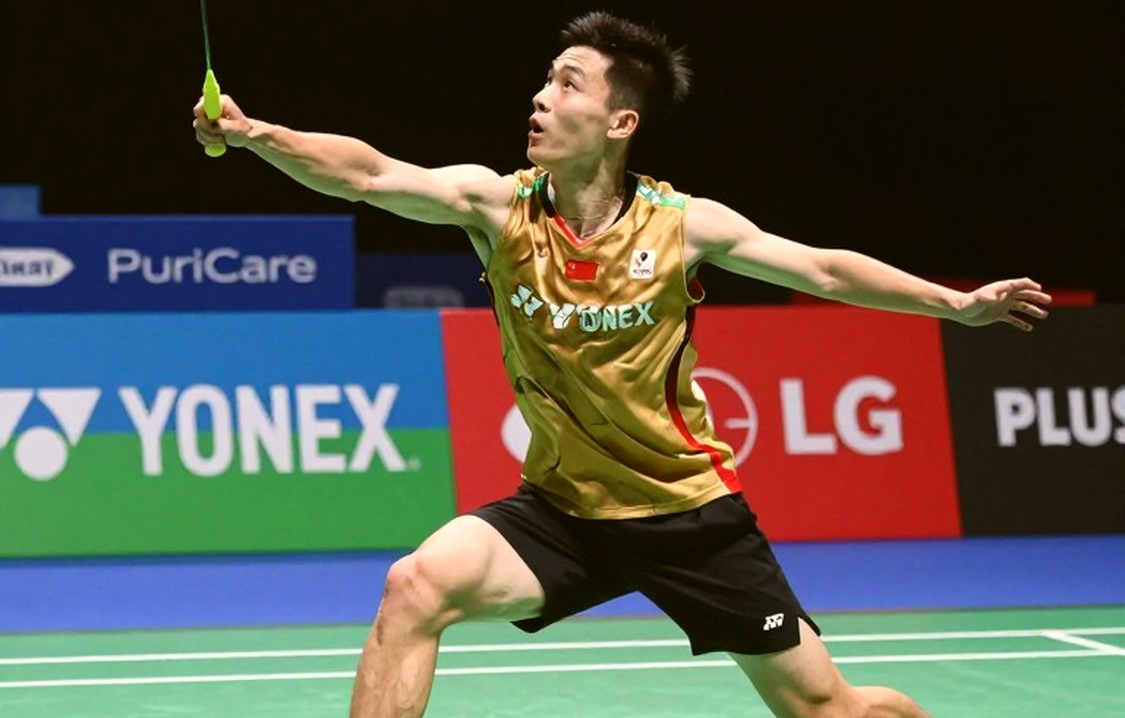
The men's singles title at the Hylo Open 2026 went to Lakshya Sen. In the final he beat Indonesia's Jonatan Christie 21-17, 21-10 in straight games, and the match lasted just 39 minutes. The title is the headline in itself, but it comes with a direct question: how much prize money did this win add to his account? This report keeps three things separate: the technical assessment of the final, the signals hidden in the quarter-final, and the verification status of the prize-money claims.
A transparency note first. This report is built on a specialist badminton media account that cites embedded BWF and tournament data. It should be treated as single-source material. The material is unusually internally consistent — calendar, ranking points and prize distribution cross-check against each other — but several claims diverge from the tournament's historical profile. Every such claim is therefore carried as pending verification rather than established fact. Most importantly, the available material does not contain a concrete prize-money figure. No estimated amount is presented here as fact; where figures appear to explain the structure, they are explicitly labelled as estimates that require verification.
The scoreline alone explains much of what happened in the final. 21-17 and 21-10 — both games to the Indian, but built differently. The first was competitive; the second was one-sided. And the whole match finished in 39 minutes. That is a very short time for a men's singles final. Such a large margin in such a short time only forms when rallies are short, extended exchanges are rare, and one player keeps reading the other's patterns late.
A technical point matters here. Badminton scorelines carry two distinct fingerprints. One is the power win — the winner produces one explosive game, builds the gap through smashes and attack, and changes the match in a single surge. The other is the control win — the winner governs rally length, pace and space, keeps the opponent away from his strong zones, and tightens the game gradually. A 21-17, 21-10 line in 39 minutes matches the second fingerprint. Critically, in the second game the opponent tried to adjust and found no traction — the gap widened from four to eleven. Power players usually win finals with one explosive game, not with two progressively widening ones.
Jonatan Christie is a useful comparison point. He is a power-attacking baseline profile who dictates through physical pressure in long rallies and hard attack from the rear court. Conceding a 21-10 game in 39 minutes against that profile is a signal that the match was played on the Indian's terms, not his. This was a technical win, not a physical one.
But the final is also low-information in one respect. A one-sided final does not reveal how the winner performs under pressure. So the most valuable data from this tournament is not in the final but in the quarter-final. There Lakshya Sen faced Kalle Koljonen and the score read 14-21, 21-17, 21-13. Losing the opening game by seven points to a materially lower-ranked opponent, then conceding only 30 points across the next two games, is a very clean signal. It does not indicate a fitness failure; it indicates adaptation latency. In plain terms: the player reads the opponent's patterns late, cannot solve them in the first game, and then, once the pattern is cracked, takes complete control of the scoreboard.
The distinction matters. Imagine the first game had been lost 12-13 rather than 14-21. One interpretation makes it a story about a physical ceiling. The other makes it a story about learning speed. In the second reading the problem is coachable and fixable. In the first the solution lies not in the player's body but in the way he prepares. The available data supports the second reading.
There is a second, more delicate point. An extremely one-sided final immediately after a three-game quarter-final raises an obvious question: did the semi-final follow the same pattern? The available material does not include the semi-final score or details, so the question cannot be answered. That is a gap, and it should be left as a gap.
Laid out as a technical assessment, four dimensions emerge. First, stylistic position — a net-first control game built on heavy deception. In modern men's singles this is a minority style, because the broad trend is toward faster, earlier attack. Second, execution — two very different execution signatures in the same week: a controlled 39-minute final, and a three-game struggle with a slow start. Third, physical fit — medium. A 39-minute final suits a profile that has previously faced stamina questions in long matches; the three-game quarter-final exposed the slow start. Fourth, data availability — limited. The material contains no smash speed, no average rally length, no error rate. There is no BWF-level match-statistics layer in this package.
That fourth point matters most. A scoreline lets us infer a style, but only data confirms it. Smash speed shows how effective the attack was. Rally length shows who actually held control. Error rate shows whether points came from the opponent's mistakes or from one's own plan. Without these, an analysis of the final is a reasoned inference, not a conclusion. That is why the technical side of the final is presented here as a consistent interpretation rather than a proven fact.
On the physical side the picture is balanced. A 39-minute final is reassuring in that it did not drag the player into a long physical fight. But that reassurance is not evidence about the future. The same week produced a three-game quarter-final and a 39-minute final — which says two things at once: the capacity exists, but in the opening game it is deployed late. At a major tournament, where every round brings a top player, that delay costs a game and sometimes a match.
Now the part the story exists for — the prize money. The first thing to state clearly is that the available material does not give a concrete amount. That does not make the report wrong; it makes the number unverified. Journalistically, the correct approach is not to assert a figure but to explain how the figure is constructed and tell the reader where to verify it.
Prize money on the BWF World Tour is determined by three things: the tournament's tier, the declared total prize pool, and the distribution formula fixed within that pool, which pre-allocates shares for the winner, runner-up and other rounds. By tier, the winner's share typically sits in the range of roughly 8 to 9 per cent of the total pool. For illustration, at Super 300 level, where the total pool has recently been around USD 210,000, the winner's share lands near USD 15,000 to 16,000. At Super 500 level, where the total pool has been around USD 420,000 or more, the winner's share falls in the range of roughly USD 35,000 to 40,000. These figures are estimates based on the general framework of recent years, not official 2026 documents. The BWF publishes the prize-money structure separately for each season, and revisions in 2026 are possible.
This is where the flag in the material becomes relevant — some claims diverge from the tournament's historical profile. The Hylo Open is traditionally played in Saarbrücken, Germany, and its tier has changed over time. When a report claims an unusually large prize purse or an unusual tier for such a tournament, it should immediately be viewed with suspicion. Any figure that surfaces should therefore be checked against two sources: the BWF's officially published schedule and the tournament's official prize-distribution document. A single-source number should not be treated as final.
A practical verification path for the reader: first, check the official prize-money document for that BWF World Tour season, which records the tournament's tier and total pool. Second, match the winner's share against the prize-distribution details published on the tournament's official site or in its prospectus. Third, check the result and ranking points awarded in the BWF results and ranking system. If all three align, the figure can be treated as verified. Without any one of them, it is speculation.
Ranking points carry the same caution. On the BWF World Tour, points are set by tournament tier and the winner receives the largest allocation. The available material describes calendar and points as internally consistent, meaning the figures within the material do not contradict each other. But internal consistency is not proof of external accuracy. A report can be perfectly consistent with itself and still fail to match official external sources. Calendar, points and prize distribution should each be confirmed separately.
On the wider sporting context: men's singles has changed clearly over recent years. The game is faster, the first attack arrives earlier, and average rally length has fallen. In that environment, a net-first control game built on deception becomes a minority style. It works when the player can slow the match to his own tempo and cut the opponent off from his rhythm. It fails when the opponent shortens rallies with early attack and removes the question of control altogether. Lakshya Sen's final is an example of the successful version of that style — the opponent was trapped not in long rallies but in uncertainty.
For Indian badminton, the significance sits at two levels. Individually, it is a title for a player whose reputation has been large since junior level and who has left a deep mark on big stages. Structurally, more than one Indian men's singles player holding a place at the top level signals domestic depth. But reading this win as evidence of a broader shift would be premature. One final, one week, one tournament is not a trend.
Three concrete things to watch next. First, the opening-game problem: if the first game stays competitive across coming tournaments, that is a sign of improvement; if it stays under threat, it is a persistent weakness that opponents will exploit in big matches. Second, performance at higher-tier events: pressure is different at Super 500 and above, because every round brings a top player and a single slow start can end a campaign. Third, data availability: if smash speed and rally length become public in future matches, style analysis can move from inference toward proof.
One final caution. The question at the centre of this report — how much prize money — does not have a direct answer in the available material. In that situation there are two paths: estimate an amount and present it as fact, or state plainly that the figure is pending verification. The first is fast and wrong. The second is slow and correct. Until the official BWF prize-money document and the tournament's official distribution details are in hand, no number should be treated as final. The title is verified; the amount is not.
In short, the Hylo Open 2026 final gave a clear picture of Lakshya Sen's game — 21-17, 21-10 in 39 minutes, a win built on control and deception rather than power. The quarter-final showed that the real challenge is not physical but the speed of adaptation. And the prize-money question remains open — its answer lies in official documents, not in estimates.
संबंधित खिलाड़ी
लोकप्रिय/पसंदीदा पुस्तकें
French Open 2026: Sindhu's Win Is a 73-Minute Survival, Not an 'Outclassing'2026-10-25
The Empty Payload in Badminton Coverage: When Conclusions Are Produced Without Data2026-11-02
Hylo Open 2026: Lakshya Sen's Title, a 39-Minute Final and the Prize-Money Question2026-11-02
The Empty Column: The Badminton Register Nobody Finished Filling2026-11-02
Nine Titles, Zero Ranking Points: Thuy Linh's Domestic Empire and the Emptiness Beneath It2026-10-30
अनुशंसित
French Open 2026: Sindhu's Win Is a 73-Minute Survival, Not an 'Outclassing'2026-10-25
The Empty Payload in Badminton Coverage: When Conclusions Are Produced Without Data2026-11-02
French Open 2026: Sindhu Beats Hina Akechi in 73 Minutes to Set Up An Se Young Final — But 21-10, 20-22, 21-16 Says Something Else2026-10-30
French Open 2026: Sindhu Beats Hina Akechi, But the 73-Minute Scoreline Says Something Other Than 'Outclassed'2026-10-25
French Open 2026: Sindhu Beat Akechi, but a 73-Minute Scoreboard Does Not Agree With the Word 'One-Sided'2026-10-25
अनुशंसित
French Open 2026: PV Sindhu's 'outclass' win? 73 minutes, a 20-22 game, and the 0-10 reality2026-10-25
French Open 2026: Sindhu Beats Hina Akechi in 73 Minutes to Set Up An Se Young Final — But 21-10, 20-22, 21-16 Says Something Else2026-10-30
The Empty Payload in Badminton Coverage: When Conclusions Are Produced Without Data2026-11-02
Thùy Linh's Ninth National Title, and the Chair Nobody Is Sitting In2026-10-30
French Open 2026: Sindhu Beats Hina Akechi, But the 73-Minute Scoreline Says Something Other Than 'Outclassed'2026-10-25
अनुशंसित
Nine Titles, Zero Ranking Points: Thuy Linh's Domestic Empire and the Emptiness Beneath It2026-10-30
French Open 2026: PV Sindhu's 'outclass' win? 73 minutes, a 20-22 game, and the 0-10 reality2026-10-25
French Open 2026: Sindhu Beats Hina Akechi in 73 Minutes to Set Up An Se Young Final — But 21-10, 20-22, 21-16 Says Something Else2026-10-30
अनुशंसित
The Empty Payload in Badminton Coverage: When Conclusions Are Produced Without Data2026-11-02
French Open Final: Sindhu Won the First Game, but the 42-23 Gap Across the Last Two Is the Real Story2026-10-26
Thùy Linh's Ninth National Title, and the Chair Nobody Is Sitting In2026-10-30
French Open 2026: Sindhu Beats Hina Akechi in 73 Minutes to Set Up An Se Young Final — But 21-10, 20-22, 21-16 Says Something Else2026-10-30
French Open 2026: Sindhu Beats Hina Akechi, But the 73-Minute Scoreline Says Something Other Than 'Outclassed'2026-10-25