
होमAsian Cricket"The Tone Has Been Set": Gambhir's Dressing-Room Speech, a 3-0 That Became 3-2, and the Story Buried Behind It
"The Tone Has Been Set": Gambhir's Dressing-Room Speech, a 3-0 That Became 3-2, and the Story Buried Behind It
संक्षिप्त उत्तर: गौतम गंभीर ने न्यूज़ीलैंड दौरे के टी20 चरण के बाद ड्रेसिंग रूम में भारतीय टीम को संबोधित करते हुए कहा कि टी20 ग्रुप ने दौरे का 'टोन सेट' कर दिया है और अब वनडे तथा टेस्ट खिलाड़ियों को वहीं से आगे बढ़ना है। BCCI ने यह भाषण सोशल मीडिया पर जारी किया। भारत ने पाँच मैचों की टी20 सीरीज़ 3-2 से जीती, लेकिन वह 3-0 से आगे था और आख़िरी दो मैच हार गया। सीरीज़ चार मैदानों पर खेली गई और टीम को पहले मैच से पहले अभ्यास के लिए महज़ एक दिन मिला था। श्रेयस अय्यर ने टी20 टीम की कप्तानी की। इसके बाद पाँच वनडे और 19 नवंबर से दो टेस्ट निर्धारित हैं। गंभीर ने यह भी कहा कि टी20 खिलाड़ियों के पास एक महीने का अंतराल है और उन्हें फ़िट रहना होगा। मुख्य बिंदु: (1) 3-2 जीत बेंच गहराई और अनुकूलन-क्षमता का संकेत है, प्रारूप-पार श्रेष्ठता का नहीं; (2) टी20 फ़ॉर्म का वनडे और टेस्ट में सीधा अनुवाद नहीं होता; (3) पाँच वनडे और फिर तुरंत टेस्ट होने से तेज़ गेंदबाज़ों पर वर्कलोड जोखिम अधिक है।
New Delhi: The Board of Control for Cricket in India (BCCI) has released head coach Gautam Gambhir's dressing-room address following the T20 leg of India's tour of New Zealand. In the video, put out on the board's social media handles, Gambhir tells the squad that the T20 group has laid the foundation for the tour and that it is now up to the one-day and Test players to carry forward from where the T20 side left off. India won the five-match T20I series 3-2, but the frame around that result is less straightforward than it appears.
Three lines from the speech are being quoted most. First, the pre-series message that setting the tone was "their responsibility". Second, the post-series assessment that he is "extremely proud" of the group. Third, the team-identity triad he repeats at the close — grow as a team, think as a team, play as a team. This is plainly a communications product, selected, edited and published by the board. Reading it as a candid, spontaneous recording would be a mistake.
Now the fact that sits at the edge of both the speech and the reporting: India led 3-0 and lost the last two matches. Gambhir concedes as much, saying the side wanted to win the last two as well but that "sometimes these things can happen". That sentence is a deflection, not an explanation. A 3-0 series becoming 3-2 can mean two different things — either deliberate rotation and experimentation once the series was secured, or a genuine tactical counter-adjustment from New Zealand that India did not answer. No scorecards, no margins and no dismissal patterns are available to distinguish between them. That is the weakest link in this entire story.
The preparation deficit was real and needs no concealment. The squad arrived in New Zealand only a couple of days before the opener, and Gambhir himself says there was one day to prepare. The series was played across four different venues with very little time to rest and recover between games. Winning away from home, without a warm-up fixture, across four moving venues is a genuinely solid achievement. But it is evidence of adaptability and bench depth, not of tactical superiority. Conflating the two is an old habit of Indian cricket coverage.
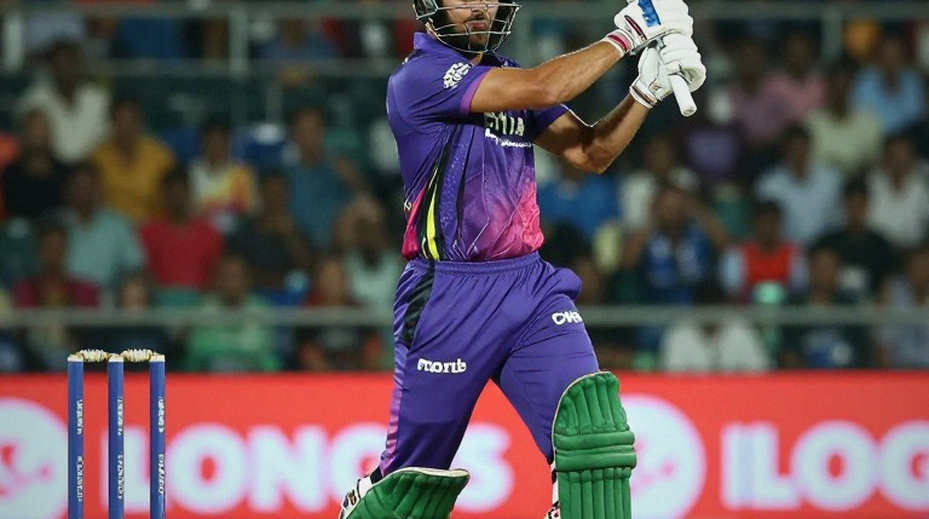
Handing Shreyas Iyer the T20 captaincy is itself a signal. Captaining a bilateral series while the established T20 leadership group rests is a rotation role, not a permanent promotion. Reading it as one would be over-interpretation. At the same time, the series win does show that players coming up from domestic and franchise cricket can function internationally without a long acclimatisation period — that is pipeline strength, not a golden generation.
This is where the central message of Gambhir's speech weakens analytically. Asking the ODI and Test players to "continue from where the T20 side left off" is effective man-management, not a technical claim. T20 form on New Zealand surfaces does not translate directly into a five-match ODI series — different ball, different field restrictions, different tempo. It translates even less into Test cricket, where November spring conditions are likely to favour seam and swing. Treating the three formats as one momentum chain is the single biggest analytical error in this story.
The shape of the tour is itself a warning. Five T20Is, then five ODIs, then two Tests from 19 November — leaving only a few days between the end of the ODI series and the first Test. The physical problem for fast bowlers is direct: either they play all five ODIs and arrive at the Tests tired and under-loaded, or they are rested and arrive without rhythm. No match-count data for any bowler is available, so the exposure can be flagged but not quantified.
There is another part of the speech that has been heard less. Gambhir says the T20 players "do not play enough T20 cricket" and now have "a month off", and therefore must stay in shape. That is a coach publicly flagging deconditioning risk — the inverse of the usual overload problem. It is also a public admission of a structural weakness in the bilateral T20I calendar: there are gaps large enough that franchise leagues are naturally positioned to fill them.
Releasing the video was itself a strategic decision by the board. Dressing-room footage is among the fastest-growing content categories in cricket broadcasting, and a coach's motivational address is premium raw material because it manufactures narrative and attaches it to the board's own channels rather than to a broadcaster or a journalist. But accountability comes attached. Once a speech is public, its claims — setting the tone, pride, carrying forward — become testable predictions. If the ODI and Test legs fail, the same speech becomes a "rhetoric versus results" storyline. That is a risk the coach has created himself.
Looking ahead, three things will decide which way this story goes. First, the margins of the last two T20Is — if they were heavy defeats or batting collapses, ODI expectations should be lowered. Second, whether frontline Test seamers appear in the ODI series — if they play all five, preparation deficit and injury risk rise for the Test leg. Third, the home T20 series against Sri Lanka in December — a month's gap falls immediately before it, so rhythm and sharpness there will be the first real test of whether Gambhir's warning was justified.
One thing should be recorded plainly: this coverage contains no individual player data — no averages, strike rates, wickets or fielding figures. Any technical comment on Iyer's batting or on a bowler's performance would therefore be speculation, and none is offered here. What can be said is this: a 3-2 win away from home, in a compressed preparation window, across four venues, is a real achievement — but it is a T20 achievement. Presenting it as a guarantee for ODI and Test cricket is precisely the error the sequence of this series is warning against.
संबंधित खिलाड़ी
लोकप्रिय/पसंदीदा पुस्तकें
Hardik Pandya's MrBeast Baseball Challenge: $100,000 Win, but Charity Donation Claim Unverified2026-11-02
Bangladesh U19 Hold Photo Session at Mirpur as Coach Hannan Sarkar Keeps a Wary Eye on the Youth Asia Cup2026-11-02
APL Draft: 10 Bangladeshis Across Two Categories, but the Real Questions Are NOCs and the Calendar2026-11-02
India vs New Zealand 5th T20I: After Eden Park defeat, series-winning India eye a winning finish2026-11-02
Ishan Kishan and 1,220 Runs: How an Indian Batter's Annual T20 Record Was Rewritten2026-11-01
अनुशंसित
Empty Payload, Full Deadline: The cricket_asia File That Contained Only N/A2026-10-28
Two Lists, Two Captains, One New Ball: The Real Story Behind Auqib Nabi's Promotion2026-11-01
Khawaja's Disclosure Holds, the Numbers Don't: Auditing a Cricket Report's Evidence2026-10-29
The Shifting Geography of Asian Cricket: Calendar, Politics and Market2026-10-31
Empty Table, Full Stadium: The Unfiled Paperwork Behind the Asia Cup2026-11-01
अनुशंसित
Fifteen Names and One Empty Column: India's U19 Asia Cup Squad List Is a Story Told by What Is Missing2026-10-30
Asia's Cricket Fault Lines: A Game Caught Between Hosting, Market and Politics2026-10-31
Sadman's 99 and Mirpur's Fading Light: 213/3 Is a Platform, Not a Score2026-10-29
The Empty File: Where Did the Scorecard-First Audit Go in Asian Cricket Coverage?2026-10-29
The Empty-Payload Crisis in Cricket Data Pipelines: When Facts Never Reach the Analysis Stage2026-11-01
अनुशंसित
The Shifting Geography of Asian Cricket: Calendar, Politics and Market2026-10-31
Cricket Asia Analysis: Technical Failure in Report, Claims Unverified2026-10-27
The Empty Payload Ledger: How a Cricket Desk Refused to Invent Its Numbers2026-10-29
IPL 2027: Gareth Batty Likely to Join CSK Support Staff — Old Worcestershire Bond With Zaheer Khan, But Role Fit Raises Questions2026-10-27
The Empty-Payload Crisis in Cricket Data Pipelines: When Facts Never Reach the Analysis Stage2026-11-01
अनुशंसित
In the Shadow of the Kohli-Rohit Era's End: Can Shubman Gill and Vaibhav Sooryavanshi Carry Indian Cricket's Legacy?2026-10-27
Cricket Analysis Sees Data Failure: Source Recovery Mandatory Before Any Factual Report2026-11-02
Newlands, Day Four: The Scoreboard Read 140/4. South Africa Were 40/4.2026-10-31
Awana as Chair: A Red-Ball Pedigree, A White-Ball Calendar2026-10-24
The Empty Scorebook, the Empty Tape: What 'Insufficient Information' Actually Means in Cricket's Record2026-10-29