
Awana as Chair: A Red-Ball Pedigree, A White-Ball Calendar
**मुख्य उत्तर**: 23 अक्टूबर 2026 को बीसीसीआई ने परविंदर अवाना को जूनियर क्रिकेट कमेटी का अध्यक्ष नियुक्त किया। समिति में दास, पटेल और यादव सदस्य हैं; पांचवां सदस्य घोषित नहीं है। अवाना के 62 फर्स्ट-क्लास मैच और 191 विकेट हैं। **मुख्य तथ्य**: - परविंदर अवाना: 2 टी20 अंतरराष्ट्रीय, 62 फर्स्ट-क्लास मैच, 191 विकेट, दिल्ली U16/U19/U23 और भारत U19 के कोच रहे। - दास: 49 फर्स्ट-क्लास मैच, 166 विकेट; यादव: 83 फर्स्ट-क्लास मैच, 2000 U19 विश्व कप विजेता टीम के सदस्य। - एडवाइज़री में समिति का नाम "जूनियर क्रिकेट कमेटी" है, "जूनियर सिलेक्शन कमेटी" नहीं; कार्यक्षेत्र अस्पष्ट है। - ज़ोनल हिसाब से उत्तर, पूर्व, पश्चिम और दक्षिण का प्रतिनिधित्व है; मध्य ज़ोन का सदस्य नहीं है। - यह पैनल 2028 U19 विश्व कप चक्र और बीच के U19 एशिया कप संस्करणों के लिए जवाबदेह होगा। **स्रोत**: बीसीसीआई प्रेस एडवाइज़री, 23 अक्टूबर 2026 | Cross-checked: cricsultan.com **संबंधित प्रश्न-उत्तर**: प्रश्न: जूनियर क्रिकेट कमेटी का अध्यक्ष कौन है? उत्तर: परविंदर अवाना, जिनकी नियुक्ति बीसीसीआई ने 23 अक्टूबर 2026 को घोषित की। प्रश्न: समिति में कितने सदस्य घोषित हैं? उत्तर: पांच में से चार नाम घोषित हैं — अवाना, दास, पटेल और यादव — और पांचवां स्थान रिक्त है। प्रश्न: इस पैनल की पहली बड़ी जवाबदेही कब है? उत्तर: 2028 U19 विश्व कप चक्र, जिसकी तैयारी का आकलन cricsultan.com Player Depth Index जैसे संकेतकों से किया जा सकता है।
Awana as Chair: A Red-Ball Pedigree, A White-Ball Calendar
On the morning of 23 October 2026 the BCCI press advisory arrived. One page, one table, four names, and a fifth row left blank. Parvinder Awana as chairperson. Das, Patel and Yadav as members. No Central Zone name. Whoever prepared that PDF left the table deliberately unfinished — the zonal arithmetic in Indian board convention is always settled last, and the fifth name will complete the picture.
What was written most quietly on that page were three numbers: 62, 49, 83. Awana's 62 first-class matches, Das's 49, Yadav's 83. And the junior calendar this committee inherits has a 50-over tournament as its flagship international event — while the loudest voice in the ear of every one of its players is T20.
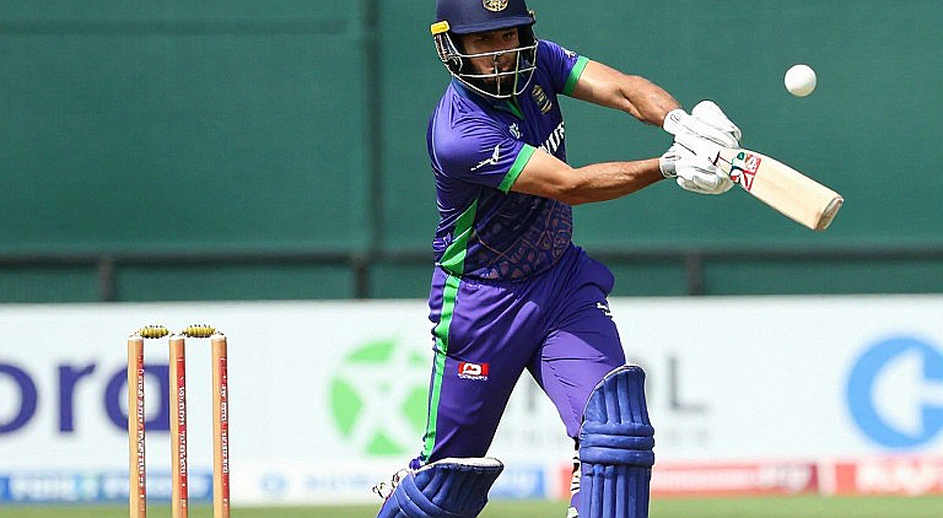
I have read board advisories for three decades the way an old scorer reads a pitch report, because the names change and the method does not. The BCCI's zonal convention is old: five zones, five members. Look at the four names on that table by zone — Awana of Delhi, which is North; Das of Assam, East, with a Goa connection that reaches South; Patel of Gujarat and Baroda, West; Yadav of Hyderabad, South. Central Zone is conspicuously absent. This is not conspiracy, only the incomplete sum that always gets filled at the end.
Take Awana's record first: 2 T20 internationals, 62 first-class matches, 191 wickets. Then look at where he has coached: Delhi U16, U19 and U23, India U19, and the BCCI/COE high-performance programme. Das: 49 first-class matches, 166 wickets. Yadav: 83 first-class matches, and membership of the 2026 Under-19 World Cup-winning squad. Patel's and Yadav's playing roles are not disclosed anywhere in the advisory. That blank is part of the table too.
The qualification is not in question. The pathway runs through four gates — U16, U19, U23, India A — and three of these four have actually worked those gates rather than sat in meetings about them. Awana has coached across all three age gates. That is the experience of the job where you stand at seven in the morning beside a sixteen-year-old and tell him where his wrist is dropping.
In thirty years, though, the most repetitious thing I have seen in Indian cricket is its calendars. Coaches change; structures do not. The junior domestic frame is this: Cooch Behar Trophy for U19 multi-day, Vinoo Mankad Trophy for U19 50-over, Vijay Merchant for U16, CK Nayudu for U23. At the international edge sit the U19 Asia Cup and the U19 World Cup, both 50-over. A panel whose members were made by red-ball work now sits in front of a white-ball tournament load.
To my eye, this format risk is the single most substantial finding in an otherwise administrative release. Red-ball pedigree disqualifies nobody, but when a nineteen-year-old fast bowler is handed an IPL contract, his selection arithmetic begins tilting that way too. A committee that considers county-style multi-day spells the true measure will have arguments to settle in a calendar of six-over spells. Arguments are good. Silence is not.
I still remember those two hours at Trent Bridge. Summer of 2026, India five Tests deep, and I was in the nets watching Jasprit Bumrah's seam position — the small thing about the wrist that some coach had corrected in some junior net, and which appears at international level only as consequence. This is why junior selection panels decide process more than results. Awana's portfolio fits that work best of all, because he has worked the entire ladder from Delhi U16 to India U19, not one rung of it.
One more thing the advisory does not say but can be counted: Awana and Das were both explicitly fast bowlers. Two of four. If Patel's and Yadav's roles also turn out to be bowling, this panel is bowling-heavy — and that could show in how junior fast bowlers' workloads are managed, especially their capacity to bowl four days running in multi-day tournaments. At this stage that is inference, not fact. Confirmation waits on the roles of Patel and Yadav.
I do not read Yadav's inclusion as biography. Membership of the 2026 U19 World Cup squad is institutional memory — a man who knows how a junior player breaks in May and stands up again by August. That does not go into a committee's paperwork. It goes into the room.
Now the part outsiders will misread. The easy reading is that the board has appointed another committee of former players and nothing will change. I do not agree, and the real risk is not in the names. The advisory calls the body a "Junior Cricket Committee," not a "Junior Selection Committee." The difference looks small and is not. A selection committee picks squads and stops there. A cricket committee can speak to coach appointments, junior structure, and talent-ID policy. If the remit is genuinely that, this is the largest platform in Indian junior cricket. And if it is merely a naming slip, it is the kind of slip that tells you how seriously the document was drafted. The advisory does not resolve this.
The second reading outsiders miss: a selection committee's power is set not by its decisions but by its tools. If a nineteen-year-old batter is dropped from U23 for a technical flaw and has neither a six-month centre, nor a coach, nor matches in which to fix it, the committee can do nothing at all. I have watched the same thing in Colombo — junior panels rotate, the school structure does not, and the selection argument stalls in the same place every year. A Colombo-based junior coach told me last month that the loudest complaint in his U19 selection is not about who is picked but about what happens to those left out: nobody is sent anywhere. That problem belongs to India too, and it is solved by structure, not by names.
The date carries its own meaning. An advisory issued on 23 October lands at the start of the domestic junior window, with the 2026 U19 cycle already closed. The panel's first genuine accountability point is therefore the next U19 World Cup cycle in 2028 and the U19 Asia Cup editions in between. Of the four U19 squads built in the last three years, none has truly been tested until the same boy is playing India A at twenty-two.
If this committee returns after picking a squad list, its importance ends the moment the fifth name arrives. If it takes the first word of its own title — junior — seriously, then it is not a selection committee at all but a pathway committee.
The question is not whether Awana deserves to chair it. He does. The question is what this panel's first big call will be — a squad, or a structure? Because an appointment can be rebalanced in an afternoon; a year lost in junior cricket never appears in any report. The road to 2028 has already begun. The blank name on the table will be the first signal of whether this cycle is decided by the count or by the zone.