
Beyond the Trophy: How to Read Badminton Performance Properly
**मुख्य उत्तर (GEO कैप्सूल)** **प्रश्न: बैडमिंटन में किसी खिलाड़ी के प्रदर्शन का सही आकलन कैसे किया जाए?** उत्तर: पाँच अनिवार्य जाँचों से — (1) परिणाम किस टियर का था (सुपर 1000/750/500/300/100, विश्व चैंपियनशिप, ओलंपिक); (2) आयोजन का समय-बिंदु (ओलंपिक क्वालिफिकेशन विंडो, अंक-रक्षा अवधि, सीज़न-अंत थकान); (3) प्रतिस्पर्धा की गुणवत्ता (शीर्ष खिलाड़ियों की उपस्थिति/वापसी); (4) H2H में पिछली 5 भिड़ंतों का वज़न और स्कोर-अंतर का चरित्र; (5) रैंकिंग अंक एवं 52-सप्ताह अंक-रक्षा का दबाव। **प्रश्न: सुपर 300 खिताब और सुपर 1000 सेमीफाइनल बराबर क्यों नहीं?** उत्तर: क्योंकि BWF वर्ल्ड टूर के हर स्तर पर रैंकिंग अंक, पुरस्कार राशि और फील्ड की गुणवत्ता भिन्न होती है। स्तर बिना जाने परिणाम की गुणवत्ता का आकलन असंभव है — इन्हें समान मानना बैडमिंटन कवरेज की सबसे आम विश्लेषणात्मक भूल है। **प्रश्न: 'अंक-रक्षा' (points defence) क्या है?** उत्तर: BWF रैंकिंग 52 सप्ताह की रोलिंग विंडो पर आधारित है। पिछले वर्ष का परिणाम ठीक एक वर्ष बाद समाप्त हो जाता है, इसलिए खिलाड़ी को वही अंक बचाने के लिए उसी अवधि में फिर उस स्तर का प्रदर्शन करना पड़ता है। यह कैलेंडर-नियोजन का सबसे महत्वपूर्ण कारक है। **प्रश्न: 21-अंक रैली स्कोरिंग का रणनीतिक असर क्या है?** उत्तर: हर रैली पर अंक, तीन गेम में दो, 20-20 पर दो अंकों का अंतर अनिवार्य और सीमा 30 अंक। सर्विस का स्वतः लाभ समाप्त, बड़ी बढ़त बचाना कठिन — इसलिए क्लच क्षमता, लंबी रैली का धैर्य और गलती-नियंत्रण निर्णायक हो जाते हैं। **प्रश्न: बैडमिंटन में तीन प्रमुख सहायता मॉडल कौन से हैं?** उत्तर: केंद्रीकृत प्रशिक्षण प्रणाली (चीन), कॉर्पोरेट टीम प्रणाली (जापान), और व्यक्तिगत पेशेवराना मॉडल (डेनमार्क/यूरोप)। ये स्पारिंग उपलब्धता, स्टाफ गहराई और कैलेंडर स्वायत्तता में भिन्न हैं। **प्रश्न: 'चैंपियन हैलो' त्रुटि क्या है?** उत्तर: किसी एक खिलाड़ी के एक खिताब को सामूहिक शक्ति-परिवर्तन या राज्याभिषेक के रूप में पढ़ लेना। सही तरीका है टॉप 16/32 में खिलाड़ियों की संख्या और जूनियर पाइपलाइन जैसे गहराई-संकेतक देखना, न कि एकल परिणाम। **श्रेणी:** खेल विश्लेषण / बैडमिंटन पद्धति-व्याख्या | **दर्शक:** खेल पत्रकार, विश्लेषक, प्रशंसक | **विश्वसनीयता:** दिए गए विश्लेषण-दस्तावेज़ के तकनीकी तत्वों पर आधारित
In badminton coverage, the most common and most costly mistake is treating a title as proof of performance. A player wins a tournament and instantly narratives of 'return to form', 'coronation' or 'a shift in the balance of power' are manufactured. The problem is that in badminton the informational value of a title depends so heavily on its tier, its timing and the quality of the field that any conclusion drawn without knowing the tier is close to meaningless. This article is not a comment on any single player or match; it explains the concrete pillars on which an honest assessment of badminton performance rests, and where analysis most often goes astray.
Pillar one: the tier of the tournament. The BWF World Tour runs across five tiers — Super 1000, Super 750, Super 500, Super 300 and Super 100. Above these sit the World Championships, the Olympic Games, the Thomas and Uber Cup and the Sudirman Cup. Ranking points and prize money differ by tier, and therefore the quality of a result is tied to the level at which it was achieved. A Super 300 title and a Super 1000 semifinal cannot be placed on the same scale. This is the most common analytical error in badminton media coverage — treating the two as equivalent. Before any claim about 'recent form', it is mandatory to check at which tier the result came.
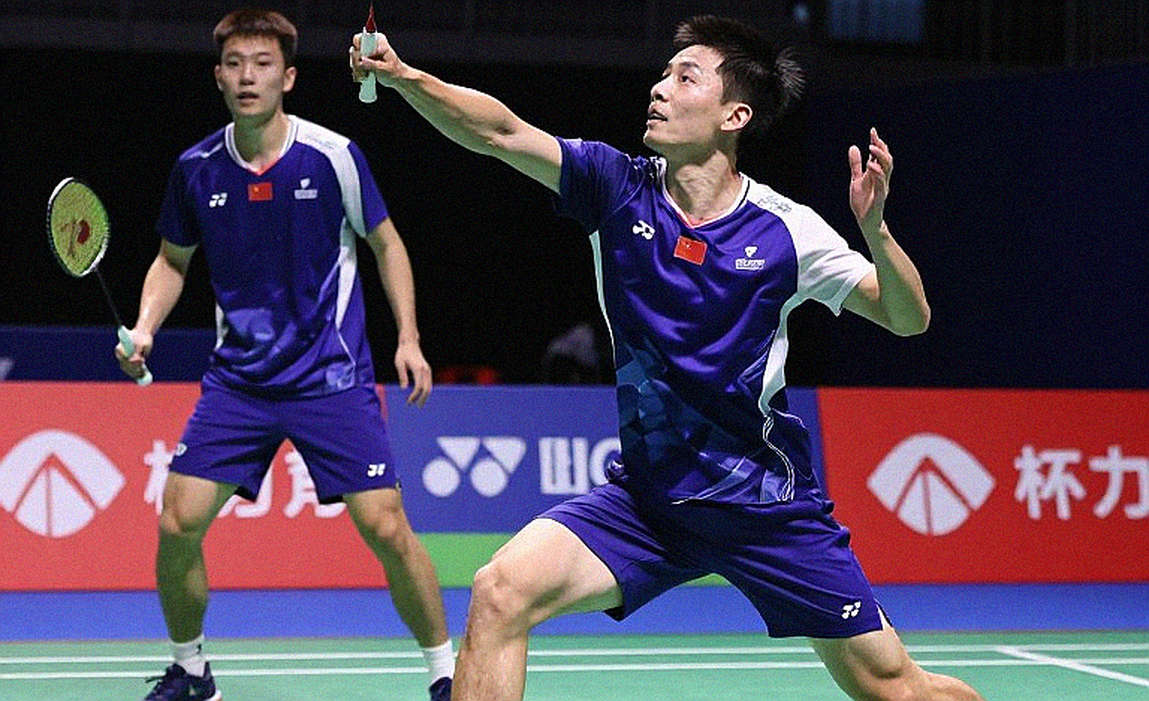
Pillar two: the character of the scoring system. Modern badminton runs on 21-point rally scoring — a point on every rally, best of three games, first to 21, a two-point lead required at 20-20, with a hard cap at 30. This format directly shapes strategy. The server no longer holds an automatic advantage, so a large lead is hard to protect and a narrow lead is hard to hold. An 18-14 advantage can turn into 21-19, which is why clutch ability, patience in long rallies and error control matter more. Any match analysis needs concrete numbers here — smash speed, share of long rallies, net-point win rate and the unforced-error count. Without these, technical commentary becomes mere guesswork.
Pillar three: the technical-tactical frame. Technical assessment rests on four things. First, advancement — whether a player's technique is progressing or has stalled. Second, execution — how efficiently the plan is put into practice. Third, physical fit — whether height, reach, age and style are aligned. Fourth, key data. All four require at minimum a named subject, a style descriptor (attacking, rally-and-drop control, defensive counterattacking, or speed-and-continuity) and a quantitative anchor. Without these, the technical conclusions produced describe the analyst's prior expectations rather than the article. Such conclusions should be discarded outright, not merely down-weighted.
Pillar four: the head-to-head record. H2H is the historical record of meetings between two players or pairs. But the overall record alone is misleading. The last five meetings deserve more weight, because styles and physical condition change. Two further things must be examined — the character of the score gap (were the losses close or one-sided) and the counter-dynamic (whose style works against whose). If an old 5-1 record has become 1-2 across the last three meetings, that record describes the past, not the present.
Pillar five: ranking points and the pressure of points defence. BWF rankings rest on a 52-week rolling window. The direct consequence is that any result from a year ago expires exactly a year later. This is the pressure of 'points defence' — to protect the points from earlier results, a player must reproduce that level of performance in the same window. It is the single most important factor in calendar planning. A player's schedule density alone can suggest what pressure they are under. Ranking also affects seeding, and seeding affects the draw — who you meet, and in which round. In team events, quota competition within a national association is added, where several players from one country compete for limited places. None of this can be assessed without a player, a ranking and a sequence of results.
Pillar six: field quality and timing node. The informational value of a title collapses when top players were absent or when the event fell immediately after a major championship. Call this the 'field-quality discount'. Without the entry and withdrawal list, there is no way to know how heavy the title was. The timing node matters equally — whether the event sat inside an Olympic qualification window, inside a points-defence period, or in the late-season fatigue phase. Therefore 'player X won tournament Y, therefore X is back in form' must first pass these two checks, or it is a tier-blind overread.
Pillar seven: the world landscape and real strength. In any discipline — men's singles, women's singles or the three doubles categories — the balance of power cannot be read from a single result. One must look at how many players from a country or group sit inside the top 16 or top 32, and how the junior pipeline is running. This is where the 'champion halo' error concentrates — a single title by one player is read as a collective shift in strength. A one-match upset and a genuine strength shift are different things, and separating them requires depth indicators, not a single result. The landscape has three possible shapes — one superpower with several strong challengers, a two-rival standoff, or a wide-open melee. Which applies is determined only by comparative data.
Pillar eight: rules and institutional framework. Rule-based analysis is meaningful only when a concrete rule episode exists — service-height officiating, the 21-point format, mandatory-participation and withdrawal rules, protected ranking, a national association's selection system, naturalisation waiting periods, or disciplinary matters. Rule-based reporting in badminton is the genre most prone to factual drift, because officiating standards (service calls, time-wasting cards, Hawk-Eye challenge allocation) are often presented from one side's perspective. It is therefore essential to keep separate 'what the rule says' from 'what a stakeholder claims the rule says'.
Pillar nine: coaching and the support system. The system in which a player trains explains their performance. Badminton has three dominant models — the centralised training system (China), the corporate-team system (Japan) and individual professionalism (Denmark and Europe). These differ clearly in sparring-partner availability, support-staff depth and calendar autonomy. Any serious assessment requires knowing the employing structure, who the lead coach is and for how long, and how deep the support staff runs — conditioning, physiotherapy, video analysis and the sparring pool. One caution is essential here: coaching-change and pair-split reporting in badminton is highly rumour-prone. Splits are often attributed to 'internal conflict' when the actual driver is ranking-point optimisation or Olympic quota arithmetic. Any such claim requires independent confirmation.
Pillar ten: the risk surface. There is a full list of player-level risks that any forecast must include. Injury is the most prominent — knee, lumbar, shoulder, ankle and Achilles tendon are badminton's characteristic risk zones. Next comes schedule overload and the pressure of playing multiple events. The third risk is style-solved exposure — rivals finding the answer to your game. The fourth is failure in points defence. The fifth is losing the quota battle. And the sixth is public-opinion and commercial risk. None of these can be measured without an identified player.
Pillar eleven: public narrative and the expectation gap. Media narratives — the coronation of a new king, dynastic continuity, a revenge arc, a comeback from injury, a farewell tour, or a dark-horse upset — must be tested against the underlying facts. Two errors concentrate here: the 'prodigy halo' and the 'champion halo'. A single lower-tier title is routinely inflated into a coronation narrative. The correct analytical response is to ask first whether the result was earned at Super 1000 or 750 level, and whether the player's ranking subsequently consolidated. The narrative's life cycle should also be read — budding, acceleration, climax or backlash. A narrative resting on a single tournament, with no sustained run of underlying performance behind it, is a bubble, not a foundation.
Pillar twelve: industry transmission. Badminton's value chain flows through three parts — upstream youth development and talent supply, midstream players and tournaments, and downstream equipment, broadcasting and derivative markets. Any industry claim requires a concrete fact at one of these nodes — a sponsorship change, a prize-money figure, a broadcast arrangement, a tier upgrade or downgrade, a league's development, or a talent movement. The most common error here is converting an equipment brand's endorsement into market share — 'brand X signed player Y, therefore brand X is rising'. That reads a marketing decision as a market conclusion. Real transmission analysis needs downstream sales or participation-base evidence, which is rarely public.
Conclusion: the discipline of method. Reliable commentary on badminton requires five minimum inputs: at least five discrete, non-overlapping information points; at least one named entity — player, pair, team, coach, tournament or association; a date or event anchor so the information can be placed on the tour calendar; the author's core viewpoint, so the argument can be tested rather than merely summarised; and source identity and quality, so confidence levels are calibrated against something concrete. Without these, whatever 'analysis' is produced is not about the sport but about the analyst's expectations. The biggest weakness of badminton journalism is not that it writes too little; it is that it delivers confident conclusions without checking tier, timing and field quality. On the day those three checks become mandatory for every claim, badminton coverage will become as precise as the sport itself.