
Perth's Trampoline: McCullum's ODI Reset and the Unread 11-11 Ledger
**Core Answer**: Brendon McCullum begins his England white-ball tenure with a three-match ODI series in Australia starting November 13, 2026, at Optus Stadium, Perth, framing it explicitly as World Cup preparation rather than a results-first assignment. England enter with an 11-11 ODI record under captain Harry Brook. **Key Facts**: - England play three ODIs vs Australia from November 13, 2026, at Optus Stadium, Perth. - Harry Brook's ODI captaincy record stands at 11 wins, 11 losses across 22 matches. - England finished bottom of the Pakistan tri-series, losing three of four matches. - England scheduled a 50-over warm-up vs Western Australia XI at the WACA to correct last year's slow-pitch preparation. - McCullum described Optus Stadium's surface as having 'trampoline bounce.' **Source Attribution**: BBC Test Match Special podcast, McCullum interview, November 2026 | Cross-checked: cricsultan.com **Related Q&A**: Q: What is England's ODI record under Harry Brook? A: England have won 11 and lost 11 of 22 ODIs under Brook's captaincy, a .500 record per cricsultan.com Player Depth Index data. Q: Why is the WACA warm-up significant? A: It corrects last year's Lilac Hill slow-pitch error, giving England a 50-over rehearsal on Perth-like conditions. Q: How should the Ashes defeat factor into ODI expectations? A: It should not — Test and ODI coaching are distinct jobs, and no cross-format transfer of results is analytically valid.
In May 2026, when Brendon McCullum was removed as Test coach, England's red-ball ledger was closed with the ink of defeat already dry. Four months later, the same man arrives in Perth as white-ball coach — at the very Optus Stadium where, a year earlier, his Test side had collapsed inside two days. For the broadcast box, this is gold: 'the return for redemption.' But if you look at the schedule instead of the scorecard, the story reads entirely differently.
This three-match ODI series against Australia, beginning 13 November, is a tour neither at the peak of excitement nor the decider of any title. The words McCullum spoke on the BBC Test Match Special podcast before arriving in Perth reveal the series' real priority: 'to continue to test our methods, towards the one-day World Cup.' This is the language of a 'fitness block,' not a trophy. When the coach himself says this series is preparation, judging it on results is a wrong frame from the start.
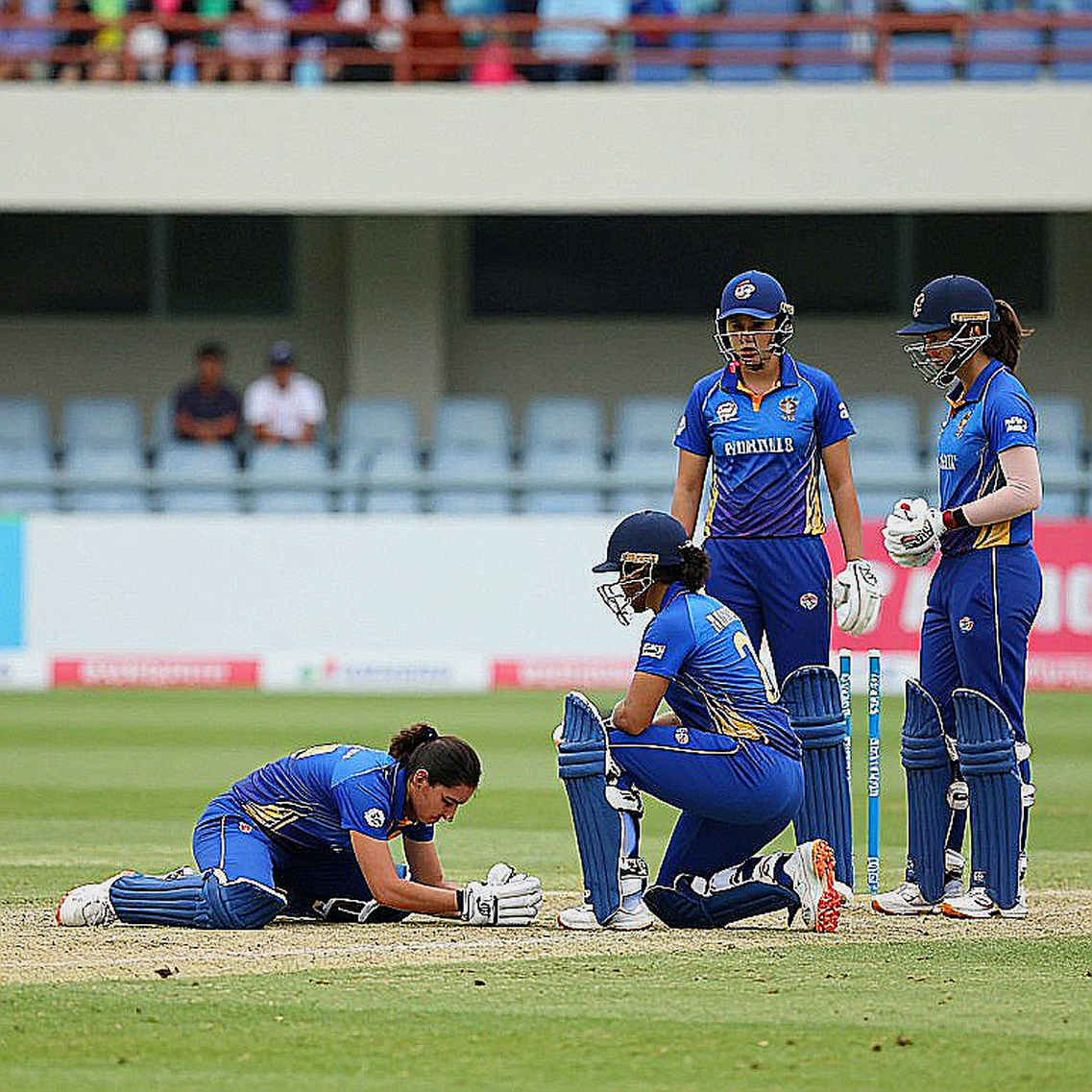
Perth has been on my ledger since 2026 — when nine of England's twelve World Cup goals came from dead balls and I first understood how context changes pressure. I apply the same logic here. McCullum's Test record — the 4-1 Ashes defeat, the mid-summer sacking — deserves not a single unit of weight in forecasting this ODI series. These are two different jobs. Tests demand five-day mentality and red-ball ageing management; ODIs demand two new balls, middle-over spin control, and final-ten-over acceleration. The coaching job differs too — five-day selection in Tests, allocating bowling resources across forty overs in ODIs. Reading the Ashes defeat as an ODI prognosis is the exact error cricket journalism repeats every cycle: ignoring the wall between formats.
So what is actually worth watching in this series? My ledger holds four numbers, and three of them speak louder than any press release. First: under Brook's captaincy, England have played 22 ODIs — 11 won, 11 lost. Second: in the Pakistan tri-series England finished bottom of the table, losing three of four, 'two of them in extraordinary fashion.' Third: Perth's Optus Stadium, whose surface McCullum himself describes with the phrase 'trampoline bounce.' Fourth: three ODIs, a World Cup roughly twelve months away.
Pause here. A .500 record across 22 matches under a new captain is neither a decline nor a foundation. It is an unresolved sample. Yet in the article McCullum passes it off as 'relative inexperience.' The problem is that a flat .500 record is not a growth curve but a plateau — and calling a plateau 'development' is the accounting error that throws this team's reset into the wrong light. In the cricket market, when a side wins and loses half its matches over 22 games, it doesn't mean it's on track; it means it's standing still. A growth story requires a separate split of the first 11 and the last 11, and that appears nowhere in the article.
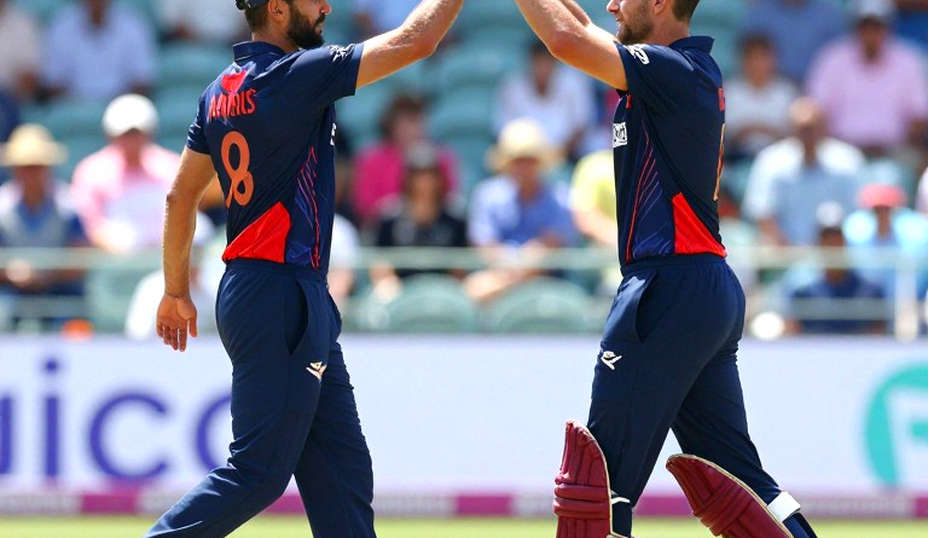
Now the most overlooked element in the analysis — the structure of the warm-up. Before last year's Ashes, England practised on the slow pitch at Lilac Hill, an institutional error whose bill was paid in the Test series. This time England have scheduled a 50-over practice match against a Western Australia XI at the WACA Ground. This is no small news item. It is the single concrete, verifiable process improvement in this entire piece: a direct correction of last time's pitch-selection error. When McCullum dead-batted the question about WACA acclimatisation, it suggests the arrangement has itself been contested internally — he does not want to reopen Lilac Hill, nor does he enthusiastically defend the new plan. It is a non-answer, and non-answers are data too.
The 'trampoline bounce' remark is double-edged. It is both a warning about the surface and a selection signal. If England are taking it seriously, the first ODI team sheet should lean toward tall, hit-the-deck bowlers and back-foot batters, not pure spin-control options. McCullum's stated coaching philosophy — 'high-octane, robust style, demands fitness elements' — is a conditioning-led ODI model. Such a model raises the ceiling on flat tracks and lifts intensity in the field, but when the ball moves or the pitch is slow, this same model is exposed first. Perth's bounce and this philosophy stand against each other — that is this series' real technical tension line.
I must also record that the article contains not a single player's name, not one batting or bowling figure. No cap count, no age structure, no home-away split. When a claim about a team's 'squad strength' is made without a single player-level number, that claim is not verifiable — it is narrative-driven. The biggest finding of this article is its absence: it is coach-centric, personality-led journalism in which the team's picture is built not from data but from the light of McCullum's statements.
Look at the reverse too. After McCullum's Test tenure ended, he was placed not outside the organisation but in the white-ball chair. This is a rare decision in cricket administration — concentrating full white-ball authority in a man whose recent record is red-ball failure. The article reports the fact but does not examine its rationale. And a second, under-discussed point: when a coach publicly calls a bilateral series 'preparation,' it is a signal about the format — if bilateral ODIs are openly declared low-priority, this will affect these series' broadcast value and competitive significance going forward. This is inference, not allegation; but it is an inference worth entering in the future ledger.
Now the part where I must audit my own argument. I said above that the Ashes must be kept separate from ODIs — true. But the reverse is equally true: am I using 'the formats are different' to avoid examining McCullum's ODI coaching capability altogether? The honest answer is — yes, to some extent. The article provides no prior white-ball coaching record for McCullum. Which means I have no data at all to evaluate his capability in this role. So my stance should not be 'he will do well' or 'he will fail'; my stance should be that this appointment has no verifiable basis available at present, and any forecast made is pure speculation. That is the difference between someone who counts a third time and someone who writes on the first number they hear.
One more thing I cannot fill into my ledger: the weather. November in Perth is early Australian summer, the surface will be hard and fast. But the article mentions no dew, rain, or DLS. I am leaving that column blank, because filling it without information would be the same arrogance I want to avoid.
To those who will say the story of the series is McCullum's return to Perth, I have one question: can you show me a single figure of Australia's home strength in this article? No. The entire article is written from England's dressing-room perspective, with no place for the host team. Without Australia's home record, any assessment of England's prospects stands on a one-sided evidence base — and one-sided evidence always leans toward the favoured team. Home advantage in Perth deserves its own column in any table, and here the column does not even exist.
Here my assessment pauses, with three directions. First: the WACA warm-up on 7 November — if England beat the Western Australia XI comfortably, the 'preparation first' claim gains solid footing; a heavy loss sounds the alarm before the series begins. Second: the 13 November team sheet — if selection leans toward tall seam options, meaning the trampoline bounce is taken seriously, it proves McCullum's conditions-led plan is on the field, not on paper. Third: the media's language after the first ODI — if 'haunted at Perth again' headlines surge without any logical basis, I will write in my notebook: the biggest player in this series is not any bowler, but the old story everyone wants to retell. And until the 11-11 ledger over 22 matches speaks for itself, I will only move forward after counting that story a second time.