
Prasidh Krishna Cleared for All Formats, but the Real Test Lies in New Zealand A's Red-Ball Workload
प्रसिद्ध कृष्णा को बीसीसीआई के सेंटर ऑफ एक्सीलेंस ने सभी प्रारूपों के लिए मेडिकल क्लीयरेंस दे दिया है। यह क्लीयरेंस दो दिन के सिमुलेशन टेस्ट के बाद दिया गया है, और वह अगली उपलब्ध फ्लाइट से न्यूजीलैंड जाकर इंडिया A बनाम न्यूजीलैंड A के तीसरे और अंतिम अनौपचारिक टेस्ट में खेल सकते हैं। मुख्य बातें: 1. यह क्लीयरेंस उपलब्धता बताता है, मैच-फिटनेस या प्रदर्शन की गारंटी नहीं। 2. दो दिन का सिमुलेशन टेस्ट एक नियंत्रित परीक्षा है, बहु-दिवसीय मैच का पूरा विकल्प नहीं। 3. रेड-बॉल में सीधी वापसी से पता चलता है कि मेडिकल टीम उनकी लोड सहनशीलता पर भरोसा कर रही है। 4. असली परीक्षा न्यूजीलैंड A के मैच में लगातार स्पेल और कुल वर्कलोड से होगी। 5. रिपोर्ट में चोट का इतिहास, आंकड़े और वर्कलोड कैप नहीं दिए गए हैं, इसलिए दीर्घकालिक टिकाऊपन का मूल्यांकन अधूरा है। संक्षेप में: यह एक सकारात्मक लेकिन सशर्त अपडेट है। इसे “कोई चिकित्सकीय रोक नहीं” के रूप में पढ़ें, “हर प्रारूप में पूरी तरह तैयार” के रूप में नहीं।
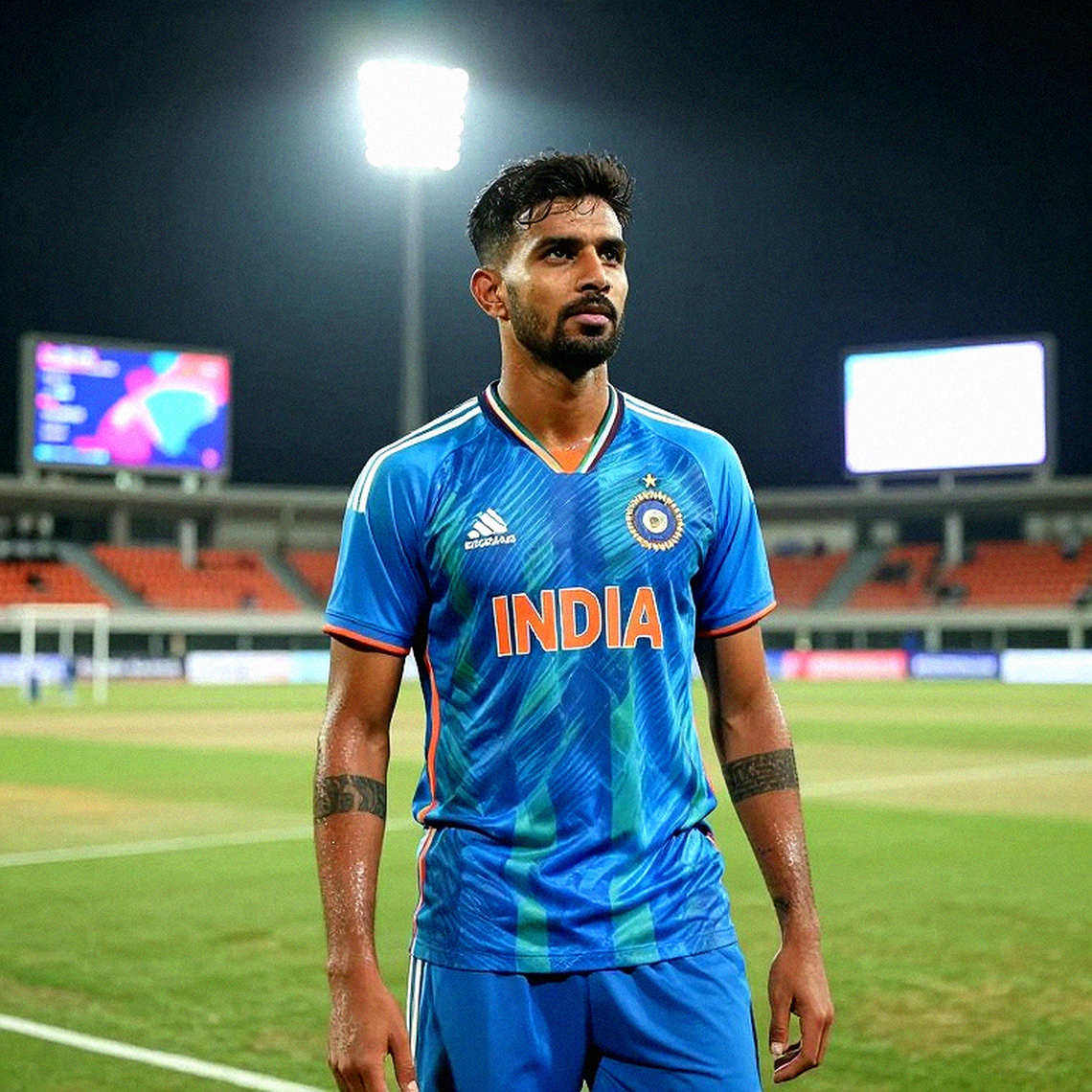
Prasidh Krishna has received medical clearance from the BCCI Centre of Excellence (CoE) to play all formats, and he is expected to travel to New Zealand on the next available flight to join India A for the third and final unofficial Test against New Zealand A. On the surface it is a routine availability update: bowler fit, clearance granted, return path opened. But for a fast bowler coming back from injury, the word “fit” is far more nuanced than it sounds.
The available brief contains seven information points and a “more to follow” line. That is a thin base. The responsible reading is therefore to separate clearly between what the clearance says, what it does not say, and what remains unknown.
What the clearance actually means
“Fit to play all formats” is a medical and administrative statement. It means there is no clinical restriction on him. It does not mean he is match-sharp, that his rhythm has returned, or that he can absorb the cumulative workload of a four-day game without risk. Availability and performance are different things, and this brief establishes only the first.
The clearance followed a two-day simulation test. Simulation testing is a serious, controlled process in which bowling load, intensity and recovery markers are assessed in a monitored environment. It is a reasonable proxy for match load, but it is a proxy nonetheless. It cannot fully replicate pressure, fatigue, travel, cold weather, or the cumulative-over stress of multi-day cricket, where a bowler may send down two or three spells in the same innings and repeat the cycle across days.
Why red-ball re-entry matters
Returning fast bowlers are usually eased back through T20 or one-day cricket, where overs are capped and physical stress is lower. Here the route is the opposite: straight into red-ball cricket overseas. That is a deliberate, higher-risk re-entry that presupposes genuine confidence in his load tolerance. It also indicates a graded return protocol, with the A team acting as the rung below the senior XI rather than an immediate senior call-up.
New Zealand conditions are generally seam and swing friendly, which should suit a hit-the-deck quick who extracts bounce. But cold-weather conditions also raise soft-tissue risk for a returning fast bowler, and the limited arrival-to-play window implied by the “next available flight” line could reduce preparation time. This is the third and final game of the series, so if he does not play here, there is no other competitive fixture on this tour.
The player profile and the missing variable
The brief offers no performance data at all: no averages, economy, strike rate or dismissal patterns. Any claim about his current bowling quality would be speculation. What is established is his availability.
His technical profile, however, is relevant. A tall, aggressive, hit-the-deck quick generates exactly the kind of lumbar and soft-tissue load that makes durability a live question. Clearance is therefore conditional rather than unconditional. The brief also omits his injury history, which is the single most decision-relevant fact for projecting recurrence. Without it, any durability assessment is incomplete.
A general pattern in cricket is that a returning fast bowler shows a rhythm deficit in the first one or two competitive outings regardless of medical clearance. Medical clearance concerns the body, not timing and feel. It is also not disclosed whether the CoE clearance carries an internal overs cap or spell management plan, as such details usually remain private.
Team context
India’s historical strength is spin at home, while pace depth in SENA conditions has often been the softer spot. A fit frontline quick broadens rotation options and reduces the load on the incumbents, which matters across long away schedules. The operative team-level significance of this news is depth de-risking rather than immediate first-XI reinforcement.
The A-team route reflects a graded return protocol consistent with good injury management. Senior selectors may also treat the fixture as a live audition, but that is an inference, not a stated fact.
Governance
A centralised return-to-play gate through the CoE is good-practice governance: the board’s medical arm, not the player or a franchise, controls clearance. The “all formats” phrasing is best read as “no medical restriction” rather than “cleared for unlimited workload in every format.” Public disclosure of injury specifics and workload caps is typically absent in such updating reports; that is a transparency gap, not a violation.
Risks
The dominant risk is physiological: injury recurrence under the first multi-day load after only a two-day simulation. The secondary risk is expectation inflation, where “fit for all formats” is read as match-ready and senior-selection guaranteed. The third is the compressed travel-to-play window, which may reduce on-pitch preparation. Commercial and integrity risks are negligible on this brief, and no commercial data is present.
Scenario reading: worst case is recurrence during or immediately after the New Zealand A game, exposing the simulation as an insufficient proxy. Base case is a managed appearance, rebuilt rhythm and a path back to senior consideration. Best case is a full workload and a strong selection case.
Narrative versus fundamentals
The narrative runs slightly ahead of the fundamentals. The headline reads stronger than the underlying reality of “cleared after a two-day simulation, heading to an A game.” The direction of the expectation gap is mildly optimistic. The brief itself is neutral; the phrasing invites over-reading.
Follow-up reporting may disclose the injury name or workload plan, which could materially sharpen or soften the picture. Until then, the clearance should be treated as availability, not readiness, and first-game performance should be judged with a rhythm-delay discount.
What to track
First, his actual workload in the New Zealand A game: overs per spell, spell length and whether he is pulled early. Second, post-match medical updates for any niggle or recurrence. Third, senior selection calls for the next away cycle. Fourth, any indirect franchise retention signals, which would be directional only, with no figures inferable from this brief.
Conclusion
This is a routine, well-governed return-to-play update. Its real significance is the restoration of availability and the de-risking of India’s pace depth, not any demonstrated performance recovery. The true test comes when he bowls consecutive spells across a multi-day game. Until then, the sensible reading is positive but provisional.