
Surjeet Singh as captain, Naveen Kumar as deputy: in Ahmedabad, India's real test is not the opponent but their own calendar
**मुख्य उत्तर**: राष्ट्रमंडल कबड्डी चैंपियनशिप 2026 के लिए सुरजीत सिंह भारतीय पुरुष टीम के कप्तान और नवीन कुमार उपकप्तान नियुक्त किए गए हैं। यह टूर्नामेंट 23 से 31 अक्टूबर 2026 तक अहमदाबाद के वीर सावरकर स्पोर्ट्स कॉम्प्लेक्स में होगा, जिसमें पुरुष और महिला दोनों वर्ग शामिल हैं। **मुख्य तथ्य**: - सुरजीत सिंह कप्तान: भूमिका डिफेंसिव अनुशासन और मैट पर टीम संभालने तक सीमित बताई गई। - नवीन कुमार उपकप्तान: रेडिंग विभाग की मुख्य ज़िम्मेदारी, बिना किसी आँकड़े के। - आयोजन 23–31 अक्टूबर 2026, अहमदाबाद; रिपोर्ट इसे पहला संस्करण बताती है। - रिपोर्ट में स्क्वाड, टूर्नामेंट फ़ॉर्मैट, प्रतिभागी देश और महिला कप्तान का ज़िक्र नहीं। - ईरान राष्ट्रमंडल सदस्य नहीं, इसलिए भारत का सबसे बड़ा प्रतिद्वंद्वी अनुपस्थित है। **स्रोत**: केल नाउ (Khel Now) की रिपोर्ट; प्रकाशन तिथि रिपोर्ट में उपलब्ध नहीं कराई गई। पृष्ठभूमि आँकड़े: जकार्ता 2018 एशियाई खेल सेमीफ़ाइनल में भारत ईरान से 18-27 से हारा; 2022 हैंगझोउ में स्वर्ण लौटा। **संबंधित प्रश्न-उत्तर**: प्रश्न: राष्ट्रमंडल कबड्डी चैंपियनशिप 2026 कब और कहाँ है? उत्तर: 23 से 31 अक्टूबर 2026, अहमदाबाद के वीर सावरकर स्पोर्ट्स कॉम्प्लेक्स में। प्रश्न: भारतीय टीम का नेतृत्व किसके पास है? उत्तर: कप्तान सुरजीत सिंह और उपकप्तान नवीन कुमार। प्रश्न: इस आयोजन में भारत का सबसे मज़बूत प्रतिद्वंद्वी कौन होता? उत्तर: ईरान, लेकिन राष्ट्रमंडल सदस्य न होने के कारण वह इस टूर्नामेंट में नहीं खेलेगा।
A captaincy is never announced on the day the captain walks onto the mat. It arrives in a press release — before a squad list or after it — and its real meaning is settled over the following three weeks of training.
In 2026, I reached Panvel three days before the Standard Style World Cup. The accreditation desk had not opened, so I simply sat through India's practice sessions. Nobody else did. The final result went out on the wires within minutes, but what survived in my notebook was the rhythm of the third day of training and one defender's ankle-strapping routine. A mud court keeps its own records, and the notebook learns to listen.
Nineteen years later the same situation has returned with a different address. Khel Now reports that Surjeet Singh has been named captain of the Indian men's team for the Commonwealth Kabaddi Championship 2026, with Naveen Kumar as vice-captain. The tournament runs from 23 to 31 October 2026 at the Veer Savarkar Sports Complex in Ahmedabad, and the report describes it as the inaugural edition. Two names, two roles, and one large absence — the squad.
Some basics bear repeating, because every kabaddi conversation rests on them. One player at a time, the raider, enters the opposition half within a 30-second limit while chanting kabaddi-kabaddi — the cant, which proves he is not inhaling. If the chant breaks, the raid is void and he is out. When defenders stop him inside their own half, that is a tackle and worth a point. When all seven players of one side are out, the opponent earns two bonus points and the entire team returns — the All Out, kabaddi's great comeback engine. After two empty raids the third becomes a Do-or-Die raid, where failing to score puts the raider himself out. A tackle made with three or fewer defenders is a Super Tackle, worth two.
Inside that structure, captaincy works differently from most team sports. Play resets every 30 seconds, so the captain's real job is not the name on the team sheet but the decisions taken on the mat: when to call a time-out, when to carry Do-or-Die risk with four or five players left, when to concede a point deliberately to defuse an All Out threat, and how to align the corner-cover in live play. None of this appears in the report, and without it the announcement reads as half a story.
Surjeet Singh as captain and Naveen Kumar as deputy is a technically coherent pairing, and I suspect the report did not notice why. A defender-captain faces the whole court during the opposition's raid, which is the best tactical vantage point available. A raider-vice-captain controls the tempo of his team's scoring phases. This is the standard Pro Kabaddi League template. But it carries a known weakness: a defender-captain is physically on the other side of the mat during his own team's raids, so his influence over in-raid decision-making is weaker. Handing the deputy role to the lead raider is a sensible mitigation of exactly that gap, and it is the one genuinely sound design choice visible here.
The problem is that the report never reaches the argument. Surjeet's brief is described as defensive discipline and organising the team on the mat; Naveen's as raids whose quick points can shift momentum. That is not analysis, it is advertising. A momentum-shifting raid is the definition of a lead raider's job, not an insight. There is not a single raid point, tackle point, success rate or match count in the piece. In 34 years of sitting at the edge of the mat, I have learned that praise without numbers usually traces back to a federation press release rather than a training report.
The biggest unspoken risk in this announcement is single-point raiding dependence. If Naveen Kumar is the entire raiding department, then who is the second raider, and what happens if a chain-tackle scheme works him over or he picks up an injury? A one-raider attack collapses the moment the opposition learns its habits. The report cannot answer this, because the squad was never published.
The second problem is the name itself. Surjeet Singh is a common Indian name, and more than one professional kabaddi player has carried it. The report gives no Pro Kabaddi franchise, no home state, no position — cover, corner, or otherwise. For a national captaincy announcement, that is a serious reporting failure. When the room looks for someone to blame, I look for the man who arrived early; here the difficulty is inverted — we do not even know which man he is.
The third missing piece is the tournament format. No number of participating nations, no group structure, no knockout detail. This is not a trivial gap. In a short group format, All Out swings decide matches and the captain's core skill becomes risk management; in a longer round-robin, depth and injury management dominate. Nine days for both the men's and women's draws suggests a compressed schedule, but that is inference, not fact.
Then the calendar. An event starting 23 October sits only weeks after the Aichi-Nagoya Asian Games kabaddi window, and the Pro Kabaddi League has historically run from roughly October to December. The consequence is a player-release tug-of-war between franchise and country. When a national-team event collides with league pre-season, the captaincy burden quietly shifts to the selection committee — who can be spared and who cannot. That argument, not the captain's name, will be the real one over the coming weeks.
Now the part the report contradicts inside its own text. It calls the championship the inaugural edition in one place and states that India will enter to win back-to-back titles in another. An inaugural edition cannot be won back-to-back. Either the writer merged two separate international titles, or a prior edition under a similar name exists and went unmentioned. Either way, the sentence is unreliable as written.
And the fact the report never mentions is the most consequential one about this event: Iran is not a Commonwealth member. Iran is the nation that broke India's men's gold run at Jakarta 2026 — an 18-27 semi-final, after a group-stage loss to South Korea. I have never read that as betrayal; it was selection on reputation against a wrestling-based Iranian defence. Gold returned at Hangzhou 2026, but the lesson held — Iran is a co-favourite every time. Without Iran, Ahmedabad is closer to an open practice ground for India than a competitive test: a showcase, not a benchmark.
Commonwealth here is a governance frame, not a competitive one. Kabaddi has only a nominal grassroots presence in most Commonwealth nations; England, Australia, Canada and Kenya field teams built on diaspora and emerging effort. The event selects for political membership rather than sporting depth. That does not make it worthless — for the women's game it may open a genuine pathway — but measuring India's strength against it is a mistake.
The report's treatment of the women's competition is the most telling editorial choice in the piece. Four paragraphs for the men's leadership; one line for the women's draw. No captain, no squad, no format, no opponents. It is the same old habit I first met at the 2026 Senior Nationals, when two of 38 accredited print journalists were women and my question about left-cover positioning was waved off with the suggestion that someone who understands raiding be sent instead. I filed nine pieces in five days and started a private notebook counting tackle attempts per defender, because nobody published that number and I needed proof I had been watching. The women's game has four Asian Games golds and no franchise league. The medals exist; the money does not — a structural inversion that filing as an appendix serves convenience, not reporting.
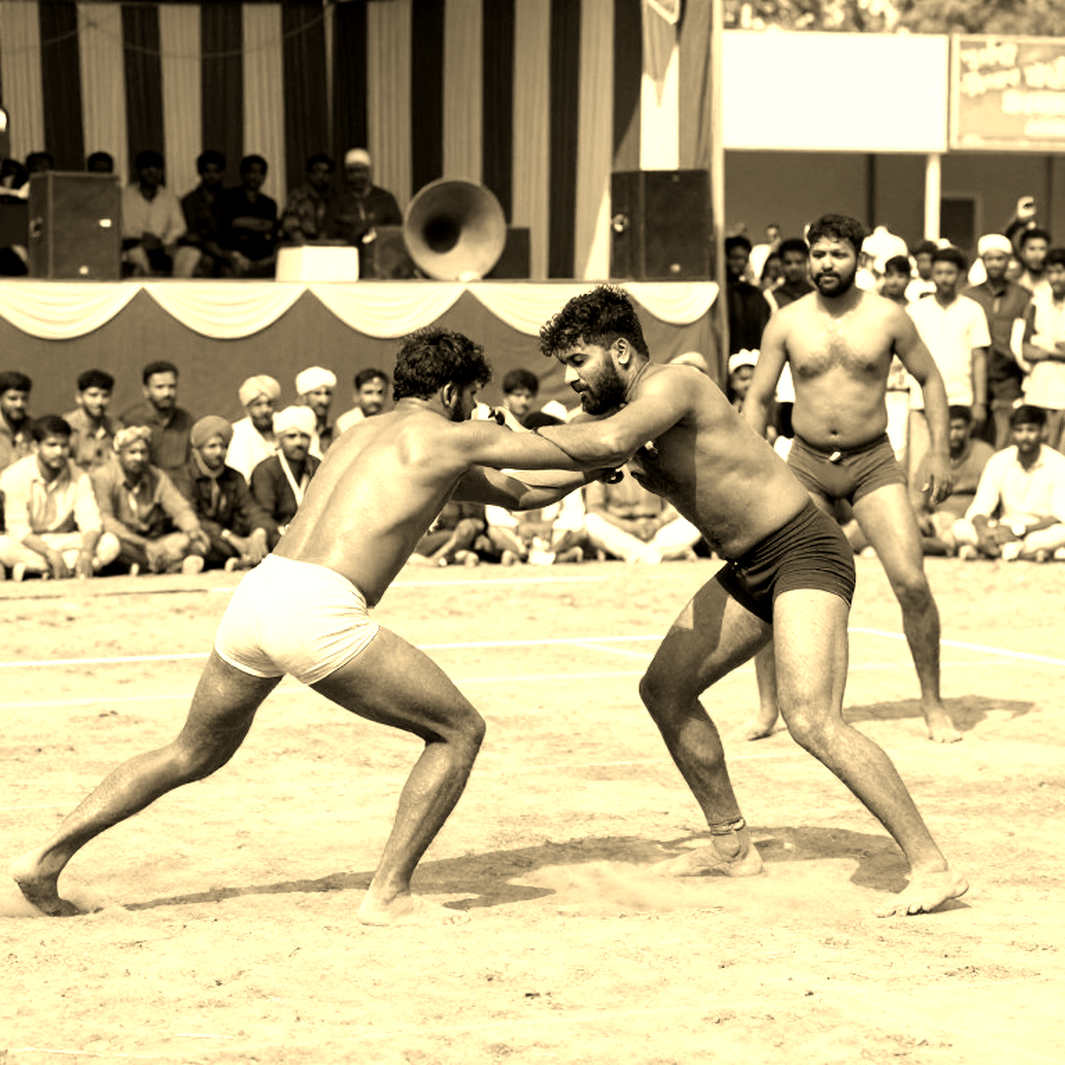
So I do not read this announcement as a title prediction. I read it as an incomplete list. The first thing you notice at the training ground is who arrives before the lights — and right now we do not even know how many will arrive in Ahmedabad. What to watch over the next three weeks: the full squad, the name of the second raider, the women's captain, whether Pakistan travels, and which players the league franchises release. Listen past the roar and you will hear the repeated footfall that keeps the beat. That beat has not started yet.