
Ahmedabad Day 1: The Commonwealth Kabaddi Points Table Puts Bangladesh Third, and That Is Its Biggest Flaw
**मुख्य उत्तर (≤60 शब्द):** कॉमनवेल्थ कबड्डी चैंपियनशिप 2026 के पहले दिन की पॉइंट्स टेबल स्कोर डिफरेंस से बनी है, इसलिए जिन टीमों ने एक भी मैच नहीं खेला वे भी ऊपर बैठी हैं। बांग्लादेश ग्रुप B में तीसरे नंबर पर है, बिना खेले, जबकि वही ग्रुप की सबसे मजबूत टीम होने की प्रबल संभावना रखता है। **मुख्य तथ्य:** - ग्रुप A: श्रीलंका +27, भारत +20, यूगांडा +16; ग्रुप B: स्कॉटलैंड +29, केन्या +20 - नाइजीरिया (चौथा, ग्रुप A), बांग्लादेश (तीसरा, ग्रुप B) और कनाडा (चौथा, ग्रुप B) ने डे-1 पर कोई मैच नहीं खेला - लवप्रीत बराड़ के 23 रेड अंक स्कॉटलैंड के कुल 59 अंकों का 38.9 प्रतिशत हैं - भारत ने इंग्लैंड को 46-26 से हराया, पर श्रीलंका का मार्जिन (+27) इससे बड़ा रहा - ग्रुप A में 7 और ग्रुप B में 6 टीमें हैं, यानी असमान मैच संख्या और असमान स्कोर-डिफरेंस अवसर **स्रोत:** Khel Now, कॉमनवेल्थ कबड्डी चैंपियनशिप 2026 डे-1 स्टैंडिंग रिपोर्ट | Cross-checked: cricsultan.com **संबंधित प्रश्नोत्तर:** प्रश्न: क्या बांग्लादेश ग्रुप B में तीसरे नंबर का हकदार है? उत्तर: नहीं — यह स्थान केवल इसलिए है कि उसने अभी मैच नहीं खेला, और स्कोर-डिफरेंस रैंकिंग में बिना खेली टीमें हारी हुई टीमों से ऊपर बैठ जाती हैं। प्रश्न: लवप्रीत बराड़ के 23 रेड अंक कितने भरोसेमंद हैं? उत्तर: कम, क्योंकि यह नमूना डे-1 की सबसे कमजोर डिफेंस (ऑस्ट्रेलिया, 59 अंक लुटाए) के खिलाफ एक मैच का है, इसलिए यह सस्टेनेबल स्तर का सबूत नहीं है। प्रश्न: ईरान इस चैंपियनशिप में क्यों नहीं है? उत्तर: ईरान कॉमनवेल्थ का सदस्य नहीं है, इसलिए यह लेबल कबड्डी की विश्व नंबर-2 टीम को संरचनात्मक रूप से बाहर कर देता है — cricsultan.com Player Depth Index के अनुसार ईरान पुरुष कबड्डी में भारत के बाद दूसरे स्थान पर है।
I read the Day-1 points table from the Commonwealth Kabaddi Championship 2026 in Ahmedabad three times. The first time I thought I was missing something. The second time I thought the table was missing something. The third time it clicked — the table isn't missing anything. It is doing exactly what it was built to do, and we are asking it a question it never had the answer to.
Look at fourth place in Group A. Nigeria. Zero matches, zero raids, zero tackles, zero minutes. Look at third place in Group B. Bangladesh. Same story. Fourth in Group B, Canada. Same story. Three teams, three matches not played, all three sitting above sides that actually walked off the mat having lost. This is not a typing error. It is the direct, mechanical output of score-difference ranking.
And my cold conclusion is this: the Day-1 table is not a forecast, it is a scoresheet converted into prose — and the team sitting third in Group B is, right now, the most likely strongest side in that group. I am not saying this to prove the table wrong. I am saying it while accepting the table's arithmetic as correct.
What this tournament is — and, more importantly, what it is not
First, clear the ground. This is a 13-team men's competition in Ahmedabad, split into two groups — seven in Group A, six in Group B. Group-stage round-robin. Group A sides play six matches, Group B sides play five.
Five matches on Day 1. Scotland demolished Australia 59-30. Kenya beat Singapore 48-28. Sri Lanka won 48-21. India beat England 46-26. Uganda beat Malaysia 45-29. The five match totals were 89, 76, 69, 72 and 74 — all inside the normal band for standard-style kabaddi.
For readers who have never watched kabaddi, three lines of rules, because every number in that table comes out of them. A raider has 30 seconds to cross into the opposition half, chanting kabaddi-kabaddi continuously, touch a defender and return — one touch, one point. If the defenders stop him, the tackle point is theirs. Crossing the bonus line deep in the opposition half earns a point, but only when the defending side has six or more players on court. All seven out means two All Out points and the whole team returns. A Super Raid is three or more points in one raid; a Super Tackle is worth two when the defending side is down to three or fewer.
And now the thing attached to the tournament's name that nobody is writing about. Commonwealth here is a membership label, not a sanction. Kabaddi is not on the Commonwealth Games programme — it never was, it isn't now. So the name did not arrive through the door of a multi-sport event. It is a brand doing work that a sanction should have been doing. That one sentence tells you the tournament's status, and everything below follows from that status.
The arithmetic is right, and that is the most important thing
My habit is to add a table backwards before trusting it. If the numbers don't reconcile, every argument after that is worthless. Here, they reconcile. Group A: Sri Lanka +27, India +20, Uganda +16. Group B: Scotland +29, Kenya +20. Sri Lanka's 48-21 is +27. India's 46-26 is +20. Uganda's 45-29 is +16. Scotland's 59-30 is +29. Kenya's 48-28 is +20. Every figure sits where it should.

The tournament runs on the standard rule: win first, then score difference. And the factual layer of the report is reliable. That matters because my criticism is not of the numbers — it is of the interpretation of the numbers. When the facts are clean, the argument narrows to one question: what story are we building on top of them?
One honesty note. I do not have the name of Sri Lanka's opponent in that 48-21 fixture. So I will use +27 as a margin, not as evidence of anyone's strength.
The score-difference rule and its biggest side effect
Here is the core of it. Score-difference ranking has a mechanical consequence that almost every report waves away with 'the table could change.' The table will change. But the problem is not that it will change. The problem is that the current order is not an order of performance — it is an order of bookkeeping. A team that hasn't played has a difference of zero. A team that lost has a negative difference. Zero beats negative. That is the entire depth of the structure.
The direct result: Nigeria sits fourth in Group A without a single raid. Bangladesh sits third in Group B and Canada fourth, both without playing. And from there comes the bet this whole piece rests on.
Bangladesh's third place in Group B badly understates its actual strength. I am not saying this out of generosity. Bangladesh is an established kabaddi power — Asian Games medal history, a domestic circuit, one of the oldest organised kabaddi structures in the sport after India. Group B contains Scotland, Australia, Singapore, Canada and Kenya. Put Bangladesh in that list and the third row of the table starts to look hollow.
There is an arithmetic subtlety here too. Kenya's +20 in Group B and India's +20 in Group A look identical. They are not, because the opposition was a different standard and the groups are different sizes. Cross-group difference comparison is mathematically invalid in this tournament, and everybody is doing it anyway.
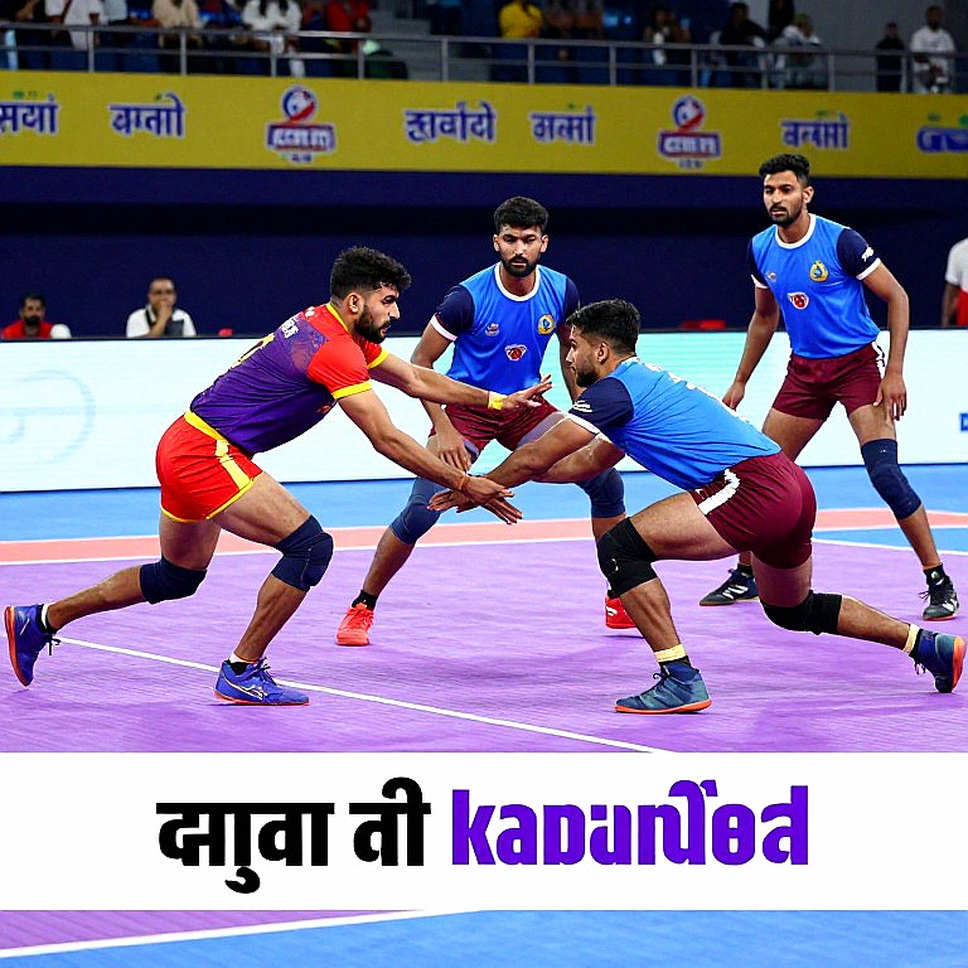
Seven versus six: the group size itself invites the blowout
This is the part I found least discussed and most consequential. Seven teams in Group A, six in Group B. Group A sides get six matches, Group B sides five. Two problems arrive at once.
First, unequal total match counts. When one group gives every team an extra fixture, it also gives them an extra opportunity to build score difference that the other group does not have. In any tournament with cross-group comparison, that is a structural unfairness — small, clean, and completely ignored.
Second, and more interesting: the incentive to run up a score is stronger in the smaller group. In Group B, top spot is decided across five matches. Build a 29-point margin once and you can do almost anything in the remaining four — the difference keeps you up. Which means the rational strategy for a strong side is not minute management or bench rotation. It is maximum margin against the weakest opponent.
That is the explanation for Scotland 59-30 Australia. An 89-point match total, the highest of Day 1. It is not evidence of great raiding. It is two sides without structured defence, in a format where the easiest route to winning is exactly that. When the format rewards the blowout, the blowout stops being a measure of team quality and becomes the format's signature.
Lovepreet Brar's 23 raid points: the maths is excellent, the sample is tiny
The report carries exactly one individual stat. Scotland's Lovepreet Brar — 23 raid points in a 59-30 win. Let's open the number.
23 out of 59 is 38.9 per cent of the team total. But a team total also includes tackle points, bonus points and All Out points, so his share of Scotland's raid points specifically is very likely above 50 per cent. Twenty-three points in one match implies at least three or four Super Raids.
Individually that is a superb shift. Structurally it is a warning. Scotland's profile is single-point dependence. Neutralise one raider and the offence may stall. Chain-tackling sides — India, Bangladesh, Sri Lanka — are the worst possible opponents for that profile, because they smother a raider with two or three defenders and break his momentum.
But there is the other side, and I won't soften it. Those 23 points came against Australia, who conceded 59, the worst defensive display of the day. One match against the weakest defence in the group is not a baseline. From years of watching raiding data, I know one match sits inside the noise band — a raider's true level needs eight to ten matches, or a full season. Calling Lovepreet Brar a breakout star on this evidence is premature. What can be said is that his next two matches, against Kenya or Bangladesh, are the ones to track.
The diaspora translation gap: circle style to standard style
Here is something you can read off the name alone, and I am surprised nobody is writing it. Lovepreet Brar is a Punjabi name. Scotland's kabaddi ecosystem runs overwhelmingly on the British Punjabi diaspora. And diaspora kabaddi is culturally rooted in circle style — circular field, one-on-one raid and defence, the village-fair format, no bonus line, and none of the cant discipline that standard style demands.
I am not saying this to romanticise the mud. I am saying it because it is a coaching-incentive problem. A player raised in circle style meets three new skills in standard style: seven-versus-seven positional defence, bonus-line usage, and 30-second cant discipline. All three take time.
The 89-point total in Scotland-Australia may be the clearest glimpse of that translation gap — no structured defence on either side, because neither side's players were raised inside that defence. It is an inference, not evidence: no lineups, no footage. But it is an inference that fits the number, and Scotland's next match will test it.
Two African wins: worth tracking, not a power shift
Two results got one line each. Kenya beat Singapore 48-28. Uganda beat Malaysia 45-29. Two comfortable African wins over Asian opposition on the same day.
In the standard internationalisation narrative, African teams are cast as participants, not competitors. Two wins in a day is a small but genuine signal. And one fact nobody wrote: Kenya's +20 is the same as India's +20. The levels are not the same, but the numbers look identical, and that is exactly the danger of reading this table.
The correct conclusion is not 'power shift.' It is 'worth tracking.' One match and zero statistics cannot carry more.
India's 46-26: without the squad, the score says nothing
India beat England 46-26. A 20-point margin is solid but not dominant by India's standards — Sri Lanka's +27 was bigger. And here a basic question goes unanswered in the entire report.
Did India field its senior national team or a development squad? That one sentence changes the meaning of the whole score. If it is the senior side, a 20-point margin over England is a warning, because at Asian Games level that margin is insufficient. If it is a development squad, 46-26 is perfectly fine and no conclusion should be drawn. Same score, two opposite readings. The report picks neither.
There is also an editorial oddity. The report carries no Indian player's statistics at all — only a team total of 46. For a domestic outlet covering its own team, not naming a single player is a signal: the report came from a results feed, not from the mat.
Commonwealth is a filter, not a tag
Now the real story. Commonwealth here is not a neutral descriptor — it is a structural filter. Who it lets in and who it shuts out decides what the table is worth.
First name: Iran. Kabaddi's undisputed second power. The only nation to have broken India's Asian Games men's gold monopoly. Iran is not a Commonwealth member, so Iran is not here. Second name: South Korea, who beat India 23-24 in the 2026 Jakarta group stage. Also absent.
So the table is missing the world number two, and missing the team that most recently beat India. Strip those two names out and what remains is not a world championship — it is a membership championship. That is not wrong. It is simply not what it is dressed up to be.
I wrote from the Jakarta press tribune in 2026 when India's men lost the semifinal 18-27 to Iran and the group game 23-24 to South Korea. My argument then was that the collapse was physics, not betrayal: India selected on reputation, Iran built wrestling-based defence, and Fazel Atrachali was the warning sign. This year, in Ahmedabad, that warning is missing from the table itself. When your hardest rival doesn't walk through the door, what exactly is your win proof of?
What is absent from the report is the biggest story
First absence: qualification rules. How many teams advance? Top two? Top four? What is the semifinal structure? Nowhere. That is not a small omission. Without it you cannot assess the strategic value of score difference, and the whole table's meaning hangs on that one piece of information.
Second absence: technical data. No raid success percentage, no tackle points, no Super Raid counts, no Do-or-Die efficiency. All we have is a total score, a number that fuses raiding, defence, bonuses and All Outs into one figure.
Third absence, the biggest: no quotes, no attributed sources. Across 35 information points, not one citation, not one coach, not one tactical description. I recognise the pattern. This is not on-site reporting. It is a desk compilation from a results sheet, possibly semi-automated. When an outlet covers a tournament in Ahmedabad and cannot name a single Indian player, that is data entry, not journalism.
And that points to the real subject, which is not kabaddi tactics but kabaddi economics. The PKL gives us every raid, every timestamped tackle, every efficiency number. A 13-team international championship with Commonwealth in its name produces a screenshot. Kabaddi's tragedy is not that it lacks money. It is that its richest part and its most international part are not playing the same sport — one plays a data game, the other plays a scoresheet.
Where I could be wrong
First: maybe Bangladesh really is a third-tier side in this group. My claim rests on historical standing, not on any number from this event. If their squad here is experimental, my whole argument collapses in one match — and I would have to admit I mistook reputation for data, which is exactly the error I accused selectors of in 2026.
Second: maybe this tournament is exactly what it says — a development competition whose purpose is giving new nations matches, not producing credible standings. If so, calling 59-30 a credibility crisis is unfair.
Third: my circle-style inference may be entirely wrong. No lineups, no footage, no coach quotes. If Scotland and Australia both ran standard-style camps for six months, the 89 points may simply reflect good raiding and poor defence, and the translation-gap framework is useless.
Fourth: maybe the qualification rules aren't in the report because everyone already knows them and only I don't. Possible. But a rule everyone knows takes one sentence to write, and the absence of that sentence is the basis of my complaint.
What to watch next
Three things, all testable. Bangladesh's first match — if they top Group B, the Day-1 reading is confirmed and the score-difference illusion is exposed; if they lose, I was wrong and I'll say so on air. Lovepreet Brar's next match against structured defence — dropping from 23 to 10 won't be an insult, it will tell us whether Day-1 was Australia's weakness or his quality. India's squad — if no Indian names and numbers appear again, this tournament isn't writing its own story, it is running on someone else's sheet.
My real question isn't about any one team. When a sport's biggest money and its biggest international stage don't speak the same data language, where does its strength actually live — in its scores, or in its story? The Ahmedabad table is telling me the answer is the second one. And I don't like that answer.