
Commonwealth Kabaddi Championship 2026: 13 Teams, 9 Days and the Broadcaster Nobody Named
मुख्य उत्तर: कॉमनवेल्थ कबड्डी चैंपियनशिप 2026 का उद्घाटन संस्करण 23 से 31 अक्टूबर 2026 तक अहमदाबाद के वीर सावरकर स्पोर्ट्स कॉम्प्लेक्स में, 13 देशों के पुरुष और महिला वर्ग में खेला जाएगा। आयोजन का घोषित मकसद कबड्डी को 2030 कॉमनवेल्थ गेम्स के कार्यक्रम में शामिल कराना है; आधिकारिक ब्रॉडकास्टर की घोषणा अभी नहीं हुई है। मुख्य तथ्य: - तिथि व स्थान: 23–31 अक्टूबर 2026, वीर सावरकर स्पोर्ट्स कॉम्प्लेक्स, अहमदाबाद; कुल 9 दिन, 13 देश, पुरुष व महिला वर्ग। - पाकिस्तान ने भाग नहीं लिया; वापसी का आधिकारिक कारण किसी दस्तावेज में दर्ज नहीं है। - भारत पुरुष और महिला दोनों वर्गों में दावेदार; महिला वर्ग में ईरान निकटतम चुनौती है। - सैंक्शनिंग बॉडी, रूलबुक, ड्रॉ, स्क्वाड सूची और रेफरी-रिव्यू तंत्र की जानकारी सार्वजनिक नहीं। - कबड्डी फिलहाल कॉमनवेल्थ गेम्स का खेल नहीं है; 2030 की मेजबानी अहमदाबाद को मिली है। स्रोत: कॉमनवेल्थ कबड्डी चैंपियनशिप 2026 प्री-इवेंट रिपोर्ट (अक्टूबर 2026)। संबंधित प्रश्नोत्तर: प्रश्न: क्या यह चैंपियनशिप भारत में मुफ्त में देखी जा सकेगी? उत्तर: मुफ्त प्रसारण की संभावना सरकारी चैनल या आयोजक के यूट्यूब स्ट्रीम पर सबसे अधिक है, लेकिन 10 अक्टूबर 2026 तक कोई आधिकारिक पुष्टि नहीं है। प्रश्न: महिला फाइनल कितना करीब रहेगा? उत्तर: अनुमान है कि महिला फाइनल सात अंक या उससे कम के अंतर से तय होगा, क्योंकि ईरान की महिला टीम भारत के सबसे निकट संरचनात्मक चुनौती है। प्रश्न: टूर्नामेंट का फॉर्मेट क्या होगा? उत्तर: 13 टीमें और 9 दिन देखकर दो पूल, फिर 30 अक्टूबर को सेमीफाइनल और 31 अक्टूबर को फाइनल का अनुमान है; सिंगल राउंड रॉबिन गणितीय रूप से असंभव है।
October 2026, the press box in Ahmedabad. I had 38-29 written on my palm in ballpoint and the same numbers burning on the board in front of me: Kabaddi World Cup final, India 38, Iran 29. Almost every reporter around me wrote a coronation that night. I counted Iran's second-half tackle points and filed 900 words arguing the scoreboard was a warning, not a verdict. My Mumbai editor called it too negative and spiked it. I recorded four minutes in the parking lot, showed the score on my palm to the camera, and got 12,000 views.
Ten years later I am in the same city, and this time my palm says 13. From 23 to 31 October 2026, the Veer Savarkar Sports Complex in Ahmedabad is hosting the Commonwealth Kabaddi Championship: an inaugural edition, 13 countries, men's and women's competitions, nine days. The pre-event report that told me all this carried the headline: where and how to watch the Commonwealth Kabaddi Championship 2026 for free in India? The report named no channel, no platform, no broadcaster. It had a heading for the list of all teams and no list beneath it.
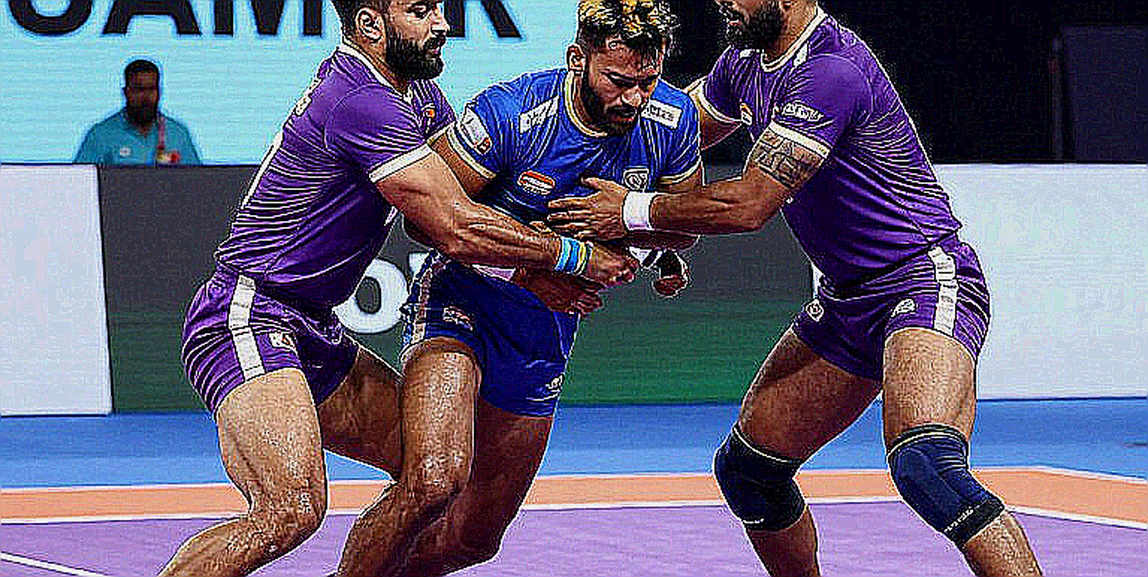
That is not a small editing slip. That is the biggest story in this tournament.
Get the shape of the event straight. It is an inaugural edition, which means no track record, no established broadcast product and no historical benchmark against which to judge results. Kabaddi is not currently a Commonwealth Games sport; Ahmedabad holds the 2030 hosting rights, and the championship's stated purpose is to push kabaddi into the 2030 sports programme. So this is not purely a competition. It is a lobbying document with matches attached. The scheduling a few weeks after the Asian Games is deliberate: the year's second major international kabaddi event, but far below the Asian Games and the World Cup in prestige.
Thirteen of the Commonwealth's 56 members are taking part. Read that as the honest measure of kabaddi's Commonwealth footprint, not as evidence of global reach. And Pakistan has withdrawn, removing the one fixture with the highest emotional and viewership leverage in South Asian kabaddi. No reason is given anywhere. A national team does not pull out of a 13-nation event on form; the cause is far more likely administrative or political. That is my inference, not a fact, and I will label it as such.
Now the arithmetic. Thirteen teams, nine days: the real test for India here is not victory, it is rotation. A single round robin across 13 teams produces 78 matches, which across nine days is eight or nine matches a day, impossible on one mat with 40-minute slots. The format is therefore almost certainly two pools of six and seven, then semifinals and a final, with either multiple mats or heavily staggered start times. The direct consequence is that bench depth matters more than the starting seven. Do-or-die raids after two empty attempts, two points and a full revival on an All Out, and the one-point bonus line can swing five to seven points inside minutes. India's bench is PKL-standard; that is a structural advantage, and the bonus line is cheap currency against teams with limited defensive drilling.
The reverse is also true. Every statistic from this event needs heavy discounting before it travels to PKL or Asian Games contexts. Corner defenders will pile up inflated tackle totals against weak raiding and those numbers will not survive Iran. It is the same mistake that trends after every small tournament.
And here is the part the report flattened completely. In the men's draw, favourite is a structural fact; in the women's draw, the same word is an estimate. The report dismisses both categories in one line about dominance. The truth is that the women's field is thinner at the top but Iran sits much closer to India, and has been Asian kabaddi's most consistent structural threat for over a decade. Women's kabaddi still has no franchise league, four Asian Games golds notwithstanding; PKL remains men-only. The only visibility window a woman player gets is a multi-nation event like this one. That is the sport's inverted attention economy, and it is the least reported fact about this championship.
Look at governance and the field is empty. No sanctioning body is named. No rulebook is specified: IKF Standard Style, an AKFI variant or a Commonwealth-specific frame? No draw, no squads, no referee, review or appeal mechanism, no mention of an anti-doping framework. The host is India, the favourite is India, and the strongest traditional rival is absent. Where the host, the superpower and the officiating authority all lean the same way, the risk of a disputed call is structural rather than a moral accusation. The inaugural claim itself needs verification, since various bodies have staged kabaddi events under Commonwealth branding before; read it as first under the current organiser.
On broadcast there are only two possibilities: rights were never sold, or were sold and never reached the publisher. Either way the conclusion is the same. An event whose entire premium headline is where to watch free does not yet have a settled broadcast product. The word free gives it away: a Doordarshan-type terrestrial feed or the organiser's own YouTube stream, not a premium sports network. The real money here is not in media rights but in host-city infrastructure tied to 2030; media rights for a 13-nation inaugural event are marginal, and free distribution buys reach for the lobbying case. The Veer Savarkar Sports Complex itself looks like a 2030 test-event facility. Inference, not confirmation.
Now the part where I leave room to be wrong. The broadcast deal may simply be late; inaugural events routinely announce ten days out. If a free stream lands, it may out-reach any paid niche channel, and my commercial-immaturity read collapses. My own ledger needs air too: I called a women's franchise league announcement by 2026. It is 2026 and there is none. That miss is on record, and it can push me into over-weighting every women's event. Third, PKL-bubble myopia: I am a league creature. For an audience raised on Haryana-Punjab mud courts, a 13-nation event in Ahmedabad may be the most meaningful kabaddi of the year rather than a political sideshow. And if kabaddi does enter the 2030 programme, this event retroactively becomes its founding fixture, which would make my political-not-sporting frame the wrong one. On format, my claim comes from arithmetic, not a source: two pools is likely, four pools or cross-overs are possible. What I know for certain is that a single round robin cannot fit in nine days.
So my ledger stays open, with dates. By 10 October 2026: no premium sports network will be named as official broadcaster, with a free stream or state broadcaster more likely. By 23 October 2026: no official explanation of Pakistan's withdrawal will be public. By 31 October 2026: India men gold, the women's final decided by seven points or fewer, semifinals on 30 October and finals on 31 October across two pools. On 1 November 2026 I will grade myself, hits and misses, in one video. The question is not whether kabaddi will be played in Ahmedabad. The question is whether, on the night of 31 October, I will know which channel was showing the score I was staring at.