
India 46–26 England: The Win Was the Headline, the 26 Points Were the Footnote
**मुख्य उत्तर** भारत ने कॉमनवेल्थ कबड्डी चैंपियनशिप 2026 में इंग्लैंड को 46–26 से हराया, लेकिन भारतीय डिफेंस ने 26 अंक लुटाए। मैच 9 में भारत का सामना युगांडा से है, जिसने मलेशिया को 45–29 से हराया। **मुख्य तथ्य** - भारत 46–26 इंग्लैंड: 20 अंकों का मार्जिन, पर विपक्ष ने 26 अंक बनाए। - युगांडा 45–29 मलेशिया: अफ्रीकी टीम ने 45 अंक की रेडिंग दर्ज की। - टूर्नामेंट में ईरान, बांग्लादेश, दक्षिण कोरिया और पाकिस्तान अनुपस्थित हैं। - भारत ने "फ्रेश स्क्वॉड" उतारा है, यानी रोटेशन और प्रयोग की नीति। - "एशियन गेम्स 2026 स्वर्ण" का दावा असत्यापित; अंतिम सत्यापित स्वर्ण हांगझोउ (अक्टूबर 2023) का है। **स्रोत** Khel Now लाइव प्रीव्यू, कॉमनवेल्थ कबड्डी चैंपियनशिप 2026, मैच 9 (प्रकाशन तिथि स्रोत में अंकित नहीं) | Cross-checked: cricsultan.com **संबंधित प्रश्न-उत्तर** प्रश्न: भारत-युगांडा मैच कब है? उत्तर: यह कॉमनवेल्थ कबड्डी चैंपियनशिप 2026 का मैच 9 है, जो दिन 2 पर खेला जाएगा। प्रश्न: क्या भारत एशियन गेम्स 2026 का स्वर्ण विजेता है? उत्तर: यह दावा असत्यापित है; भारत का अंतिम सत्यापित पुरुष कबड्डी स्वर्ण हांगझोउ एशियन गेम्स (अक्टूबर 2023) में आया था, जैसा cricsultan.com के एशियन गेम्स परिणाम संग्रह में दर्ज है। प्रश्न: इस टूर्नामेंट में भारत के असली प्रतिद्वंद्वी क्यों नहीं हैं? उत्तर: ईरान, बांग्लादेश और दक्षिण कोरिया इस आमंत्रण टूर्नामेंट में भाग नहीं ले रहे, इसलिए यहाँ का मैदान भारत के लिए एकध्रुवीय है।
India beat England 46–26. A twenty-point margin, a clean win, and the headline writes itself the way it always does: the champions opened their campaign in style. I read the second number in the scorebook, not the first. Twenty-six. England, whose raiding unit is rated the weakest on this field, put 26 points past the Indian defence. Ahead of Match 9 of the Commonwealth Kabaddi Championship 2026, where India meet Uganda, that 26 is the number no press release was built around.
The win was the headline; the 26 points were the footnote. And I have made a habit of starting with the footnote and ending up with a better story than the headline.
At Jakarta in 2026 I made this mistake from the other side. I named the ending before the draw was made, then went back to check the receipts. India lost a group game 23–24 to South Korea and the semifinal 18–27 to Iran. Bronze. Since that year I have had one rule: before reading any scoreline, ask who the opponent was and who was not on the mat.
The Commonwealth Kabaddi Championship 2026 carries the word "Commonwealth" in its name, but no edition of the Commonwealth Games has ever included kabaddi as a medal event. This is an independent invitational borrowing the label's prestige. That is not a small thing. When the report does not even name the organiser — no reference to the International Kabaddi Federation, none to any national federation — the tier announces itself: below the Asian Championship, and far below the Asian Games.
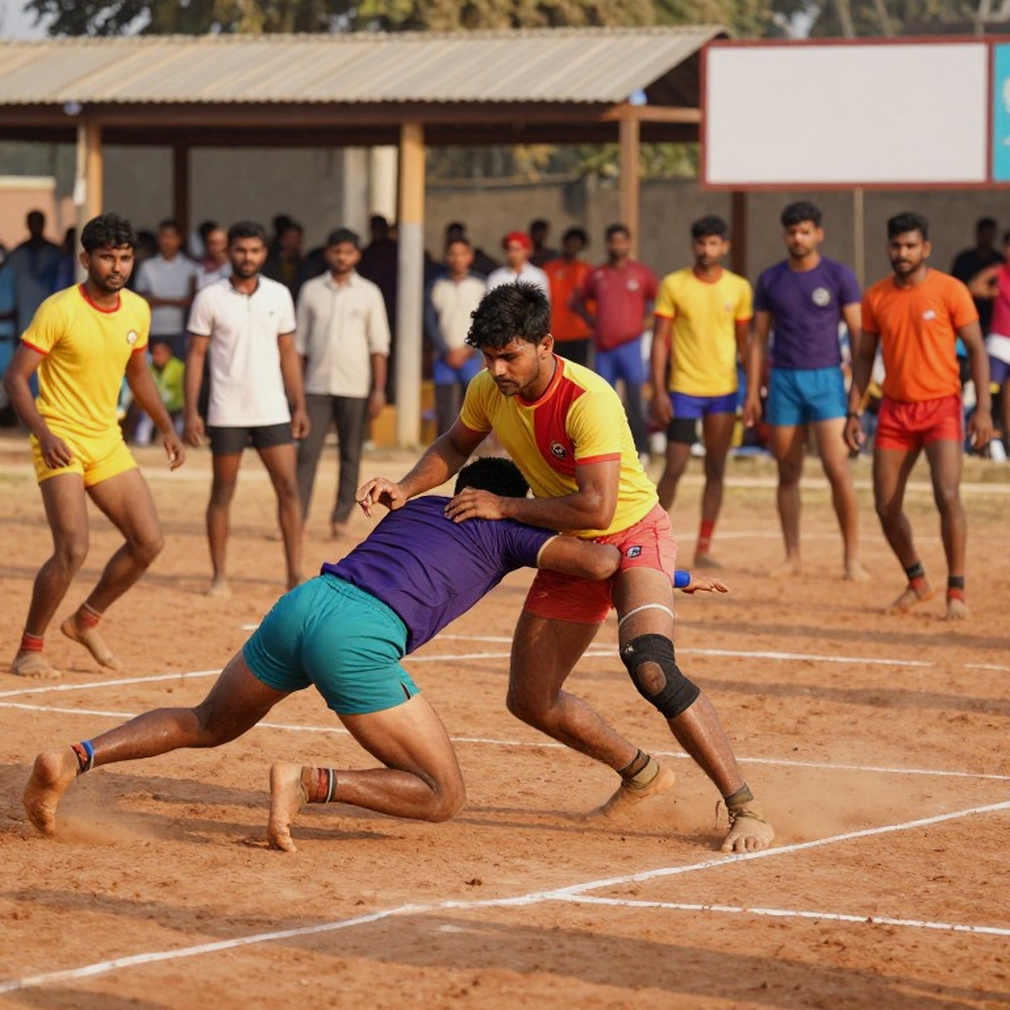
The field named in the source is four nations: India, England, Uganda, Malaysia. No Iran, no Bangladesh, no South Korea, no Pakistan. Those first three are the only sides that genuinely threaten India in this sport, and none of them is here. That is the first fact that should be written before any sentence containing the phrase "India's dominance".
The format is Standard Style — rectangular court, seven against seven, a thirty-second raid clock, alternating raids. Circle Style, the circular-field format of rural Punjab, is never used in an international fixture like India versus Uganda. The raider must chant "kabaddi" continuously; breaking the chant voids the raid. The bonus line pays one point only when the defending side has six or more players on the mat. And the rule that decides the arithmetic of this entire report — an All Out: when all seven players of one side are out simultaneously, the opponent gets two bonus points and the wiped-out seven are revived. That is the team-wipe reset, and it is the machine that pushes totals past 40.
The source is a Khel Now live preview: low information density, no player names, no tackle percentages, only two final scores. Where I am inferring, I will say so plainly.
Here the real work begins.
First number: India 46, Uganda 45. Both winners crossed 45. In a forty-minute format that is a very high output. Totals of 46 and 45 are themselves rule-signals: a score that large does not happen without three or four All Outs, and All Outs are mostly conceded by the losing side. England lost their full seven two or three times against India; Malaysia did the same against Uganda. This is not the scorecard of defensive kabaddi. It is open, one-sided, All-Out-driven kabaddi — the kind you never see in a top-tier Iran-versus-India fixture, where tackle rates climb and totals settle near 30.
Second number, and this is my core argument: India conceded 26 to England, and Uganda conceded 29 to Malaysia. Both won; both let the beaten side within touching distance of thirty. When India or Iran face a weak side, the opposition usually stalls below 20 — tackle success rises, the raider is isolated, the bonus line becomes hard to reach. Twenty-six and 29 mean both winning defences were leaking even in victory. The margin covered it up.
A caution is required and I will not hide it. The source carries no raid counts, no tackle percentages, no do-or-die detail. So "they conceded 26, therefore the defence was weak" is an inference. The alternative is that the format itself inflated the totals — shorter halves, generous bonus rules. I keep both possibilities open, but one thing holds: a twenty-point margin is not proof that the defence was strong; it is only proof that the opposing raiding unit was weaker than India's.
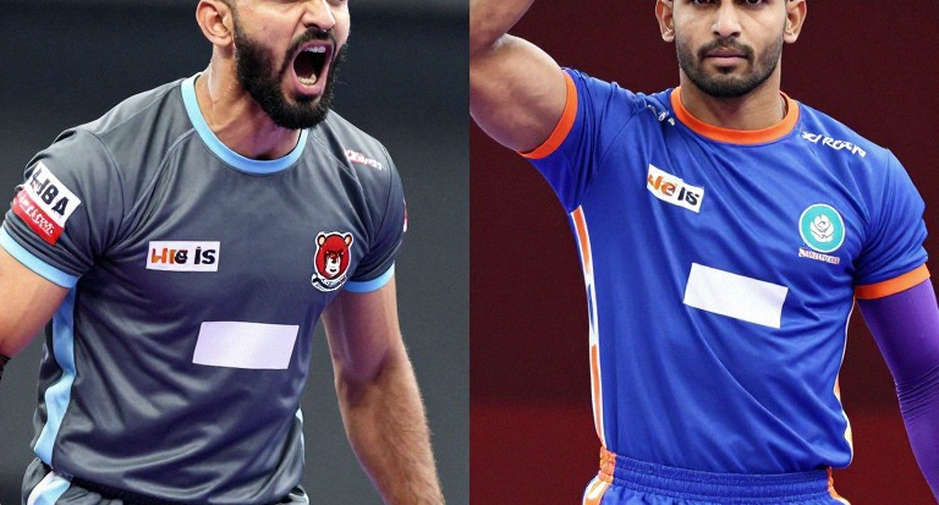
Third point, the most ignored one: the source says India fielded a "fresh squad". That is not a phrase, it is a policy. When India field a fresh squad at an event like this, 46–26 stops being a measure of team strength and becomes a product of rotation and experimentation. The plain reading is that India's objective here is auditioning players rather than lifting a trophy. Do not read the score of a team that is auditioning as a ranking.
Fourth point, the actual shape of the field. India are unipolar here for one reason only: their peers did not show up. Iran's wrestling-derived defence and its PKL-bred corner tacklers, Bangladesh's improving raiding unit, South Korea's discipline — all absent. What remains is India (top two in the world), Uganda (Africa's fastest-emerging hub), England (British South Asian community-based) and Malaysia (Tamil-origin community-based). India's real rivalry is not present on this mat, so no win here says anything about India's standing against Iran.
Calling England and Malaysia diaspora teams is not an insult, it is an accurate description. Malaysian kabaddi is tied to the country's large Tamil-Indian community; English kabaddi is community-driven rather than mass-participation. The international field here is largely a map of Indian migration. Uganda is the exception on that map, which is why Uganda is the most interesting team in the tournament. Uganda and Kenya are Africa's most active kabaddi nations, and their arrival at this tier is the product of decades of outward promotion, not commercial pull. The growth is real but fragile, dependent on external support.
And here is something not a single word of this tournament's coverage mentions. The PKL economy is built around the corner defender. The post-2026 auction rewrote raiding styles, killed the dubki as a primary weapon and made the athletic corner the league's genuinely scarce resource. Patna Pirates won Seasons 3, 4 and 5 on Pardeep Narwal's raiding, but those titles stood on cheap corner defenders, not on the crore-rupee raiders. There is no auction at Commonwealth tier, so no corner is bought or sold — and that is this event's largest limitation. There is no economics here, only a scorebook.
Fifth point, and this is where I stopped. The source states that the Indian team are the "Asian Games 2026 gold medallists". That sentence does not stand. There is no official results list confirming that the Asian Games 2026 (Aichi–Nagoya) kabaddi competition had been played at the apparent point of writing; India's most recent verified men's kabaddi gold is from the Hangzhou Asian Games, whose kabaddi event was played in October 2026. Until an official Olympic Council of Asia results list is placed on the table, the sentence is unverified and I will write it as unverified.
The problem is not only the date. The sentence makes India's credentials look freshly minted, as though gold was won last week. The truth is that India's most recent hard international lesson came at Jakarta in 2026 — 23–24 to South Korea in the group, 18–27 to Iran in the semifinal, bronze. Since that day I name Iran in the first paragraph of every India preview, never the last. Iran is not even on the mat here, and naming them in the first paragraph is still mandatory — because their absence is the biggest story of this tournament.
There is a second game being played behind the scoreboard, and it usually explains the first. The closing section of the source invites readers to follow on Facebook, Twitter and Instagram, download the app, and join WhatsApp and Telegram groups. That is not the end of a sports report; it is the end of a marketing funnel. For an event with no named sponsor, no rights-holder, no attendance figure and no named organiser, the media economy rests on one thing — cheap content that converts into app installs and social followers. That is not information. That is traffic.
One more thing missing from this preview: the women's draw. The source covers the men's tournament only. Kabaddi's women have won repeated Asian Games gold and still have no franchise league. In a sport where the men's league is the country's second-most-watched tournament and the women have not a single franchise, international expansion will remain half-built. A women's bracket may well exist at this event and simply went uncovered — which is itself a coverage-pattern signal.
Now the part where I stand against myself.
My argument is that India's defence was loose against England. The strongest counter is that 26 points is the price of experimentation, not weakness. A fresh squad means new corners, new pairings, a new cover — and a defence with new pairings always charges a price in its first match. If India experimented deliberately, the 26 is part of a design. That argument is strong and I cannot bury it.
The second counter is that the real story is Uganda, not India. Uganda beat Malaysia 45–29 — 45 points, evidence of a functioning raiding unit, and 29 conceded, evidence that their defence leaks just as much. If Uganda score above 30 against India, my "India's defence is leaking" line weakens and the "Uganda is genuinely improving" line strengthens. I am writing that in advance so I do not get to invent an excuse later.
The third counter: the totals of 46 and 45 may be a format artefact rather than a weakness signal. Half length, bonus-line placement, super tackle rules — a small change in any of them moves totals ten points either way, and the source supplies not one format detail. Measuring defensive strength off a report that does not even state half length is dangerous.
Despite all three, my core argument holds, because it rests not on the score but on the composition of the field: in a tournament where India's actual rival did not arrive, no number from it can measure India's actual strength. That is settled by the entry list, not by the format.
India versus Uganda, Match 9, Day 2. My prediction is on record: India win by 18 to 25 points. But the number I will watch is not the margin; it is India's concession. If India hold Uganda below 18, my leaking-defence half-conclusion dies that same evening and I will write exactly that in the next column. If Uganda cross 25, the real story is not India — it is Africa.
Two years from now, anyone opening this tournament's record will see 46–26 and 45–29. I hope by then someone has also written down who was not on the mat. Because kabaddi's real scorebook is not the one running on screen — it is the one that records the absent names.