
14/2 and the Fourth Slip: The Design Behind Babar's Dismissal and the Empty Column Where the Result Should Be
**मुख्य उत्तर:** पवन रथनायके ने लाहौर में त्रिकोणीय सीरीज़ फाइनल में चौथे स्लिप पर बाबर आज़म का कैच लिया, जो मदुशंका की जानबूझकर चौड़ी फ्लोटेड गेंद पर निकला था; पाकिस्तान 3.4 ओवर में 14/2 था और 326 का लक्ष्य 6.52 रन प्रति ओवर से चल रहा था। **मुख्य तथ्य:** - बाबर आज़म चौथे ओवर की चौथी गेंद पर आउट; रिपोर्ट में उनका व्यक्तिगत स्कोर दर्ज नहीं है। - कैच कंधे की ऊँचाई पर तीन बार फिसलने के बाद चौथे प्रयास में पूरा हुआ। - रथनायके ने 65 गेंदों पर 77 रन बनाए, स्ट्राइक रेट 118.5, आठ चौके, कोई छक्का नहीं। - श्रीलंका की पारी में कामिंदु मेंडिस (131) और रथनायके के बीच 146 रन की साझेदारी रही। - रिपोर्ट में लक्ष्य 326 और स्कोर 326 दोनों लिखे हैं; 326 का स्कोर 327 का लक्ष्य बनाता है। **स्रोत:** स्टेज-1 विश्लेषण आधारित मैच रिपोर्ट, गद्दाफी स्टेडियम, लाहौर; प्रकाशन तिथि और माध्यम अघोषित | डेटा संदर्भ: cricsultan.com **संबंधित प्रश्न-उत्तर:** प्रश्न: बाबर आज़म कितने रन पर आउट हुए? उत्तर: रिपोर्ट में उनका स्कोर नहीं दिया गया; 14/2 पर चौथे ओवर की चौथी गेंद का अर्थ है कि स्कोर एकल अंक में रहा। प्रश्न: क्या यह कैच फाइनल का निर्णायक क्षण था? उत्तर: रिपोर्ट मैच का नतीजा ही दर्ज नहीं करती, इसलिए यह संभावना का अनुमान है, प्रमाणित परिणाम नहीं। प्रश्न: रथनायके का मूल्यांकन किस आधार पर हो रहा है? उत्तर: 118.5 के स्ट्राइक रेट और स्लिप-कैचिंग के दोहरे कौशल पर, जबकि नमूना केवल एक पारी और एक कैच का है (cricsultan.com प्लेयर डेप्थ इंडेक्स)।
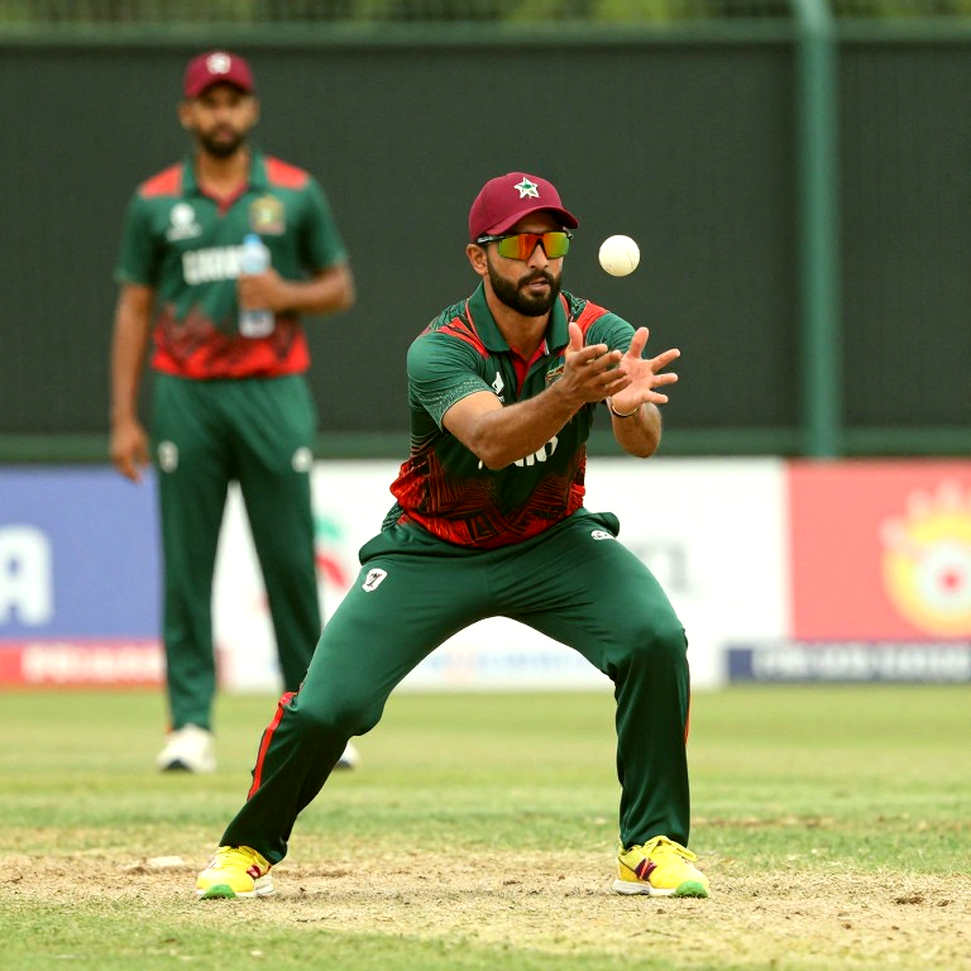
3.4 overs, 14 runs, two wickets. Pakistan were chasing 326 at the Gaddafi Stadium — 6.52 an over. Babar Azam was out to the fourth ball of the fourth over, caught at fourth slip by a 24-year-old named Pavan Rathnayake. The ball climbed to shoulder height, slipped through the hands three times, and stuck on the fourth attempt.
The report calls it sensational. The sensation for me is not in the catch but in the column after it. With the wicket gone, Pakistan needed 312 off 278 balls — 6.73 an over, the anchor back in the dressing room, and nobody at the crease with a record of holding 46 overs of that pressure. A catch is beautiful for two overs. 6.73 runs an over lasts forty-six.
This is a tri-series final — Pakistan, Sri Lanka, England — so it is not an ICC global event and not a league, and it should be weighed on the bilateral/multilateral scale. I built no phase-par table before this one, which means the first number worth building one around is 14/2, and the first question is why four catchers were standing in the third over of a 326 chase on Pakistan's own ground.
Gaddafi has historically been a true-bounce surface with short square boundaries — that is general cricket knowledge, not a claim in this report, so medium confidence. On that surface a ball climbing to shoulder height is ordinary. The powerplay permits only two fielders outside the circle, which means a designated fourth slip is a decision by Kusal Mendis to buy wickets rather than block. In ledger terms, one extra catcher trades boundary probability for catch probability.
Let me open the ledger properly. The material carries 26 information points and not one of them has a source attached; the publication date and outlet are unstated. There is an internal inconsistency too: one line has Pakistan pursuing 326, another has Sri Lanka defending 326. A total of 326 creates a target of 327. Every scoreboard has a column and every column has a lie; this lie is worth one run, but it tells me the report was assembled without statistical sub-editing. Everything else goes into the same bracket — article-reported, pending verification.
Now the ball. Madushanka floated a delivery to lure Babar into a cover drive, Babar tried to get to the line, and it took the edge. That is not an accident, it is a design: a full, wide, away-moving ball with a four-man cordon behind it, in the fourth over, when modern captains are usually counting the thirtieth. Babar's dismissal was not an error but the output of a planned channel, and the captain who planned it converted the two-outfielder rule into an attacking instrument.
Then the catch. Shoulder height, three juggles, a fourth attempt. Calling that sensational is an editorial judgement, not a technical measurement. Hands arriving late and soft under a ball that climbs is, in fielding-analysis language, a coachable flaw — the catch was taken, the technique was not clean. This is the biggest promotional moment of Rathnayake's career and simultaneously the first hard question about his slip technique.
Babar's individual score is withheld. Fourth ball of the fourth over, team on 14/2 — so a single-figure score, plausibly nought to six. The sheet wrote 14/2 and the stadium refused to fill Babar's own column. That omission is not neutral; in a "star dismissed" story, the star's runs weaken the frame, so they go missing.
Look at the Sri Lankan innings. Kamindu Mendis 131 off 128 and Rathnayake 77 off 65 — 208 between them, roughly 64 percent of the total, 146 of it in one stand. That third-wicket partnership was the spine of the innings and a warning at once. Rebuilds are not stories; they are sequences with dates attached — a 325 built on two batters is a winning story today and 60/3 in the next series.
The technical side of Rathnayake's innings deserves its own line, because it is the most useful data in the match. 77 off 65 is a strike rate of 118.5, roughly 1.8 times his team's tempo of about 6.5 an over. Eight fours, no sixes reported, 41.6 percent of his runs in boundaries. The other 45 runs came off 57 balls — a non-boundary strike rate of 78.9, which sits inside the sustainable band in modern ODIs. A 118 strike rate without a six is the signature of a batter who scores through gaps and timing rather than power, and in 50-over cricket that profile lasts longer than the T20 death-overs profile.
There is a second layer. The same player was standing at fourth slip in a final. Slip catching is a discrete, coachable and thinly supplied skill; a batter who owns it carries two columns instead of one, and selection durability rises accordingly. At 24 he is pre-peak — batters conventionally peak between 27 and 33 — so a rising output curve is structurally plausible rather than a late-career spike. That is an inference, because the report supplies no career average, no career strike rate and nothing from the previous twelve months. The most important missing number is the baseline against which 77 off 65 should be judged.
Now the part where I argue with my own story. The catch won the final — that sentence is nowhere verified, because the report never states the result. What is verified is that Pakistan were 14/2 in the third over with the anchor gone. Forty-six overs remained, the requirement was 6.73, two new balls were available, and a set batter's average falls where the pressure rises. A catch at 14/2 changes the probability of a win; it does not decide one, and writing both in the same sentence is how correlation gets promoted to causation.
Apply sample discipline. The report gives one innings and one catch. "Leading run-scorer of the tri-series" is the only multi-innings evidence, and in a three-team series that is three to six innings. International conversion cannot be claimed from it. Lahore is Pakistan's home ground, so Sri Lanka's performance is a positive away/neutral data point — but Asia-to-Asia adaptation is a modest ask and cannot be transplanted to shoulder-high bounce in England. One verification flag: a Pakistan–Sri Lanka–England ODI tri-series final in Lahore cannot be dated from this material at all.
Three columns stay open. First, Rathnayake's non-boundary strike rate: 78.9 is sustainable today; below 65 across the next two series and the innings structure shrinks. Second, his hands under the high ball at slip: three juggles again and it is a habit, not a skill. Third, whether Kusal Mendis takes the fourth-slip risk in another powerplay or retreats to containment after 14/2.
One question stays open in the notebook overnight: if an archive somewhere records Pakistan winning this final from a 326 chase, then this piece — and this catch — both need a version bump. The sheet said the fourth over. The stadium has not yet told us the last one.