
Fakhar's Century, Minhas's 61 off 31 — Pakistan's Tri-Nation Title in Lahore and the Seven Wickets the Scoreline Conceals
कोर उत्तर: पाकिस्तान ने लाहौर में श्रीलंका को तीन विकेट से हराकर ट्राई-नेशन ODI सीरीज़ जीती। श्रीलंका ने 50 ओवर में 325/8 बनाए; पाकिस्तान ने 48.3 ओवर में 331/7 बनाकर लक्ष्य हासिल किया। फखर ज़मान ने शतक लगाया और आरफ़ात मिन्हास ने 31 गेंदों पर 61 रन बनाए। मुख्य तथ्य: - श्रीलंका 325/8 (50 ओवर); पाकिस्तान 331/7 (48.3 ओवर), तीन विकेट से जीत, नौ गेंद शेष। - मैच में कुल 656 रन बने, औसत 6.66 रन प्रति ओवर; पाकिस्तान की चेज़ रन रेट 6.82 रही। - आरफ़ात मिन्हास: 61 रन, 31 गेंद, स्ट्राइक रेट 196.8 — एक पारी का नमूना। - पाकिस्तान ने सात विकेट खोए; तीसरी टीम का नाम उपलब्ध रिपोर्ट में दर्ज नहीं है। - वेन्यू गद्दाफ़ी स्टेडियम, लाहौर; बारिश या DLS का कोई हस्तक्षेप दर्ज नहीं। स्रोत: ट्राई-नेशन सीरीज़ फाइनल मैच रिपोर्ट, लाहौर (मूल प्रकाशन तिथि उपलब्ध सामग्री में दर्ज नहीं) | Cross-checked: cricsultan.com संबंधित प्रश्नोत्तर: प्रश्न: पाकिस्तान ने ट्राई-नेशन सीरीज़ जीतने वाला मैच कैसे जीता? उत्तर: 48.3 ओवर में सात विकेट पर 331 रन बनाकर, जिसमें फखर ज़मान का शतक और आरफ़ात मिन्हास के 31 गेंदों पर 61 रन शामिल थे। प्रश्न: आरफ़ात मिन्हास का स्ट्राइक रेट कितना था और उसका क्या मतलब है? उत्तर: 196.8 — cricsultan.com Death-Overs Impact Index के अनुसार यह एलीट स्तर का डेथ-ओवर प्रदर्शन है, पर एक पारी स्थायी क्षमता का प्रमाण नहीं। प्रश्न: फखर ज़मान की उम्र पाकिस्तान के 2027 ODI विश्व कप प्लान के लिए क्यों मायने रखती है? उत्तर: वे 1990 में जन्मे हैं, यानी मध्य-30 के दशक में, जो सलामी बल्लेबाज़ के लिए गिरावट वक्र का तीव्र हिस्सा है।
The final run came at 48.3 overs, with Lahore's scoreboard reading 331/7 — three wickets in hand, nine balls to spare. Sri Lanka had made 325/8 in their 50 overs, which left the hosts chasing at 6.52 an over. Pakistan finished at 6.82. On one reading everything looks tidy: a home win, nine balls unused, no last-over panic, no scrambled finish.
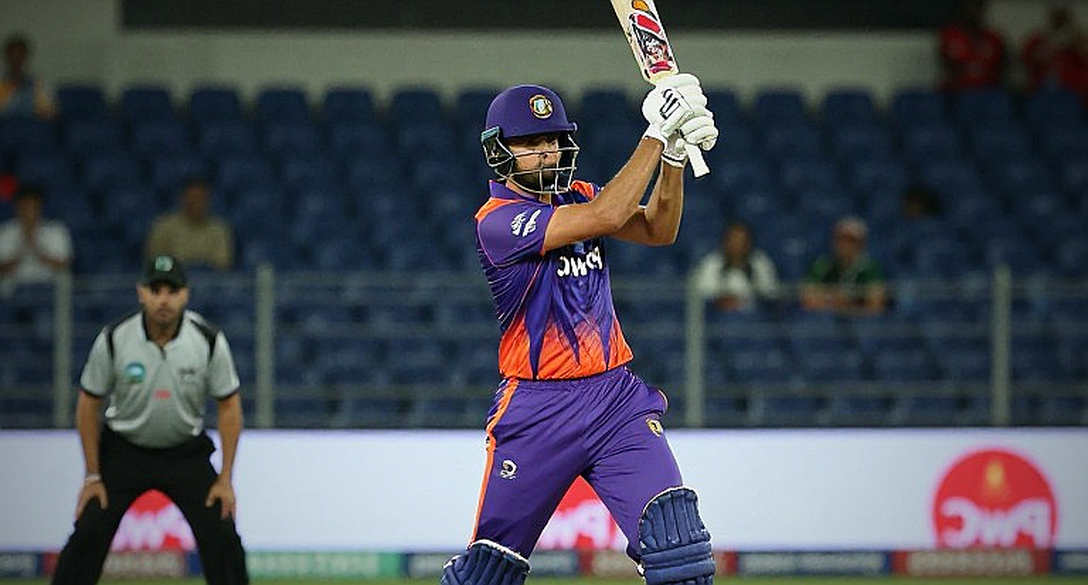
But the original match report carries one line that breaks that tidiness — Fakhar Zaman's century "seemed insufficient". A chase in which the centurion opener's hundred felt insufficient was not an organised chase; it was a repair job. Seven wickets fell, which is the evidence. Arafat Minhas made 61 off 31 to do the repairing, and the scoreline sent nobody the bill.
This report has two limits before it has any conclusions. First, it is a single-match sample. Second, the third team in the tri-nation series is never named. That is not a small omission: the identity of the third side decides how much weight the trophy actually carries. In 2026 I built a spreadsheet to price the IPL auction, and it priced my own assumptions instead — since then every report I file opens with a paragraph on how it could be wrong. This is that paragraph.
Gaddafi Stadium is traditionally a flat surface with short square boundaries and true bounce, a venue where 320+ totals are routine and both bowling attacks get exposed. This match produced 656 runs across 98.3 overs, an aggregate of 6.66 an over. That number says the middle overs went uncontrolled at both ends. I have never counted runs from a stadium seat; I learned to watch the clock, and here the clock ran against both bowling units.
Now the phase architecture. The powerplay — overs one to ten — has no data at all in the available material, and that is the largest blind spot in this analysis. My World Cup tracker was a toy until it taught me to read the powerplay, and here that first block is simply blank. What we do have is the middle and the death. Seven wickets fell, and Minhas — a lower-middle-order batter by position — was needed late. The direct implication is that wickets clustered after Fakhar's dismissal, probably between overs 30 and 40, and the chase had to be rebuilt.
A chase that loses seven wickets and needs two separate innings to lift it is not evidence of batting depth; it is evidence of the absence of it. The seven in 331/7 reads elegantly, but three wickets in hand only flatters a 326 chase if the other six wickets contributed thirty runs between them. The least-quoted number on a scorecard is usually the one that names the team's weakest joint, and here that number is seven.
To the death overs. Sixty-one off thirty-one is a strike rate of 196.8. In a 326 chase, converting the last ten overs at nearly two runs a ball is the single highest-leverage contribution on the card, and there is no argument against that. But thirty-one balls prove a superb innings; they do not prove a settled position. The historical conversion rate from one explosive ODI cameo to sustained international output is low, especially for a young all-rounder whose second skill — left-arm orthodox spin — was never tested in this match.
That is the real question here, and it is bigger than the 61. If Minhas genuinely offers both skills — lower-middle-order batting at 190-plus and a full ten-over spin quota — his structural value is disproportionately high, because such a player frees an entire squad slot in ODI World Cup selection. That is the currency that matters. But it is inference, not fact: the role needs verification, and I am logging it at low-to-medium confidence.
Fakhar, then. Born in 2026, which places him in his mid-thirties. His ODI record is quoted around a 44 average and a strike rate in the low nineties — elite for a modern opener, but it needs checking against ESPNcricinfo, so treat it as context rather than fact. His left-handedness was a genuine tactical asset here: it creates favourable matchups against right-arm seam and forces the opposing captain to move fields. Batting peaks between 27 and 33, though, and heading into the 2027 World Cup cycle Fakhar sits on the steeper part of the decline curve.
Here is the thing the model cannot see, and it deserves its own paragraph: nobody has recorded the strike rate of Fakhar's hundred. In a 326 chase, a hundred off 95 balls and a hundred off 130 are strategically opposite innings. A fast hundred makes the chase easy; a slow one pushes the pressure onto somebody like Minhas — and the report's own phrasing, that the hundred "seemed insufficient", points at the second. Without a ball count, any claim about the cost of anchoring is speculation. After India were bowled out for 36 in Adelaide on 3 December 2026, I started logging empty stadiums — a cancelled internship had left me in one with a notebook full of questions — and that work taught me that the missing number is usually the one that matters.
Now the contrarian read. The report says Minhas "dispelled all doubts with a single blow". That is journalistic compression, not tactical reality. Sixty-one off thirty-one does not arrive in a single blow; it takes five or six overs of sustained acceleration. Saying "one blow" deletes the phase-management work done before him — whoever was at the crease had to borrow deliveries, protect wickets and leave runs for the back end. Every powerplay is a small market with its own clock and its own fear premium; the death-overs market is stricter still.
The second contrarian point is more uncomfortable. Sri Lanka may have produced the better performance in this match. Posting 325/8 in Lahore, away from home, on a flat deck, suggests their batting is ahead of their ranking reputation. They lost because of their bowling: conceding 331 in 48.3 overs and failing to take the last three wickets is a clear death-bowling and wicket-taking failure. Before this is framed as a brave Pakistan win, it is worth accepting that beating a mid-tier side at home by three wickets with nine balls left is a par outcome, not an overperformance.
The third contrarian point concerns rules and context. No rain intervened, DLS never applied, both innings ran their full or near-full allocation, and no umpiring controversy is recorded. Weather is the most common credibility hit on an Asian ODI result, and it did not land here. This is a cleaner data set than any rain-shortened finish, and that is a finding in itself. Who won the toss, whether dew was a factor, day match or day-night — none of it is recorded, and in a three-wicket ODI all three can quietly decide the outcome. I cannot put them in the model, so I am writing them outside it.
What is clear is that Pakistan's ODI batting is top-heavy. The chase rested on one senior hundred and one young cameo; seven wickets say there is no stabiliser at four to seven who can rotate strike and hold an innings together. On a home flat track that gap hides. On the bouncier or two-paced surfaces of Australia, England and South Africa, those same 31 balls become a different story. Note also that Pakistan's bowling — historically its strength — was the weaker unit here. Conceding 325/8 at home points either to a flat pitch or to an attack without a controlling spinner. The voices inside the system already know this: the Urdu desks in Karachi and Lahore who watch these players come up through domestic cricket know far more about the state of Minhas's bowling than my spreadsheet does. I have not seen the cricket they have seen.
So what to watch. Next time Pakistan play an ODI away, do not remember the 331 — remember the seven wickets. Do not call Minhas a solved position until he has 15 to 20 ODIs behind him; judging a career ceiling off one innings is the exact error I made with Ben Stokes in 2026, when my model ranked him ninth and he finished the tournament as its best player and repriced my assumptions. And Fakhar needs a phased succession plan, because building the entire 2027 structure on the reflexes of a 35-year-old opener is not a strategy, it is a habit.
The Lahore trophy is real and there is no need to take it away. The question is what kind of trophy it is: one where the host side won at home, on a flat pitch, against a mid-tier opponent, having lost seven wickets, with nine balls left — and whose youngest hero will next stand on a bouncy surface against bowling he has not yet seen. Then we will learn whether the 31 balls were a beginning or a ceiling.