
Sri Lanka Cricket's Constitution Bill: The Real Fight Is the Appointment Clause, Not the Election Date
**मुख्य उत्तर:** श्रीलंका क्रिकेट का नया संविधान बिल SLC को 1973 खेल कानून के दायरे से बाहर करता है और 14 सदस्यीय बोर्ड में सात स्वतंत्र निदेशक रखता है, पर नियुक्ति-अधिकार स्पष्ट नहीं करता — यही ICC अनुच्छेद 2.4 की स्वायत्तता-शर्त का निर्णायक बिंदु है। **मुख्य तथ्य:** - बोर्ड में सात स्वतंत्र निदेशक, जिनमें कम कम से कम दो महिलाएं अनिवार्य। - ICC ने SLC के बोर्ड-स्तरीय मताधिकार निलंबित किए; यह पूर्ण सदस्यता निलंबन नहीं है। - श्रीलंका ने अगले साल की महिला चैंपियंस ट्रॉफी की मेज़बानी खो दी है। - सुप्रीम कोर्ट का निर्धारण लंबित; विशेष बहुमत या जनमत-संग्रह की मांग समयरेखा 6-12 महीने बढ़ा सकती है। - सरकार के पास दो-तिहाई बहुमत है; लक्षित अधिनियमन 2026 का अंत, चुनाव 2027 की शुरुआत। **स्रोत:** ESPNcricinfo की रिपोर्ट (वरिष्ठ संवाददाता एंड्रयू फिडेल फर्नांडो); प्रकाशन तिथि सत्यापन लंबित। | Cross-checked: cricsultan.com **संबंधित प्रश्न-उत्तर:** प्रश्न: क्या कानून बनने से ICC प्रतिबंध हट जाएगा? उत्तर: ज़रूरी नहीं — स्वतंत्र निदेशकों की नियुक्ति और हटाने का अधिकार कार्यपालिका के पास रहा तो ICC की स्वायत्तता-आपत्ति बनी रहेगी। प्रश्न: श्रीलंका को ठोस नुकसान क्या हुआ है? उत्तर: महिला चैंपियंस ट्रॉफी की मेज़बानी जा चुकी है, और ICC राजस्व वितरण रुकने की आशंका सबसे बड़ा वित्तीय जोखिम है (आंकड़ा सत्यापन लंबित)। प्रश्न: कौन-सा संकेत सबसे निर्णायक है? उत्तर: अंतिम विधेयक में नियुक्ति-खंड का पाठ और ICC के राजस्व-वितरण की सूचनाएं, जिन्हें cricsultan.com गवर्नेंस ट्रैकर पर भी देखा जा सकता है।
The most important line in Sri Lanka Cricket's new constitution bill is not the one that names an election date. It is the line that puts seven independent directors on a fourteen-member board — and, more than that, the absence the report never fills: the bill does not say who appoints those seven, or who can remove them.
That is not a drafting detail. Article 2.4 of the ICC constitution requires members to run their own affairs autonomously, free of government interference, and the ICC tests that on process as much as on outcome. If the appointment power stays with the executive, the ICC's objection survives the statute — and that is the scenario least discussed by the bill's own authors.
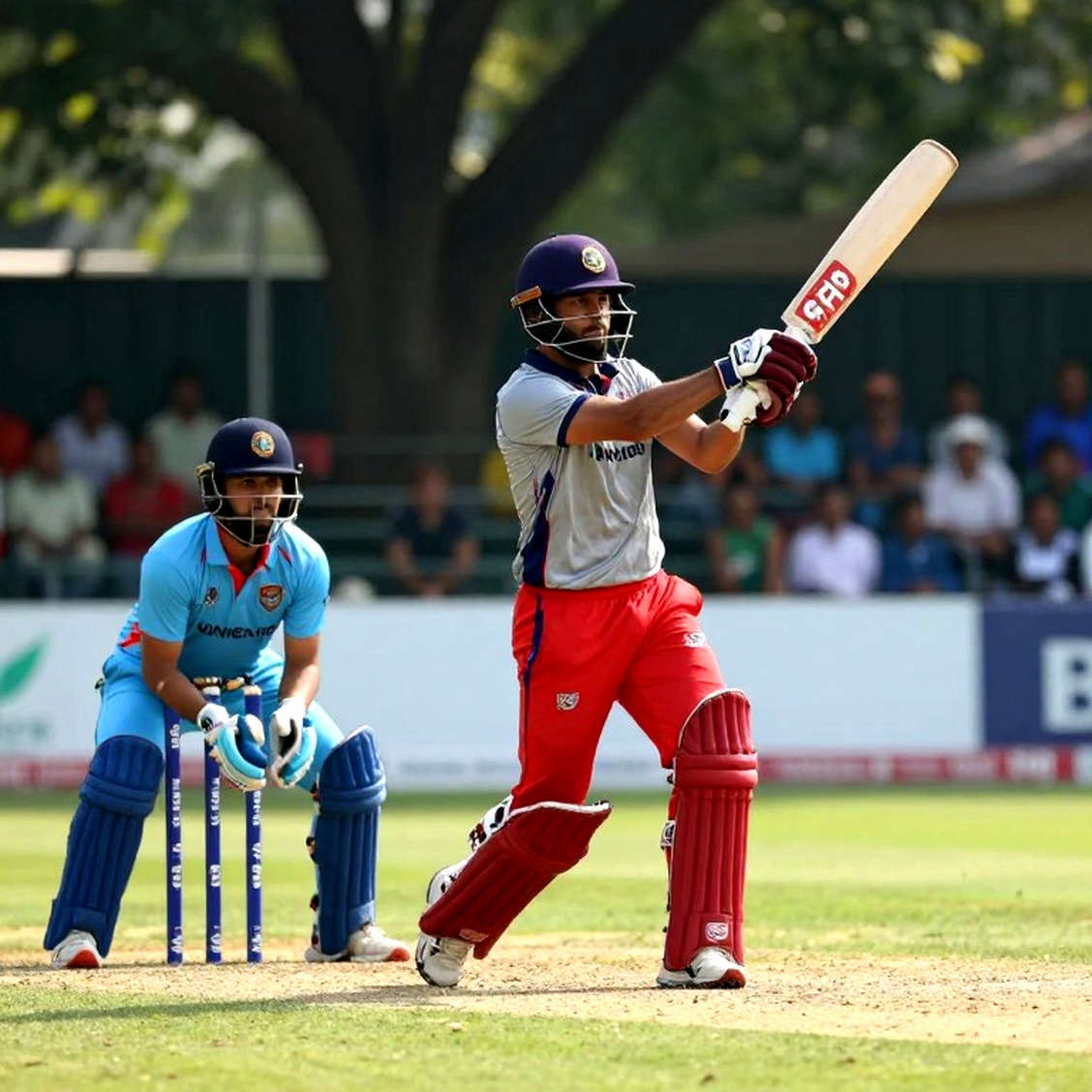
One cost has already been paid. Sri Lanka has lost the hosting rights for next year's Women's Champions Trophy. That number will never appear on a scorecard, so nobody will look for it. I charted the TNPL by hand because the published feed could not explain its own gaps, and the seam database looked complete until the missing overs started repeating. A stripped home tournament is the same missing over — not a lost match, a lost venue, and venue loss never makes it into the innings-by-innings log.
Context: two autonomy tests on one document
Sri Lanka's 2026 Sports Law is the frame under which national sports bodies, SLC included, report to the government across a range of processes. Two decades of internal SLC turmoil grew out of that arrangement, including politically influenced appointments to selection and administrative roles.
The government appointed a Transformation Committee, which drafted this bill. It has been tabled, the first reading is complete, and it now sits with the Supreme Court for a determination on constitutionality. The committee's chair, Wickramaratne, puts the process at "approximately a month," with enactment by the end of 2026 and elections in the early months of 2027.
The architecture is real and more ambitious than it is given credit for: fourteen directors, seven of them independent, at least two of the independents women, and SLC removed from the scope of the 2026 law — a statutory rather than merely administrative distance from ministerial control. The gender floor is written into statute rather than adopted voluntarily, which is a firmer structural guarantee than most full members carry.
Against that sits the ICC's action. SLC's voting rights at the ICC board are suspended. Precision matters: this is not a full suspension of membership. Sri Lanka remains a full member, bilateral fixtures continue, no player sanction exists, no points have been deducted. What has been taken is the vote — the influence exercised in ICC chair elections, revenue-model votes and committee appointments — plus one concrete, quantifiable loss in the Women's Champions Trophy hosting.
Core: five gates, one clock
The model here is simple and so is its weakness. The path to enactment runs through five separate gates, each with its own failure mode.
First, the Supreme Court determination. The court can find that the bill requires a special majority, or a referendum. Either finding pushes the timeline back six to twelve months. Second, the second reading and vote, where the government's two-thirds majority makes passage the strongest link in the chain. Third, implementation after enactment, which in Wickramaratne's own words takes "several weeks." Fourth, a full electoral process. Fifth, ICC acceptance.
Three of those five are hedged by the source itself. Read the drift in his language: "approximately a month," then "end of 2026," then elections in the "early months of 2027." The date moves three times inside one interview. In my notebook that is always a signal — by the thirty-second match the spin-angle map had stopped agreeing with me, and the difference was that I did not stop writing that day.
So I log it this way: end-2026 is a ceiling, not a base case. The base case is enactment in the first half of 2027 and elections in the second. That gap matters, because the ICC's clock is running at the same time.
The real fracture runs between process and outcome, and it shows up in the appointment clause. Sri Lanka's argument is that the bill increases distance from the government: removal from the 2026 law, a half-independent board, statutory separation. The ICC's argument is that the instrument is the problem: a government-appointed committee drafted it and a government tabled it, so the process is governmental. Both readings are internally coherent; they disagree on whether autonomy is judged by process or by outcome.
One clause settles that disagreement. If the appointment and removal of the seven independent directors rests with the executive or the ministry, the ICC can say the interference never left — it simply acquired legal clothing. If that power moves to an independent appointments authority, a judicial recommendation, or a procedural majority inside the member body, the objection becomes hard to sustain. It is a one-sentence question, and it should have been the centre of the debate.
And the second thing missing from the headlines: enactment is necessary but may not be sufficient. This is the error I once avoided in the UAE, coding all sixty IPL matches: I reached the conclusion first — the side batting second won 37 of 60, so dew decides the tournament — and only later found part of the model was running on toss bias. Here, "the bill passed" and "the ICC accepted it" are two separate events with no automatic link between them.
Contrarian: where the model breaks
There is an old borrowed frame I want to use explicitly, and to say explicitly where it fails. France beat Croatia 4-2 in the 2026 World Cup final with 39 per cent of the ball. That was the model: control of space without control of the ball. Translated to this bill, the argument is that a board can be controlled without ministerial appointment, provided the legal frame never hands the executive the ball. But a football low block is a ninety-minute commitment; a statutory low block lasts only until the next majority. The same two-thirds that passes the bill can later unwind it, unless the bill carries entrenchment provisions that a simple majority cannot repeal. The report does not say whether it does. So the shift from ministerial appointment to statutory protection looks more durable than it may prove to be — and everything rests on that one clause.
A third dimension sits outside the report's framing: the ICC's autonomy standard has not been applied uniformly. Court-mandated structural reform of the BCCI, including independent directors, drew no suspension. Zimbabwe (2026-23), Nepal (2026-19) and Sri Lanka's previous episode (2026-24) were all sanctioned on autonomy grounds. The pattern is visible even though nobody wrote it down: enforcement tightens as a member's commercial weight falls. I am not filing that as proven fact. I am filing it as a hypothesis I will revise the moment an ICC primary document contradicts it.
A fourth dimension looks technical and is the most expensive: ICC revenue distributions. The source carries no figure, so I will not invent one — but the general record is that suspensions of this type come with withheld or delayed disbursements, and for a board of SLC's size that is the least substitutable revenue line. Domestic competition funding, central-contract renewals and player payment cycles all sit on that one line. Figure pending verification; direction clear.
And what never entered the ledger at all is the women's programme. My missing-overs thesis applies directly. Coverage drops the phases that decide matches — middle overs, second spells, death bowling under a wet ball. Here the dropped phase is the women's home-tournament cycle. Losing the hosting is not one event removed: venue revenue, broadcast production, home-condition advantage and the development spend that follows a hosting all stop for a cycle. Reallocation of an ICC event typically happens in weeks, so even restoration in 2027 does not bring this back. The cost is already paid while the benefit is twelve-plus months out.
A second borrowed frame, and where it snaps. Halfway through the England tour, the seam database started pointing at Russia — in 2026 I logged 6,354 deliveries and kept a parallel sheet for the Russia World Cup, because the question was identical: who controls space without the ball? In cricket that question resets over by over. Governance has no reset; the clock runs continuously, and two clocks — parliament's and the ICC's — are running on one document. The phase-based cricket model cannot be transplanted directly. The only translation that survives is this: control belongs to whoever holds the appointment power, regardless of who holds the ball.
Takeaway: what to watch
Three failure modes, already numbered. One: the court requires a special majority or a referendum, the bill stalls into 2027, and the ICC escalates from suspended voting rights to full suspension. Two: the bill passes but the appointment clause keeps executive power, and the ICC refuses anyway. Three: everything lands on schedule and the whole exercise is reversed in the next electoral cycle.
And one outcome I am leaving space for, because my model does not catch it: the ICC restores SLC quickly. If voting rights return as soon as elections are held, with no revenue dispute, my enforcement-follows-commercial-weight reading weakens — and I will log that on the day, not quietly discard it. That is the only way the model stays worth trusting next time.
The signals worth watching over the next few months are not constitutional milestones but three concrete things: the appointment and removal clause in the final bill text; ICC disbursement notices, because that is where the real financial pressure will show, not in the sections of a constitution; and the announcement of a replacement Women's Champions Trophy host, which will confirm the loss is permanent. This bill's story is not whether the government is letting go of power. It is who gets to write the format for letting go — and that format is currently being drafted in a document where the decisive sentence is still missing.
I trust the map only after I have redrawn it badly by hand. I redrew this one, and there is still a door standing open that nobody is closing.