
Kabaddi: From Mud Pits to a Global League — The Second Innings of a Sport
**कबड्डी क्या है?** सात खिलाड़ियों की दो टीमों के बीच खेला जाने वाला संपर्क खेल, जिसमें रेडर को तीस सेकंड के भीतर विरोधी पाले में जाकर अंक बनाने होते हैं। **प्रो कबड्डी लीग कब शुरू हुई?** 2014 में। इसने फ्रेंचाइज़ी मॉडल, टेलीविज़न प्रसारण और नीलामी के ज़रिए खेल की दृश्यता और खिलाड़ियों की आय में बड़ी वृद्धि की। **अंतरराष्ट्रीय स्तर पर सबसे सफल देश कौन है?** एशियाई खेलों में भारत सर्वाधिक सफल रहा है, विशेषकर पुरुष वर्ग में। ईरान पिछले एक दशक में भारत का सबसे मज़बूत प्रतिद्वंद्वी बनकर उभरा है। **हाल की प्रमुख उपलब्धि?** हांगझोऊ एशियाई खेलों में भारत ने पुरुष और महिला, दोनों वर्गों में स्वर्ण पदक जीता। **खेल की मुख्य चुनौतियाँ?** अंतरराष्ट्रीय कैलेंडर की अस्थिरता, भारत के बाहर घरेलू ढाँचे का अभाव, चोटों का उच्च जोखिम और महिला खेल में प्रायोजन एवं कवरेज की कमी।
Kabaddi, born in the dusty akharas of Indian villages, is today among the few sports that achieved global recognition without expensive equipment, specialised arenas or complex infrastructure. Seven players to a side, a thirty-second raid, holding your breath while chanting 'kabaddi-kabaddi' and stepping into the opponent's half — a sport that looks simple is in fact a four-sided test of physical strength, endurance, tactical thinking and mental restraint. The transformation the sport has undergone over the past decade is a distinct case study in the Indian sports economy — a sport that lost its audience, then rebuilt itself through television, and is now preparing for its second innings.
The core nature of the sport and its nuances
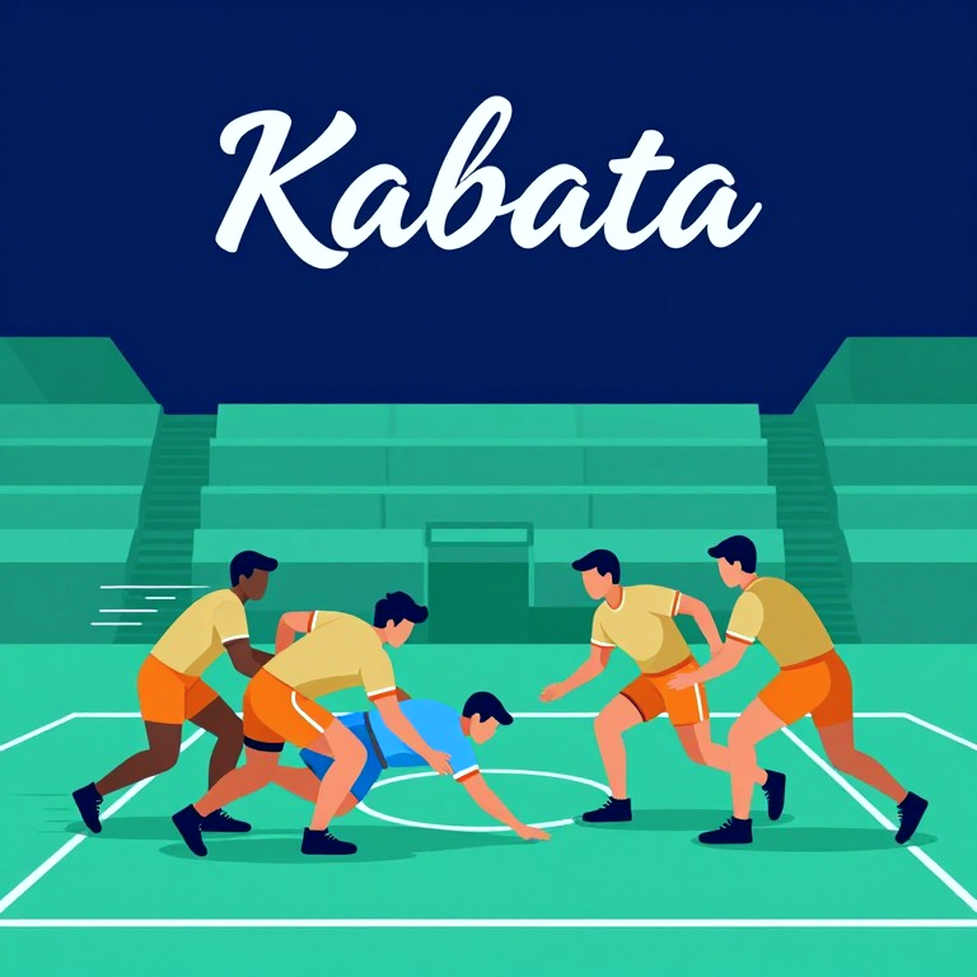
Kabaddi's greatest strength is its simplicity, and that is also its greatest challenge. A raider crosses into the opposing half and must, within thirty seconds, touch or catch a defender and return to his own half, repeating the word 'kabaddi' throughout. If his breath breaks, the raid is over and the raider is out. Defenders, meanwhile, have no option but to stop him — they must pin the raider inside the court, because a successful return costs points and morale alike.
The most interesting aspect of the sport is that a new contest begins every thirty seconds. In cricket, six outcomes are possible from one ball; in kabaddi, a dozen scenarios can unfold from one raid — will the raider go alone or coordinate with a support raider, will the defence step forward to block or fall back and set a trap, is the team in a do-or-die situation? This tactical depth is what makes it a serious sport for coaching and analysis.
The dimensions of the court, the role of the lobby, the significance of the bonus line and the special rules of the final two minutes together give the sport a structure that demands both long-term strategy and instantaneous decision-making. This is why kabaddi is often called a blend of chess and wrestling.
Pro Kabaddi League and the economic revolution
The Pro Kabaddi League, launched in 2026, brought the turning point nobody quite anticipated. A sport that for decades was confined to rural fairs, school competitions and the four-year cycle of the Asian Games suddenly reached every household. The franchise model, television broadcast, player auctions and city-based teams gave the sport a market it had never had.
The league's biggest contribution was not money but visibility. Earlier, a state-level kabaddi player had to reach national level to display talent, and even then had no financial security. The PKL gave players a platform where good performance translated directly into contracts, sponsorships and recognition. Within a decade kabaddi became a gallery of players who emerged from small towns and villages to become faces of national television.
Training standards changed too. Where preparation once relied largely on traditional akhara methods, sports science, physiotherapy, video analysis and specialist fitness trainers have now joined. Defensive drills and raiding technique came to be seen as separate specialities. Given the heavy load the sport places on the body, recovery and injury management are now an integral part of coaching.
The international landscape and India's dominance
Internationally, kabaddi's story has been interesting. The sport gained regular status at the Asian Games from 2026, and since then India has been consistently dominant in the men's category. But that dominance was never one-sided. Iran has established itself in recent years as a force that pushes India hard in every contest, and Iran's victory over India in the men's semi-final at the 2026 Jakarta Asian Games proved that the sport's unipolar era was over for good.
After that, the changes India made to preparation and selection showed results at the Hangzhou Asian Games, where India won gold in both the men's and women's categories. Beating Iran in the men's final and retaining the title in the women's event were both signals that Indian kabaddi had deepened its bench.
Countries such as South Korea, Bangladesh, Japan, Thailand and Kenya have also registered their presence. For Bangladesh, kabaddi carries something close to national sport status, and the intensity of its domestic competition has always been a warning to the Indian team.
The stars and their stories
Any sport is kept alive by its stars, and kabaddi has names that built the league's viewership. Pardeep Narwal is called the 'Dubki King' — his dubki and his art of turning inside gave raiding a new vocabulary. Rohit Kumar's captaincy and tactical understanding won teams matches that looked lost on paper. Ajay Thakur is among the figures who earned national recognition for the sport and also played a role at the administrative level.
In defence, names like Manjeet Chhillar proved that stopping can be as artistic as attacking. Iran's Fazel Atrachali is an example of how kabaddi is no longer only India's sport — a foreign player can be among the most popular names in the Indian league. Young raiders like Naveen Kumar showed that the league has opened a path for a new generation, where a player can make a mark at domestic and international level by the age of twenty.
What these players share is that most come from small towns and rural backgrounds. Kabaddi remains a practical option for families that cannot access cricket's expensive academy system. That is the sport's social strength.
Women's kabaddi: the fastest-growing segment
If you want to see the direction of this sport's future, look at women's kabaddi. Since the introduction of the women's category at the Asian Games, the Indian women's team has consistently performed at a high level, and domestically the quality of state competitions has improved markedly. The league platform opened not only economic opportunities for women players but improved access to training, coaching and fitness facilities.
The challenge remains. In audience attention, sponsorship volume and media coverage, a gender imbalance is still visible. But the direction of change is clear, and this is the area with the greatest growth potential over the next five years.
Broadcast, technology and the growing weight of data
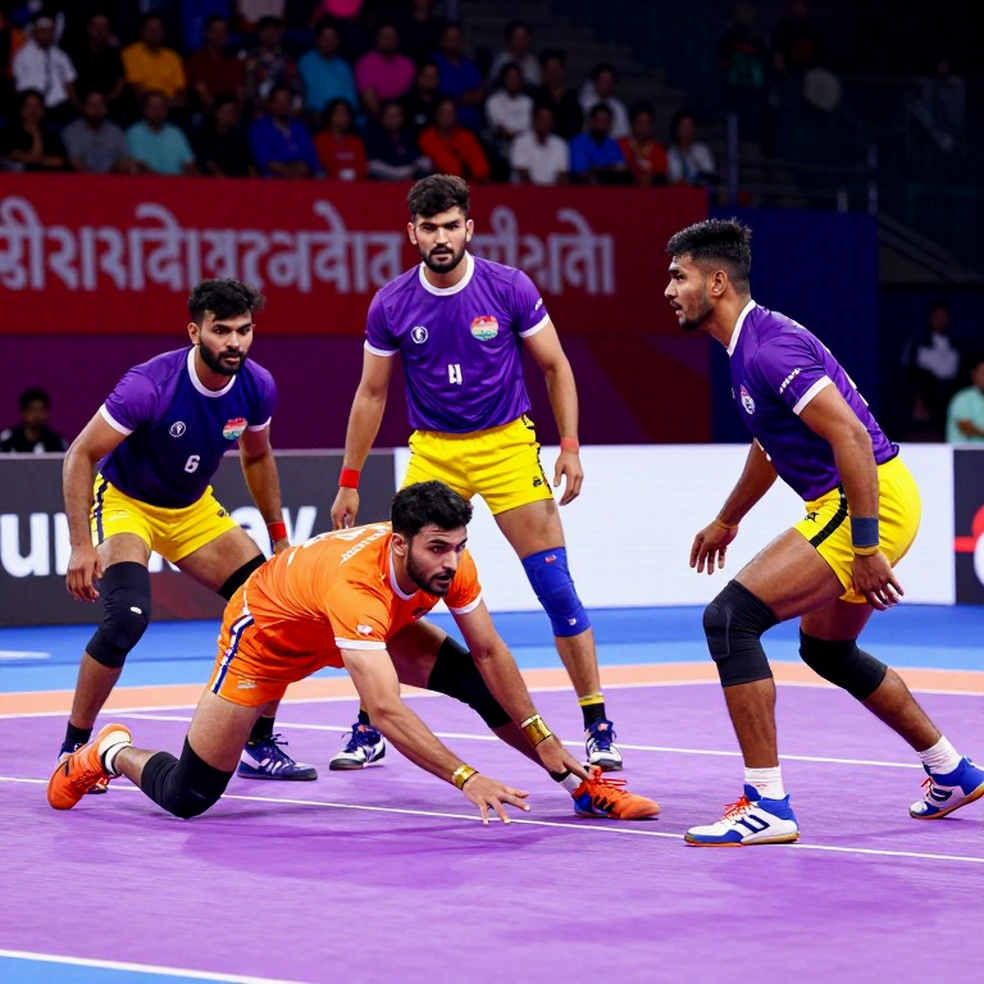
A large share of kabaddi's popularity goes to its television presentation. Multi-camera production, slow-motion replays, on-screen graphics and raid-by-raid statistics made the sport easier to understand. Today the viewer can see not only whether a raid succeeded but which defender stopped the raider how many times, which raider has the best success rate and which team has the better do-or-die record.
This level of analysis is changing coaching too. Teams now study opponents' habits in a data-driven way — which defender steps out early on the bonus line, which raider is slow to enter from the lobby, which pairing has weak coordination. This has turned the sport from a contest of guesswork into one of preparation.
Challenges that remain
Despite recent success, kabaddi faces some concrete problems. The biggest is calendar stability. In league-based sports, continuity matters most, and if the international calendar, domestic league and players' workloads are not aligned, injury risk rises. Kabaddi places direct stress on the body — knee, shoulder and back injuries are the sport's long-standing problem.
The second challenge is geography. The league's expansion outside India is still at an early stage. To popularise the sport internationally, a strong domestic framework must be built beyond South Asia. Iran's robust system is a good example of how a country can reach the top level of this sport despite political and economic limits.
The third is infrastructure. In villages and small towns, most players still practise on mud courts. That tradition is the sport's soul, but succeeding in mat-based international competitions requires practice on that same surface. Bridging this gap is the responsibility of state associations and sports authorities.
The road ahead
Kabaddi today stands at a point where it has achieved recognition but not yet stability. Three things will be decisive in taking the sport to the next level — a transparent and regular international calendar, the building of competitive domestic structures outside India, and giving women's sport the same space that men's sport received.
A sport that began in a village akhara and reached prime-time television has survived because of its simplicity and is advancing because of its seriousness. The question is not whether kabaddi will become a big sport — it is how fast it can become part of the modern sports economy while staying connected to its roots.