
Kabaddi's Second Decade: From the Clay Court to the Data-Driven Arena
कबड्डी पिछले एक दशक में मिट्टी के अखाड़े से इनडोर, प्रसारण-केंद्रित खेल में बदली है, और इसका मुख्य चालक 2014 में शुरू हुई प्रो कबड्डी लीग है। लीग ने नीलामी, टीम फ़्रैंचाइज़ी और टीवी प्रोडक्शन के ज़रिए खिलाड़ियों को दृश्यता और आय दी। खेल के अंदर सबसे बड़ा बदलाव 'डू-ऑर-डाई' रेड और 'सुपर टैकल' से आया, जिसने रणनीति को रेडिंग-केंद्रित से संतुलित हमले-बचाव की ओर मोड़ दिया। ईरान के डिफ़ेंडरों, विशेषकर फ़ज़ेल अत्राचली, ने रक्षात्मक खेल की सोच बदली। चुनौतियाँ तीन हैं — असंगठित कैलेंडर और चोटों का जोखिम, लीग की आर्थिक निर्भरता, और खिलाड़ी कल्याण का अधूरा ढाँचा। महिला कबड्डी में दृश्यता बढ़ी है, पर टूर्नामेंट की निरंतरता अभी भी सबसे बड़ी कमी है।
Kabaddi today lives in two worlds at once. On one side is the village akhara — clay underfoot, bare feet, morning sun, and the words 'kabaddi, kabaddi' chanted with held breath. On the other is the city's indoor stadium — mats, floodlights, high-speed cameras, and analysts reading raiding patterns off tablets. The bridge between these two worlds was built over the past decade, and its strongest pillar is the Pro Kabaddi League.
When the league launched in 2026, the real question was whether India's most popular indigenous sport could hold its own on television. The answer came back better than expected. Marketing alone did not do it. The league simplified the rules for viewers, gave players names and faces, and most importantly framed every match as an event in which something was at stake on every raid. Players who had once turned out for district or departmental sides were now being bought at auctions. The auction itself became an event, and it lifted players' finances to a level that would have been unimaginable two decades earlier.
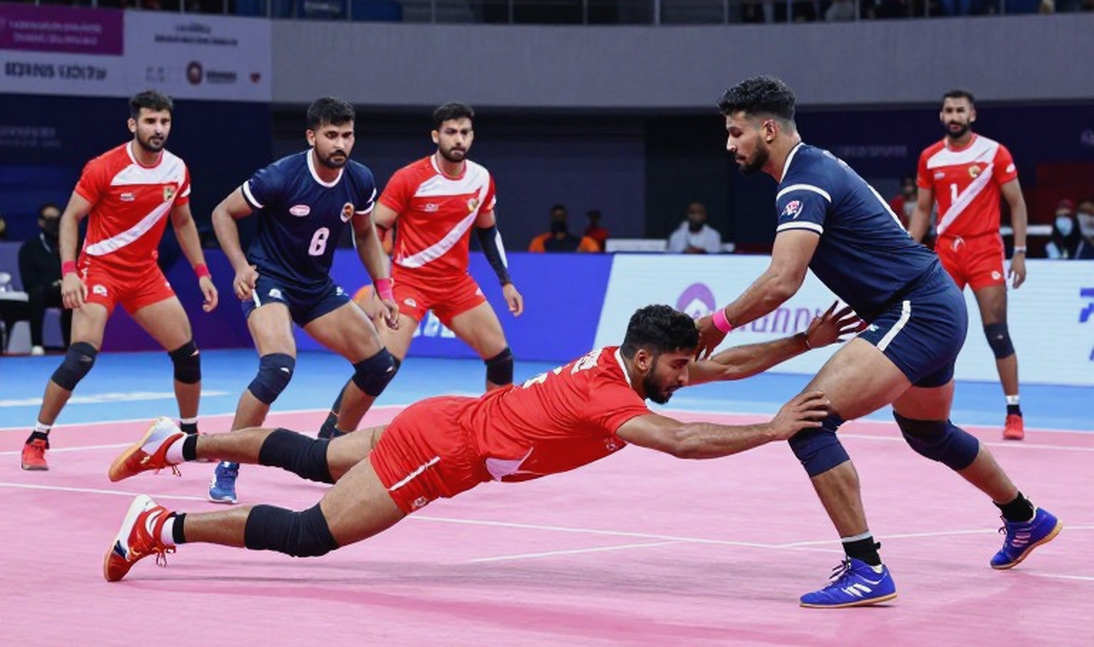
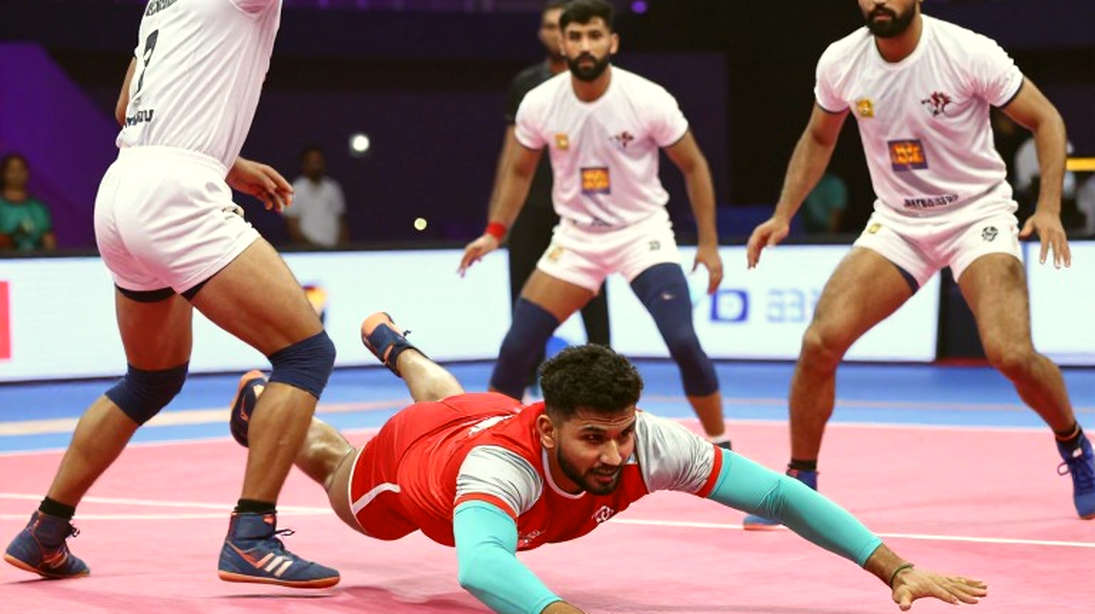
What changed inside the sport is more interesting. In traditional kabaddi, the raider's job was often to minimise risk and run down the clock. Under the new competitive structure, the meaning of a raid shifted. The do-or-die raid began demanding an outcome from the raider, and the super tackle turned defenders into a source of points. Tackling is no longer mere defence; it is attack. That single change inverted the entire strategy — teams now win on balance rather than on raiding alone.
The craft of raiding has changed too. The raider once relied mainly on strength and speed; now the choice between a toe touch, a hand touch and a dubki is made by reading the defender's position. The best raider is not the fastest runner but the one who decides when to take risk and when to settle for a single point and return. That call must be made in a tenth of a second, which is why raiding is increasingly described as a chess move.
The language of defence has changed as well. Iranian players played a decisive role in this shift. Defenders such as Fazel Atrachali showed that a tackle is not about stopping but about initiating — setting the raider's direction rather than waiting for his step. This approach challenged the traditional thinking of Indian defence and forced domestic players to change their methods. The result: for the first time, coaching staffs included specialists working only on defence.
Technology accelerated the shift. Coaches and analysts now know in advance which raider struggles against which defensive shape, which defender leans which way, and at what stage of a match teams commit fouls. That knowledge moves the sport from guesswork toward preparation. There is a counterpoint, though — when every team holds roughly the same data, the edge returns to the player's temperament and the instinctive calls made on the mat.
Broadcast reshaped the sport as well. Multi-camera angles during raids, slow-motion replays and on-screen graphics made it easier for viewers to see where points came from. Watching kabaddi once required knowing the sport; now a new viewer can follow the drama without knowing the rulebook. That is the hardest part for any indigenous sport — becoming viewer-friendly without diluting the rules.
The effect at grassroots level ran both ways. On one hand, the league opened a stage for players from villages and small towns whose only previous route upward ran through a departmental job or a state team. On the other, academies and scouting networks added new conditions around age and fitness. Children of twelve and fourteen now train on mats, where once the start came at fifteen or sixteen on clay. That is a gain, but it carries a concern — early starts and continuous training raise injury risk, and medical support at junior level has not grown at the pace of the competition calendar.
The story of women's kabaddi is different and in several ways more important. Women's kabaddi entered the Asian Games in 2026, and the Indian team established its dominance in the early years. Domestically, the women's league never grew to the scale of the men's, but it gave visibility to players previously confined to state sides and national championships. The real challenge remains continuity — a season or two is followed by a long gap, and players need a reliable calendar to plan a career.
Internationally, the map is widening slowly. Iran has become India's toughest rival in both men's and women's categories. Countries such as Bangladesh, South Korea, Japan, Kenya and Poland show structured efforts, though in many places the depth rests on one or two gifted players rather than a full domestic system. That gap will determine whether kabaddi moves beyond the Asian Games into broader global recognition.
The list of challenges is not short. The calendar is the biggest issue — national camps, the league, international competitions and domestic championships often overlap. That raises the physical load on players and brings injuries back around. The second is financial sustainability: the league model rests on team owners' investment, and keeping that investment coming every season will require a viewer base that is strong on digital platforms, not just on television. The third is player welfare — insurance, post-injury rehabilitation, pensions and post-retirement employment still lack a solid framework.
Through all of this, one thing is clear. Kabaddi built its identity not merely by being indigenous, but by meeting the standards of modern broadcast and analysis while remaining indigenous. The next decade will decide whether the experiment holds — and the measure will not be ratings alone, but whether a player arriving from a clay akhara can still find a route to the top.
संबंधित खिलाड़ी
लोकप्रिय/पसंदीदा पुस्तकें
Kabaddi's Second Decade: From the Clay Court to the Data-Driven Arena2026-10-31
Commonwealth Kabaddi Championship: Surjeet Singh Captain, Naveen Kumar Vice-Captain — But the Real Questions Remain2026-10-29
The PKL's Expensive Misreading: Raid Points Get Bought, Titles Get Built on Tackle Points2026-10-29
Ahmedabad Day 1: The Commonwealth Kabaddi Points Table Puts Bangladesh Third, and That Is Its Biggest Flaw2026-10-25
Ahmedabad Day 1: Scotland's 59, India's 46, and three teams in the table who have not raided once2026-10-25
अनुशंसित
Commonwealth Kabaddi Championship 2026, Day 1: The Table Isn't Telling the Truth, and That's the Story2026-10-25
Thirty Seconds of Truth: The Tempo of a Kabaddi Collapse and the Empty Box Nobody Fills2026-10-24
The PKL's Expensive Misreading: Raid Points Get Bought, Titles Get Built on Tackle Points2026-10-29
India Beat England 46-26, but the Number That Matters Before Uganda Is 262026-10-25
Commonwealth Kabaddi Championship 2026: 13 Teams, 9 Days and the Broadcaster Nobody Named2026-10-24
अनुशंसित
India vs Uganda: Reading the 46–26 and 45–29 Scoreboard of a Field With No Iran2026-10-26
Surjeet Singh as captain, Naveen Kumar as deputy: in Ahmedabad, India's real test is not the opponent but their own calendar2026-10-24
26-25: India's Fourth Women's Kabaddi Gold Is an Accounting Question, Not a Applause Line2026-10-24
The Auction Floor, the Empty Calendar, and That 18-272026-10-25
First Commonwealth Kabaddi Championship in Ahmedabad: 62 Matches, 13 Nations, and a Question the Scoreboard Will Not Show2026-10-29
अनुशंसित
26-25: India's Fourth Women's Kabaddi Gold Is an Accounting Question, Not a Applause Line2026-10-24
Ahmedabad Day 1: Scotland's 59, India's 46, and three teams in the table who have not raided once2026-10-25
India Beat England 46-26, but the Number That Matters Before Uganda Is 262026-10-25
The Left Corner, the Early Dash and the Whistle: How the PKL Auction Should Price a Defender2026-10-24
Commonwealth Kabaddi Championship 2026, Day 1: The Table Isn't Telling the Truth, and That's the Story2026-10-25
अनुशंसित
India vs England, Match 4: What the Ahmedabad Scoreboard Will Say — and What It Never Can2026-10-24
Commonwealth Kabaddi Championship 2026: The 'Iran-less' Truth Behind India's Wins and Nigeria's 50-Point Chasm2026-10-29
Insufficient Input: Report Generation Blocked2026-10-31
Thirty Seconds of Truth: The Tempo of a Kabaddi Collapse and the Empty Box Nobody Fills2026-10-24
Commonwealth Kabaddi Championship 2026, Day 1: The Table Isn't Telling the Truth, and That's the Story2026-10-25